REVIEW · ROME
Ancient Rome at Twilight Walking Tour
Book on Viator →Operated by E & D Guided Tours · Bookable on Viator
Rome glows when the sun drops. This Ancient Rome at Twilight Walking Tour keeps you out of the worst daytime heat and crowds while you move through the city’s most dramatic ruins. I love the cooler pace and the Colosseum photo moments from elevated viewpoints, both made for nighttime light. One watch-out: you’re still walking on uneven, old-stone streets, and the audio can be hit-or-miss if you end up far from the guide.
The best part is how calm it feels with a small-group size (max 15) and a mobile ticket that makes check-in simple. Guides are a big deal here, too, with examples like Mario and Jason showing up in past tours as enthusiastic storytellers, and Lara praised for speaking clearly if you struggle with hearing.
In This Review
- Key things that make this twilight walk work
- Why twilight feels like the real Rome
- Piazza Venezia start: Altare della Patria in the blue hour
- Capitoline Hill views: Roman Forum at night
- Via dei Fori Imperiali and Mussolini’s straight line
- Rione Monti streets: Caesar’s neighborhood feeling
- Scalinata dei Borgia: a dark staircase with stories
- Torre dei Borgia and the “locals” Colosseum viewpoint
- Piazza del Colosseo: finishing with Colosseum night impact
- Price and value: what $37.49 buys you in real time
- Timing, walking comfort, and what to wear
- Guides, storytelling style, and how to get the most out of it
- Jubilee restoration and weather: why messages matter
- Should you book this Ancient Rome at Twilight tour?
- FAQ
- How long is the Ancient Rome at Twilight walking tour?
- What language is the tour offered in?
- What is the group size limit?
- Where do we meet, and where does the tour end?
- Do I get a ticket on my phone?
- Is it okay if I bring a service animal?
- What if it rains or monuments are affected by the Jubilee?
- Can I get a refund if I cancel?
Key things that make this twilight walk work
- A night schedule that beats midday crowds and heat, so you can focus on the monuments instead of battling other groups
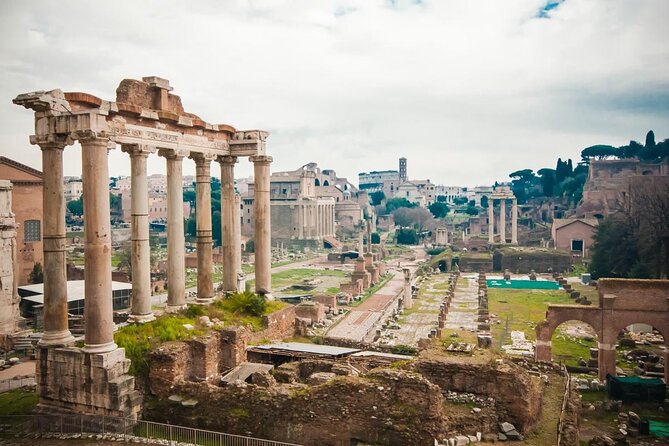
- Capitoline Hill views over the Roman Forum, timed so the ruins look almost stage-lit
- Monti neighborhood walking, including the Julius Caesar connection and spooky-street vibes
- Borgia-themed stops with dark local legends and atmospheric photo angles
- A secret-feeling Colosseum viewpoint, where the night scene feels special without feeling rushed
- Small group pace, built for questions, not just moving fast
Why twilight feels like the real Rome
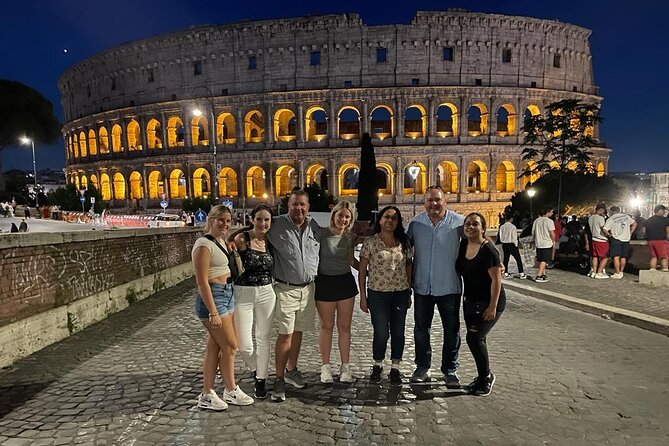
Rome at night has a different mood. Daytime turns everything into a race: heat, loud tour groups, and people snapping photos while standing in the same congested spots. At twilight, the air cools down, the light changes, and the ruins look less like museum props and more like places where stories still linger.
This tour runs roughly 1 hour 30 minutes to 2 hours, long enough to cover key ancient areas, but short enough that you don’t feel like you’re stuck in the dark too long. You also get multiple view-and-walk moments, which matters because Rome is never just one “big sight.” It’s sight after sight, and nighttime helps them connect.
I also like the practical emphasis on photos. You’re not just told where to look—you’re directed to spots where the lighting makes sense, including an elevated, end-of-tour style moment at the Colosseum.
You can also read our reviews of more walking tours in Rome
Piazza Venezia start: Altare della Patria in the blue hour
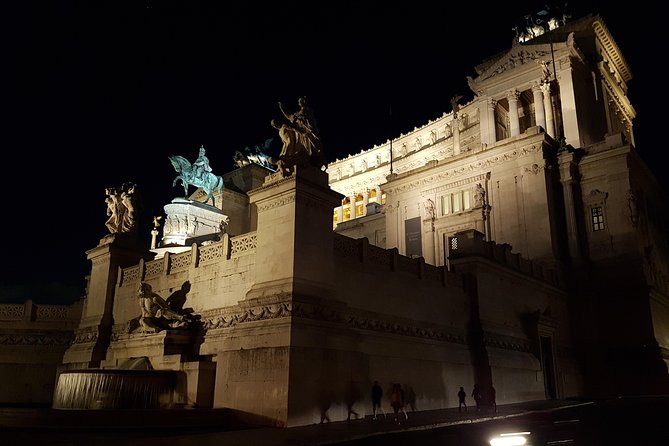
You begin in Piazza Venezia, right in front of the massive marble Altare della Patria monument. It’s a huge visual landmark—easy to orient yourself, even if you’re arriving without a perfect plan. The timing at dusk helps here: the bright marble stays crisp while the surrounding streets soften into evening.
What I like about this kickoff is that it gives you context fast. You’re not starting with the most ancient stone right away. You’re starting with a “Rome that grew into itself,” a reminder that the city keeps layering history. From this wide-open plaza, the rest of the walk feels more purposeful.
Practical note: meeting at big public landmarks can be straightforward, but construction and street changes can still make wayfinding annoying. Arrive a few minutes early and give yourself buffer time, especially if you’re coming by public transit.
Capitoline Hill views: Roman Forum at night
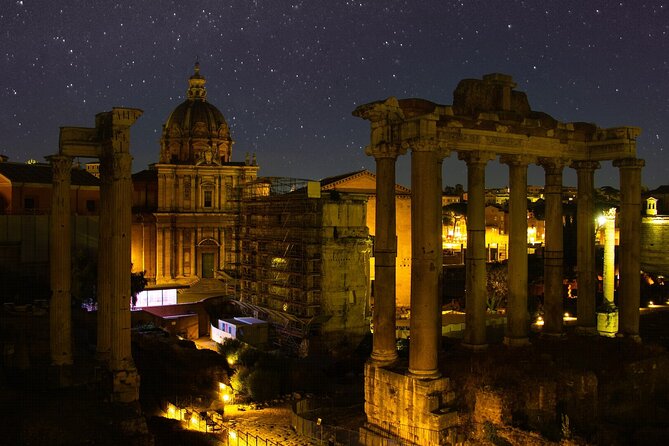
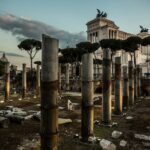
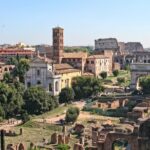
Next, you head to Piazza del Campidoglio and climb up toward the Capitoline Hill viewpoint. This is the moment where Rome starts looking like an overview instead of a collection of random ruins. At night, the Roman Forum area settles into darkness and shadow, and the sightlines feel cleaner.
This stop also sets up how you’ll understand everything after: the Forum isn’t just “old.” It’s a whole system of spaces that once organized public life. When you can see it from above, it becomes easier to connect monuments you may have seen in photos to what’s actually around them.
If you’re taking photos, this is one of the smarter “hold the camera steady” moments. Twilight light can be tricky, so aim to shoot quickly, then let your guide talk for a minute. You’ll get the story and the image without freezing your brain trying to perfect settings.
Via dei Fori Imperiali and Mussolini’s straight line
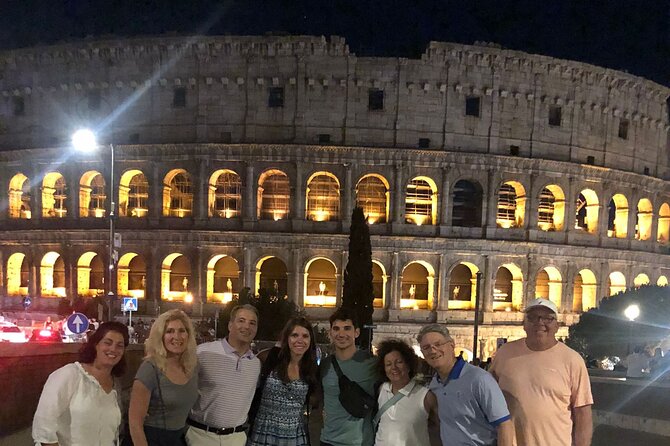
From the hilltop, you move along Via dei Fori Imperiali, crossing the wide boulevard built by Mussolini. It’s not the most “ancient-looking” stretch in the classic sense, but that’s exactly why it matters. Rome is not one era at a time. It’s how empires and governments reused space, shaped movement, and built showpiece urban axes.
Crossing this boulevard gives you a different kind of understanding: you’ll see how planning and power leave physical marks. Even if you’re not into political history, it helps you read the city as something designed, not random.
Then you enter Monti, a neighborhood where small streets and nighttime lighting make the “walkable” part feel intimate. This is where the mood shifts from viewpoints to atmosphere.
Rione Monti streets: Caesar’s neighborhood feeling
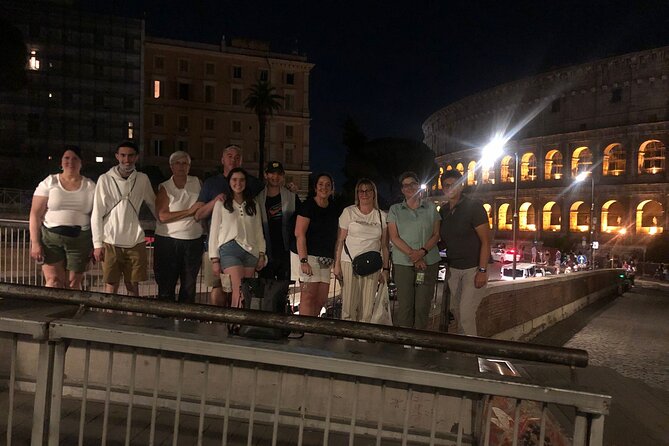
Now you’re walking into Rione Monti. This is where the tour leans into atmosphere: narrow streets, old walls, and the legend that Monti is connected to the birthplace of Julius Caesar. The idea here isn’t just to say a name. It’s to help you feel the scale and character of the area.
Monti at night also feels different from Monti in the daytime. You’ll likely notice fewer people and slower movement, which makes it easier to hear the guide and take in details. One of the most useful parts of a nighttime walk is the chance to look longer because you’re not constantly dodging crowds.
One consideration: the tour describes this area as notoriously dangerous in ancient times, which is a reminder to stay aware in modern Rome too. Keep your phone secure, stay alert when streets narrow, and don’t wander off to “get one more photo” without catching up to the group.
Scalinata dei Borgia: a dark staircase with stories
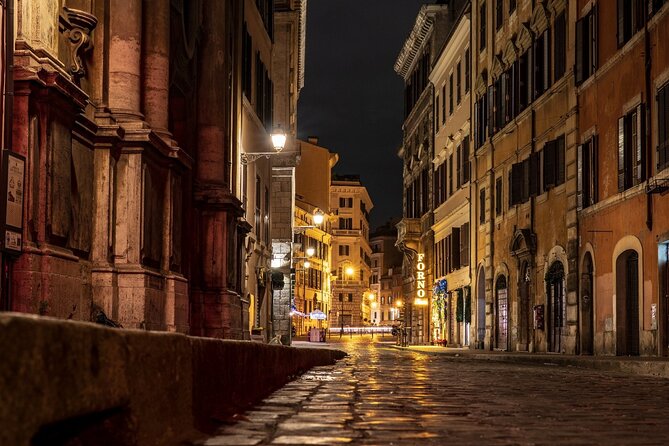
Next comes Scalinata dei Borgia, a darker, spooky-feeling climb toward a courtyard tied to the Pope Borgia residence and his mistress. This is the stop where the tour turns more theatrical—murders, intrigue, and a building-corner-in-a-nighttime-story vibe.
Even if you’re not typically a fan of spooky legends, this works because it changes your pace. You go from wide views and straight paths into something more claustrophobic and atmospheric. And when you hear the stories while standing where they connect, it sticks better.
The drawback is physical: stairs can slow a group down, especially when you’re balancing photos, traction on stone steps, and attention on the guide. Wear shoes you can trust, and if you need a steadier pace, ask early so the guide can help you keep up.
Torre dei Borgia and the “locals” Colosseum viewpoint
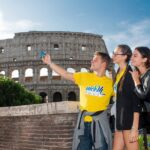
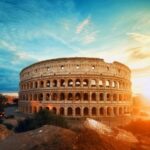
At Torre dei Borgia, the tour highlights a spot that feels special—where locals gather to admire the Colosseum at night. This is the payoff moment for many people: you get an angle that isn’t the obvious front-of-building scene, and the night lighting makes the structure look dramatic rather than plain.
I love this kind of stop because it respects your time. Instead of sprinting to another crowd magnet, the guide brings you somewhere that supports photos and also lets you pause. It’s a small-group environment, so you’re not stuck behind a wall of people.
Also, the guide’s role matters here. A good guide reads the moment: when to talk, when to let you look, and how to guide your eyes to the best angles. Past experiences have singled out guides for being fun and energetic, and this stop is where that energy pays off.
Piazza del Colosseo: finishing with Colosseum night impact
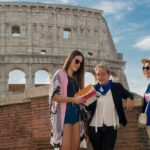
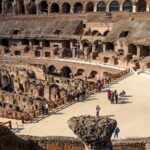
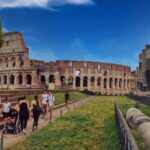
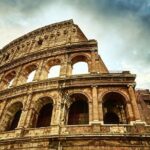
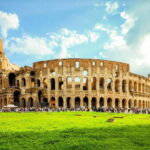
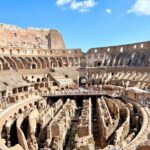
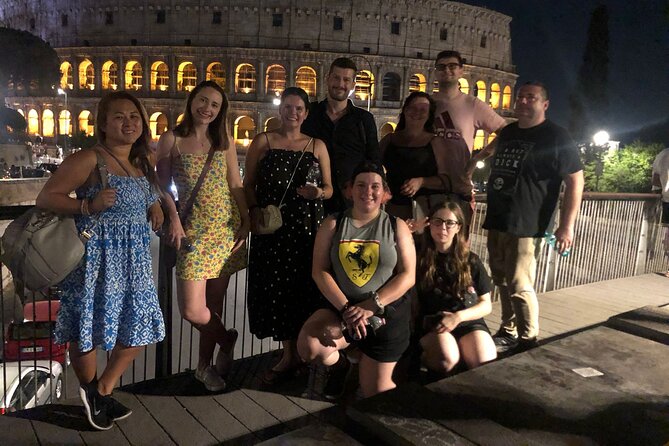
The tour ends at Piazza del Colosseo, finishing in front of the Colosseum itself. If you’ve only seen the Colosseum in daytime photos, nighttime can change your brain’s “where does this fit” feeling. The building looks more sculptural, and the shadows make the arches feel deeper.
This final portion lasts about 20 minutes, which is long enough to get your bearings and take multiple photos without feeling rushed. It also gives you time to ask your last questions, especially if you’ve been holding them back during the walk.
Practical note: the Colosseum area can get busy even at night, so don’t plan to linger forever right at the curb. Take the photos, listen to the last bit of context from your guide, then decide your next step for dinner or gelato.
Price and value: what $37.49 buys you in real time
At $37.49 per person, this is a pretty low-cost way to “make Rome make sense.” You’re paying for three things that add up quickly when you travel:
- time saved by having a route that connects the main ancient areas,
- interpretation so the ruins feel like stories instead of shapes,
- and a night schedule that improves comfort and photo chances.
Because the tour runs about 1.5 to 2 hours, it also fits well into a first evening in Rome. Many people want a gentle but meaningful start, and a twilight walk does that without committing you to a half-day plan.
The small group cap at 15 people is also part of the value. Larger tours move like trains, and you barely get to ask anything. Here, the setup is geared toward a relaxed pace, and you’ll feel it during the frequent stop-and-talk moments.
Timing, walking comfort, and what to wear
Expect real walking, including climbs and steps. This isn’t a “sit on a bus and see Rome” tour. It’s a walk through multiple elevations and older surfaces, so you’ll want comfortable shoes with good grip.
Evening conditions can change fast. One moment you’re in warm twilight; the next you’re in cool air with damp stone if rain rolls through. Past experiences have mentioned tours continuing despite rain, so plan as if weather could shift.
If you’re sensitive to sound, pay attention to positioning. Some people noted that there were no headsets, which can make it harder to hear if you’re toward the back. You can fix that by staying closer to your guide when possible and facing them during key explanations.
Guides, storytelling style, and how to get the most out of it
Guides seem to be a big reason this tour scores so well. You’ll hear vivid ancient life stories, and you’ll also hear how the guide connects Roman ruins to later periods for extra context. Names that have come up include Mario, Jason, Ali, Rebecca, and Lara, with feedback highlighting humor, patience, and clear speaking.
What I’d do to get the most out of the tour: come with at least one question in mind. Maybe you want to know what life was like in the Forum, or why Mussolini’s boulevard cuts through the ancient area. Then ask it at the next natural pause. Twilight tours are built for those moments.
Also, use the photo breaks wisely. Don’t take pictures continuously while the guide talks. Listen first, then shoot. You’ll end up with fewer, better images and a stronger memory of what you’re actually looking at.
Jubilee restoration and weather: why messages matter
Two real-life factors can change your experience in Rome.
First, weather matters. If conditions aren’t good, the tour may be changed or canceled, with an alternative date or a full refund offered. Second, because of the Jubilee, some monuments may be under restoration. That means the route could adjust, or certain spots might look different than expected.
The lesson is simple: when you book, keep an eye on messages from the provider. This isn’t a “set it and forget it” walk. Rome is active, and restoration work can affect sight access.
Should you book this Ancient Rome at Twilight tour?
Book it if you want a first-night Rome experience that’s comfortable, photo-friendly, and built around real explanation, not just sights. The route makes sense for orientation: you start broad, see the Forum from a hilltop angle, then walk through Monti and end at the Colosseum when it looks most dramatic.
Skip it or consider another option if you know you need perfectly clear audio from a distance, since headsets aren’t mentioned as part of the setup. Also, if your mobility is limited by stairs and uneven pavement, this one may feel harder than you expect.
If you’re the type who likes Rome with breathing room and story pacing, this is a strong value at $37.49. It’s also a smart way to turn the ancient center into something you can actually picture long after you leave the streetlights behind.
FAQ
How long is the Ancient Rome at Twilight walking tour?
It runs about 1 hour 30 minutes to 2 hours (approx.).
What language is the tour offered in?
The tour is offered in English.
What is the group size limit?
This experience has a maximum of 15 travelers.
Where do we meet, and where does the tour end?
The tour starts at the Monument to Victor Emmanuel II in Piazza Venezia and ends at Piazza del Colosseo, in front of the Colosseum.
Do I get a ticket on my phone?
Yes. You receive a mobile ticket.
Is it okay if I bring a service animal?
Service animals are allowed.
What if it rains or monuments are affected by the Jubilee?
The tour requires good weather. If canceled due to poor weather, you’ll be offered a different date or a full refund. Also, because of the Jubilee, some monuments may be under restoration, so you may need to follow messages about potential changes. If canceled due to not meeting the minimum number of travelers, you’ll be offered a different date/experience or a full refund.
Can I get a refund if I cancel?
You can cancel for a full refund up to 24 hours in advance. If you cancel within 24 hours of the start time, the amount you paid isn’t refunded.