REVIEW · ROME
Colosseum & Ancient Rome by Night Guided Walking Tour
Book on Viator →Operated by Tours of the Colosseum · Bookable on Viator
Rome glows after dark on this walk. What makes the experience click is the night illumination of ancient monuments and the way a guide like Thomas turns scattered ruins into a clear story of how Romans lived, worked, and performed. I also love that you get in-depth explanations tied to what you’re actually seeing, so you’re not just standing in the dark guessing. The main catch is also the point of the tour: it’s all outside, so you won’t enter the monuments, and it depends on good weather.
You start at Chiesa di Santa Maria in Portico in Campitelli (Piazza di Campitelli, 9) and finish near the Colosseum at Piazza del Colosseo, so it’s an efficient use of an evening. It’s a private night walk in English with an official guide and a mobile ticket, which helps if you want questions answered in real time and a pace that feels personal to your group.
In This Review
- Key highlights to look for
- Why this night tour helps Rome make sense
- Teatro di Marcello: the theatre that explains Roman entertainment
- Piazza del Campidoglio: Michelangelo’s design and a forum view
- Mercati di Traiano and the Fori Imperiali area: Trajan’s big statement
- Colonna Traiana: war storytelling in reliefs
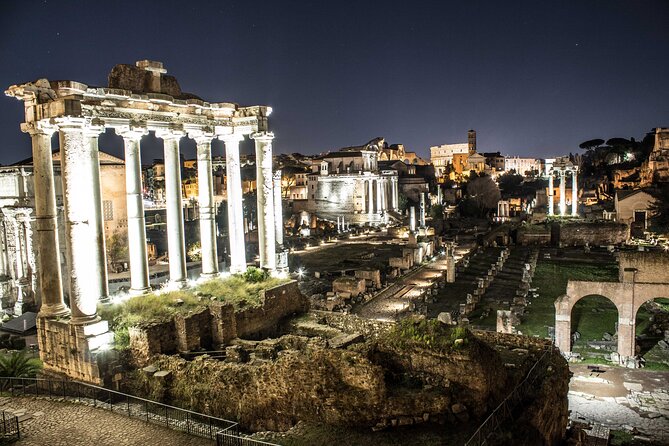
- Roman Forum views without entry tickets: center of life, law, and religion
- Colosseum exterior at night: gladiators and shows in the right context
- Arch of Constantine: why it influenced triumphal arches worldwide
- Price and what you’re paying for at about $272.83
- What the pacing feels like on an evening schedule
- Who this tour suits best
- Should you book this Colosseum and Ancient Rome by Night tour?
- FAQ
- How long is the Colosseum & Ancient Rome by Night guided walking tour?
- What’s included in the tour price?
- Do I need tickets to visit monuments during the tour?
- Where does the tour start and end?
- Is this tour private?
- What happens if the weather is poor?
Key highlights to look for
- Teatro di Marcello at night: a standout preserved ancient theatre and a clear intro to Roman shows
- Michelangelo’s Campidoglio viewpoint: the Marcus Aurelius statue and a forum-facing perspective
- Trajan’s era in stone: Mercati di Traiano and the grand scale of the forums tied to his legacy
- Colonna Traiana’s reliefs: war scenes that read almost like a comic strip
- Colosseum exterior, gladiator context: you see the landmark and the culture around it without entry tickets
- Arch of Constantine’s long shadow: one of Rome’s best-preserved triumphal arches and its influence beyond Italy
Why this night tour helps Rome make sense
At day, Rome can feel like a highlight reel. At night, it becomes something else: more quiet, more dramatic, and easier to connect details to big ideas. This tour leans into that. You walk between major Roman landmarks that form a kind of route through power, religion, entertainment, and propaganda, and your guide keeps pointing out what to notice and why it mattered.
Two things make it especially strong for first-timers and returning travelers alike. First, the exterior-only format keeps you moving through the city’s atmosphere instead of getting stuck with indoor logistics. Second, the guide’s approach is built around explanation, not just location. When you stand near Roman stonework, it’s easy to think in vague terms. Here, you learn the specific role each place played, so the ruins feel less like leftovers and more like evidence.
The only drawback to plan around is simple: it’s outside the whole time. That means you don’t get the inside access that some other Colosseum experiences include. And since the experience requires good weather, you should pick this as a night you can afford to change if conditions are rough.
You can also read our reviews of more walking tours in Rome
Teatro di Marcello: the theatre that explains Roman entertainment
Your first stop is Teatro di Marcello, a theatre that’s famous for being one of Rome’s best preserved in its original form. Even without going inside, you can see why it worked. Stone design shaped sightlines and movement, and the size gives you instant context for how public entertainment was built into Roman life.
What I like here is how the guide uses the setting to talk about Roman shows. You’re not just looking at an old building; you’re learning what kinds of entertainment Romans expected and how these spaces were part of civic culture. If you’ve only heard the word theatre in modern terms, this helps you reset your mental picture.
Practical tip: spend your full stop thinking in layers. Look at the structure, then ask what it was for. The better you connect function to form, the more the next stops will click.
Piazza del Campidoglio: Michelangelo’s design and a forum view
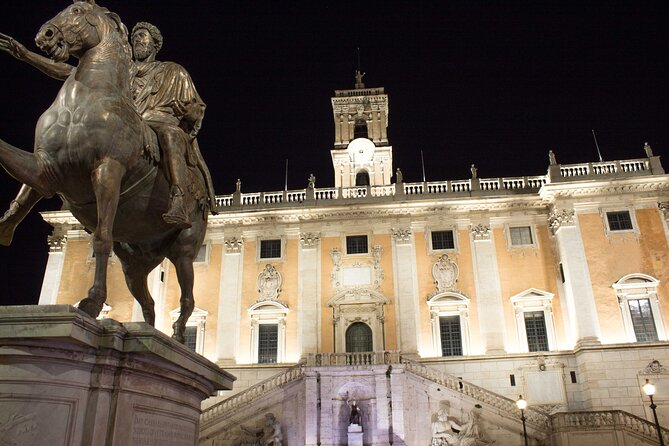
From a preserved theatre, you jump to a place built for perspective. Piazza del Campidoglio is the square designed by Michelangelo, and it’s hard to overstate how useful that design is at night. The space feels intentional, like a stage, and your guide makes sure you use it that way.
Here’s where you’ll see the town hall and the statue of Marcus Aurelius. More importantly, you’ll get a great view of the forums. That visual matters because it turns the route from a list of stops into a connected landscape. Instead of ruins scattered around Rome, you start to see how the city’s center worked—how power, law, commerce, and religion were grouped close enough that people could walk between them.
One possible consideration: night lighting can create strong contrast and shadows. That’s great for mood, but it can make photos tricky if you’re relying on your phone camera alone. If photos matter, pause and adjust your angle before rushing.
Mercati di Traiano and the Fori Imperiali area: Trajan’s big statement
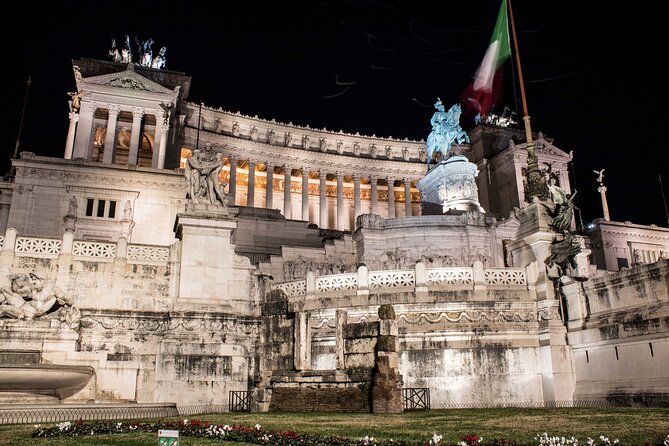
Next up is Mercati di Traiano and the Museo dei Fori Imperiali area. Even though you’re not going inside on this tour, this is still an important stop because it helps you understand scale. Trajan’s influence shows up as “big” in a way that’s easy to miss when you only skim ruins during the day.
This area connects to the grandest forum setting built by Trajan. The guide’s job here is to connect architectural bulk to political messaging. Forums weren’t just meeting spaces. They were visual proof that an emperor could shape Rome physically and socially.
What I found valuable is that the explanation makes the buildings feel like infrastructure, not monuments. Once you understand a forum complex as an engine for daily activity and imperial messaging, you stop treating it like scenery.
If you’re the kind of traveler who likes context over pure sightseeing, this is one of the stops that delivers most per minute.
Colonna Traiana: war storytelling in reliefs
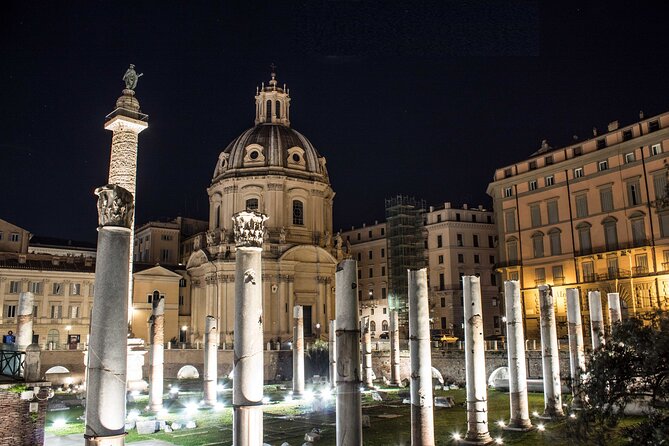
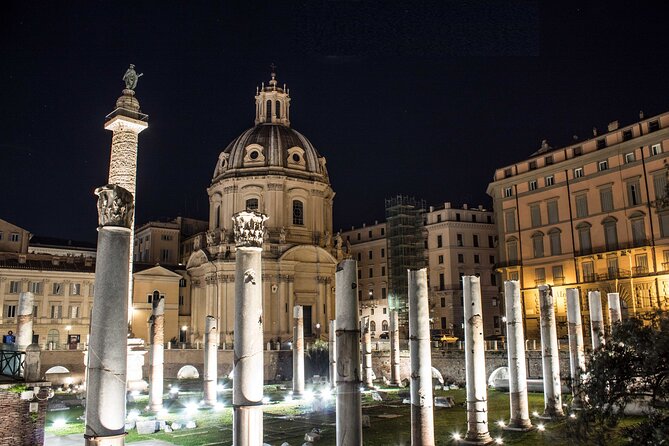
The Colonna Traiana is a masterpiece of Roman art, and the way it’s described on the tour is exactly how you should approach it. It shows Trajan’s campaign of war in Romania, and the reliefs are spectacular—almost like a comic book in stone.
That comparison is useful. It encourages you to look for sequence and narrative instead of just admiring technique. You’re not only learning that a campaign happened; you’re seeing how the Romans wanted it remembered. The medium is art, but the message is propaganda and legacy.
At night, the column can feel even more imposing because you notice it from a different visual angle and your attention naturally tightens. Even in a short stop, you get enough guidance to know what to look for.
Practical tip: if you want a better feel for the story, don’t stare straight at the base only. Look slightly along the reliefs and let the guide’s points shape where your eyes go next.
You can also read our reviews of more guided tours in Rome
Roman Forum views without entry tickets: center of life, law, and religion
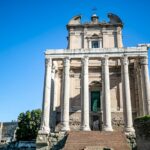
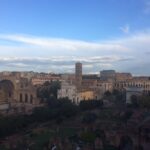
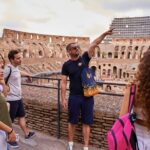
The Roman Forum stop is where the tour earns its reputation for clarity. You’ll see and learn about the center of Rome and the Roman Empire, including where important judicial courts were located, plus areas tied to trade and temples.
This is the part where many people need help. The Forum can look like a pile of stones if you don’t know how to interpret it. Here, the guide gives you the mental map: this area connected to justice, this one to commercial activity, this one to temples and public belief. When you’re armed with that, the Forum becomes understandable even from outside.
Because you don’t enter monuments on this tour, you’re not spending time on ticketed building interiors. You’re focused on the street-level reality of how these spaces connect. That can be a huge value for travelers who want context without the indoor queue time.
One caution: you’ll get the most out of this stop if you’re paying attention to the guide’s framing. If you treat it like a quick photo break, you’ll likely miss the “why” that makes this tour different.
Colosseum exterior at night: gladiators and shows in the right context
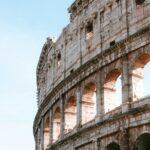
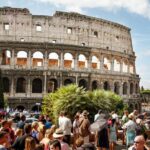
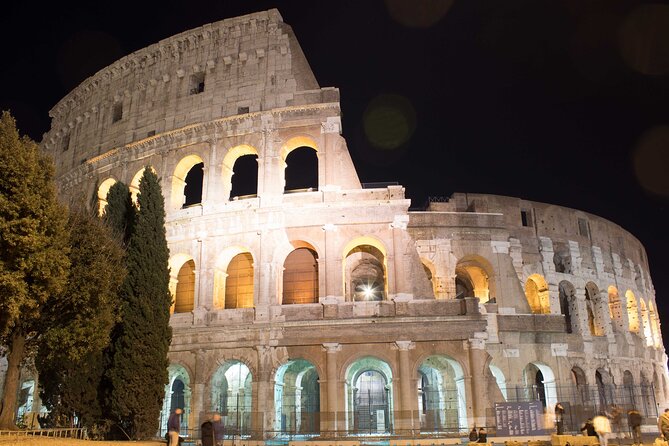
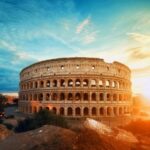
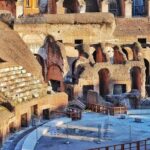
You’ll see the Colosseum from outside and learn about gladiators and shows. This is a smart move for a night tour. At night, the Colosseum has presence even without entry, and you don’t need to spend extra time buying or using interior tickets to get the emotional payoff.
The guide uses the exterior viewpoint to explain what gladiators and public games meant in Roman culture. That matters because the Colosseum isn’t just an ancient stadium. It’s a symbol of organized spectacle and a tool for public attention. When you understand that, the building stops being a single famous ruin and becomes a representation of a system.
If you’re hoping for the inside experience, know what you’re signing up for: this is an exterior walk. Still, it’s a great fit if your priority is guided understanding over inside access.
Tip: wear comfortable shoes. You’re doing a night walk, and the Colosseum area can involve uneven ground and busy sidewalks around transit.
Arch of Constantine: why it influenced triumphal arches worldwide
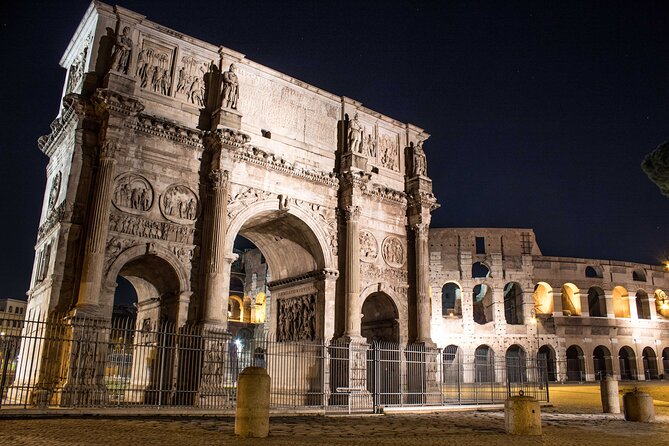
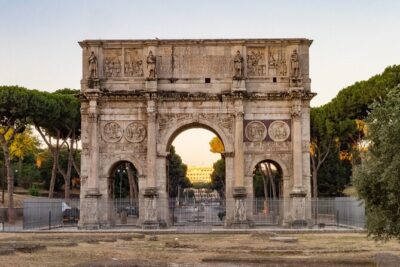
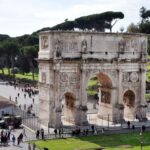
The tour ends with a look at the Arch of Constantine. This is described as the best preserved ancient arch in Rome, and it’s also presented as a model for other triumphal arches beyond Italy, including examples like the Arch of Triumph in Paris and Marble Arch in London.
That angle is more interesting than it sounds. It teaches you to see the arch as not just a Roman monument, but a design that echo-traveled across centuries. When the guide mentions its preservation, you can also understand why later architects studied it: it still communicates form and symbolism.
At night, this stop is also practical. The area around the Colosseum is busy, but the arch gives you a clear focal point and a good chance to end with understanding instead of rushing to your next activity.
Price and what you’re paying for at about $272.83
At $272.83 per person for a roughly 2 hours 30 minutes private night walk, this isn’t a budget option. The value is in the guide-led structure and the fact you’re paying for interpretation, not tickets. Since the tour is all outside and includes an official guide with a mobile ticket, you’re not paying for multiple admission entrances.
Private format matters too. The experience is set up for only your group, so you’re more likely to get tailored explanations and quick answers during the walk. If you’re traveling with friends or family and want a more intimate evening than a large group tour, the price can feel more reasonable.
Who should consider it most:
- People who want a guided story connecting major sites in a single night
- Travelers who feel lost among ruins unless someone explains what they’re looking at
- Couples or small groups who prefer a private pace and a higher chance to ask questions
Who might look elsewhere:
- Travelers who specifically want Colosseum interior access
- People whose schedule can’t handle weather-based changes on a night plan
What the pacing feels like on an evening schedule
The stop lengths are short to medium, which is exactly right for night walking. You’ll pause at Teatro di Marcello for about 15 minutes, then spend around 30 minutes at Piazza del Campidoglio, around 15 minutes near Trajan’s complex area, then brief but meaningful stops at Colonna Traiana, Roman Forum, and the Colosseum exterior. The Arch of Constantine wrap-up is about 20 minutes.
That timing structure is helpful because it keeps attention from wandering. It also helps you fit the tour into an evening without sacrificing too much time for dinner.
Two practical notes:
- Bring a layer. Night air in Rome can feel cool compared to midday.
- Give your feet priority. Many streets and plaza edges are uneven, and at night it’s easier to misstep if you’re rushing.
Who this tour suits best
This works well if you’re the type of traveler who likes to understand what you see, not just collect landmarks. The stop selection is also strong for first-timers because it mixes entertainment (Teatro di Marcello), art and power (Campidoglio and the Marcus Aurelius statue), imperial building projects (Trajan), and narrative history (Colonna Traiana). Then it finishes with the big symbols everyone recognizes: Roman Forum, the Colosseum, and the Arch of Constantine.
It’s also a good choice if you already visited key sites earlier and want the night version with better context. Seeing the same places after dark can shift your perception fast, especially when you’re armed with explanations.
If you’re traveling with kids or a mixed-age group, note the tour is outside only and you’ll be walking between stops. Most travelers can participate, but your group should be comfortable with an evening pace and cobbled surroundings.
Should you book this Colosseum and Ancient Rome by Night tour?
I’d book it if you want a guided evening that teaches you how Roman power and culture were built into the city’s spaces. The biggest reason is the way the guide uses each stop to answer the question What am I looking at, and what was it for? The exterior-only format is not a downgrade here; it’s part of the design because it keeps the focus on views, connections, and story.
Skip it if your top goal is entering monuments or if you can’t be flexible about weather. Also, if you’re the rare traveler who enjoys ruins without explanations, you might feel like something is missing. But if you like your history with clear signposts, this tour is built for you.
FAQ
How long is the Colosseum & Ancient Rome by Night guided walking tour?
It runs for about 2 hours 30 minutes.
What’s included in the tour price?
You get an official tour guide. Admission tickets aren’t included because the tour is all from outside.
Do I need tickets to visit monuments during the tour?
No. The tour does not include entering any monument, and admission tickets are not included.
Where does the tour start and end?
It starts at Chiesa di Santa Maria in Portico in Campitelli, Piazza di Campitelli, 9, 00186 Roma RM, Italy, and ends at Piazza del Colosseo, 00184 Roma RM, Italy near the Colosseum.
Is this tour private?
Yes. It’s a private tour/activity, and only your group participates.
What happens if the weather is poor?
The experience requires good weather. If it’s canceled due to poor weather, you’ll be offered a different date or a full refund.