REVIEW · KATHMANDU
UNESCO Seven World Heritage Tour in Kathmandu
Book on Viator →Operated by Himalayan Advisor Pvt. Ltd. · Bookable on Viator
First, Kathmandu throws you a lot at once. This full-day tour strings together seven UNESCO World Heritage sites into one efficient route, with a private guide and car to keep the day moving. You’ll hop between major stupa and temple complexes, plus the royal squares that define the valley’s look and feel.
What I like most is the format. You get private transportation for smart time-savings, and you also get an English-speaking guide who explains what you’re seeing—often with the kind of calm, patient pace that keeps the day from feeling like a race.
The one drawback to plan for: it’s a long day with a lot of walking and steps. If you’re even slightly foot-sensitive, you’ll want good shoes and an honest pace from the start.
In This Review
- Key highlights (why this tour works)
- Kathmandu’s UNESCO Route, Planned for a Fast First Impression
- Private Car, English Guide, and the Pace You Actually Need
- Swayambhunath Monkey Temple and Amideva Buddha Park
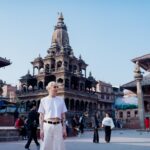
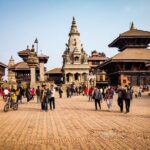
- Durbar Square, Kumari Chowk, and the Royal Courtyard Feel
- Golden Temple (Hiranya Varna Mahavihar) and Patan Museum’s Context
- Bhaktapur City: Nyatapola, Siddha Pokhari, and the Temple-Town Momentum
- Changu Narayan’s Licchavi-Era Roots: The One Stop That Wants Time
- Pashupatinath and Boudhanath: From River-Side Hindu Complex to Giant Stupa Stillness
- Pashupatinath Temple Complex
- Boudhanath Stupa
- Price and Value: What $180 Buys in a 12-Hour Heritage Day
- What to Wear, What to Bring, and How to Keep the Day Comfortable
- Who This Tour Fits Best (and Who Might Prefer Something Else)
- Should You Book This UNESCO Seven-Sites Tour in Kathmandu?
- FAQ
- What sites are included in this UNESCO Kathmandu Valley tour?
- How long is the tour?
- Is hotel pickup and drop-off included?
- What about admission tickets and entry fees?
- What is the tour price?
- Is lunch included?
- Do I need to bring money for tips?
- Is this tour private or shared?
- What should I wear?
- Can I cancel for a full refund?
- How far in advance do people usually book this tour?
Key highlights (why this tour works)
- Seven UNESCO sites in one day—great when you have limited time in Kathmandu Valley.
- Private car + hotel pickup and drop-off—less hassle between far-flung sights.
- English-speaking guides like Shanti, Pankaj, Kabita, Sarita, and Som—frequently praised for clear explanations and flexibility.
- Admission fees for the heritage sites included—you’re not stuck juggling tickets in the middle of sightseeing.
- A smart mix of major icons and quieter corners (Bhaktapur’s temple zone, courtyards, and stupa areas).
- Changu Narayan gets the time it deserves (listed at about 1 hour), instead of a quick walk-by.
Kathmandu’s UNESCO Route, Planned for a Fast First Impression
This is the kind of day tour you book when you want your first Kathmandu visit to make sense. Instead of picking just one or two sites, you cover the valley’s big-ticket UNESCO names in a single outing—Swayambhunath, Durbar Square areas, Bhaktapur, Changu Narayan, Pashupatinath, and Boudhanath—plus several important buildings that sit inside the UNESCO zones.
The practical win is the routing. Kathmandu traffic can be chaotic, and distances between monuments aren’t trivial. A private vehicle changes the experience from wandering-with-questions into a guided day with momentum. You also get hotel pickup and drop-off, so you start and end the day without extra coordination headaches.
One more thing: you’re not just looking at “pretty temples.” The best part is having someone connect the dots between Hindu and Buddhist spaces. In the feedback, guides such as Shanti, Pankaj, Kabita, Sarita, and Som are repeatedly described as patient, friendly, and strong on explaining religion and history in plain terms. That matters because these sites can feel confusing if you only read a sign.
You can also read our reviews of more historical tours in Kathmandu
Private Car, English Guide, and the Pace You Actually Need
This tour is private. That means you’re not negotiating for time at crowded steps or getting shoved along with strangers. Your guide can manage the flow, and the driver can handle the practical parts of moving through streets and tight areas.
In real-world terms, here’s what that buys you:
- Less stress between stops, so you spend more energy looking instead of figuring out transport.
- An English-speaking guide who can answer the questions that pop up once you’re there (symbol meaning, why shrines look the way they do, what to notice).
- Time adjustments on the fly. Several accounts highlight that the day doesn’t feel rigid; the guide can shift the schedule to match your interests and keep things comfortable.
That said, you still should expect a steady schedule. This isn’t a slow “sit and savor” day. You’re cramming a lot into about 12 hours, and some stops include longer stair climbing and courtyard walking.
Swayambhunath Monkey Temple and Amideva Buddha Park
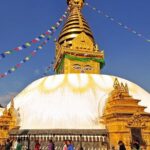
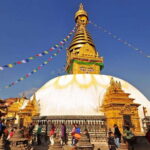
You’ll start with Swayambhunath Stupa, the famous Monkey Temple perched on a hill. Expect the classic approach: a gradual climb, then prayer wheels and smaller shrines around the stupa complex. People come for the atmosphere and the views, and the tour’s description makes it clear you’ll go up via steps—listed as 365 stairs to reach the top.
What I’d plan for here:
- The stairs are real. Bring shoes with grip and save your energy.
- The viewpoint is the payoff. Once you’re up, you can see the spread of Kathmandu in a way that helps you understand where everything is later.
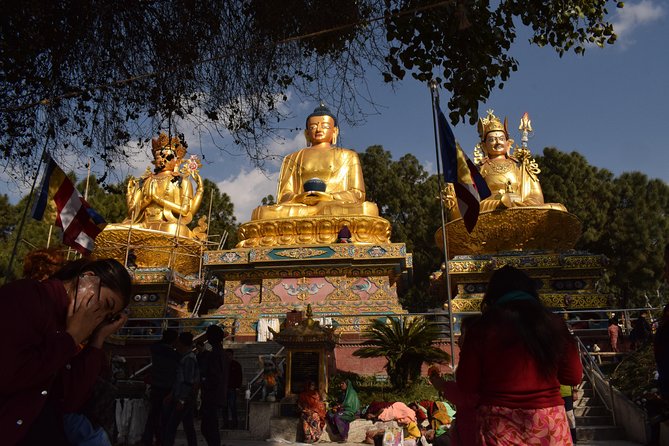
Immediately after Swayambhunath, you’ll stop at Amideva Buddha Park. It’s a short add-on (listed around 10 minutes) that changes the mood. Instead of bustling courtyards and monkeys, you focus on the big Buddha statues on the hillside. It’s the kind of “breather” stop that keeps the morning from becoming one nonstop climb.
Durbar Square, Kumari Chowk, and the Royal Courtyard Feel
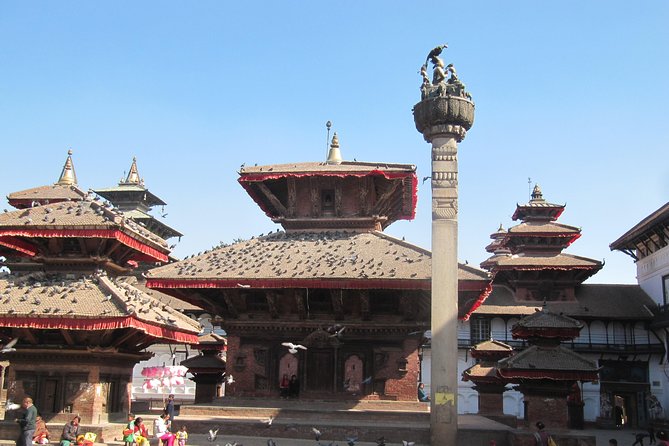
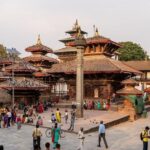
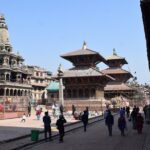
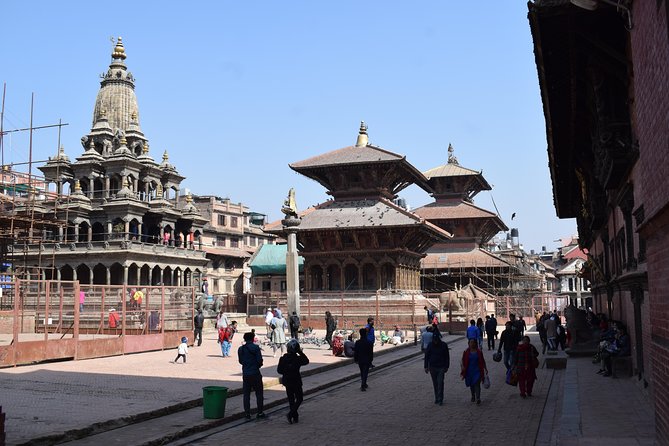
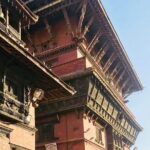
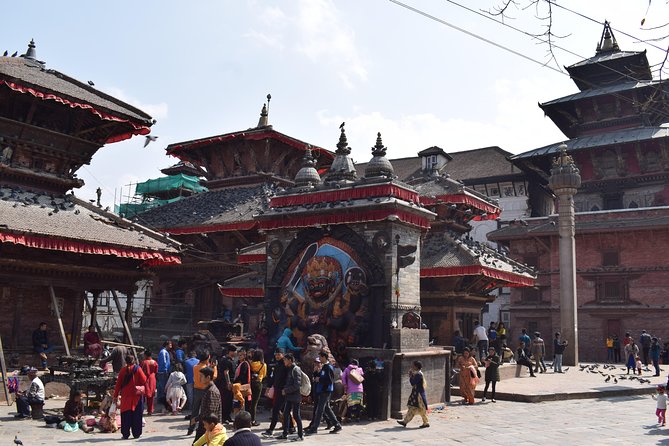
Next comes the heart of the valley’s old city power: the Durbar Square zone. You’ll get time around Kumari Chowk, the courtyard connected to the living goddess tradition. The description is very specific about the site being a red-brick, three-level building and its role in hosting the Kumari until puberty. Even if you don’t catch a ceremony, the place itself gives you that “royal courtyard” atmosphere—tight spaces, carved structures, and a sense that this is more than just sightseeing.
From there, you’ll move through Durbar (Central) Square with stops that highlight the stone artistry—like the Krishna Temple area made through stones and described as having many shrines within the templar complex. One thing to note: the text you’re given points out reconstruction is ongoing in places, which is a reminder that heritage sites aren’t “frozen in time.” They’re living places where preservation and change happen at the same time.
Practical tip: Kathmandu’s Durbar areas can involve uneven surfaces and packed foot traffic. A private guide helps because you can ask where to pause for photos, where to look for details, and how to move through without doubling back.
Golden Temple (Hiranya Varna Mahavihar) and Patan Museum’s Context
At Golden Temple (Hiranya Varna Mahavihar), you’re stepping into a 12th-century style pagoda setting. The tour description calls it a golden temple and notes bronze statues and silver and gold-type detailing. This is a good contrast after Durbar Square: the feel shifts from royal courtyards into a more distinctly religious focus.
Then you head to Patan Museum at Keshav Narayan Chowk. This is only about 15 minutes on the schedule, so it’s not a full museum day. But it can help you switch gears. The description highlights that you’ll see facts about Nepali tradition and history, plus material related to historic Japanese civilization. If museums are your thing, this quick stop can add meaning to the carvings and temple forms you’re about to see more of in Bhaktapur.
If you’d rather spend that time walking outside rather than inside museum rooms, it can feel like a “bonus you don’t fully use.” On the other hand, for first-timers, even a short museum moment helps you notice things you’d otherwise miss.
Bhaktapur City: Nyatapola, Siddha Pokhari, and the Temple-Town Momentum
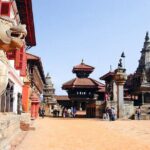
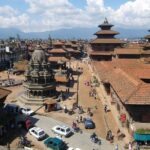
Bhaktapur is where the day starts to feel like a different world inside Kathmandu Valley. The tour labels it Bhaktapur City, calling it the City of Devotees and emphasizing that many old-style houses and buildings remain intact.
You’ll see major Bhaktapur sights clustered in an easy-to-follow route:
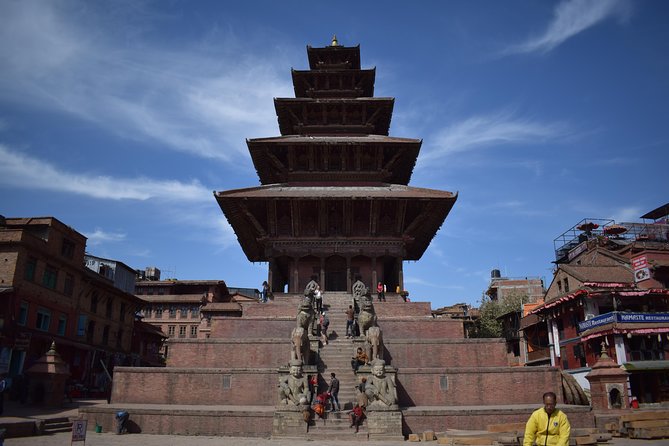
- Nyatapola Temple, a pagoda-style five-level temple described as one of the tallest pagodas and a high-art example of temple construction.
- Dattatreya Temple at Dattatreya Square, where the description says it was built using a single stem of a tree—an unusual detail that makes this more than a name on a map.
- 55 Window Palace, identified by its carved windows and the “palace of fifty-five windows” look.
- Siddha Pokhari, a human-made pond described as 171 meters long and 3 meters deep, near the first town gate—also noted as a favorite hangout spot.
Here’s why this portion of the tour is valuable: Bhaktapur is the place where the valley’s “city-as-a-temple” layout becomes obvious. You stop seeing monuments as isolated. You start seeing how art, water, courts, and temples work together in everyday space.
Downside to plan for: Bhaktapur is one of those places where you keep noticing stairs, slopes, and tight lanes. Even when the stops are short on paper, the total walking adds up fast.
Lunch note: Lunch in Bhaktapur is not included. The tour is designed so you can choose where to eat, and you’ll be in the area where you have multiple options rather than being stuck with a set menu. That flexibility is a real benefit on a long day.
Changu Narayan’s Licchavi-Era Roots: The One Stop That Wants Time
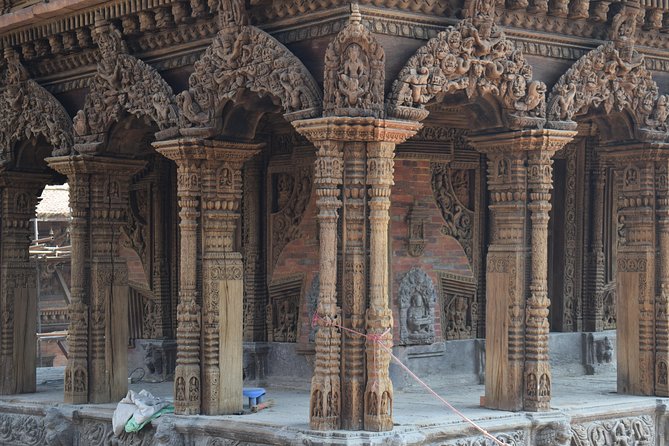
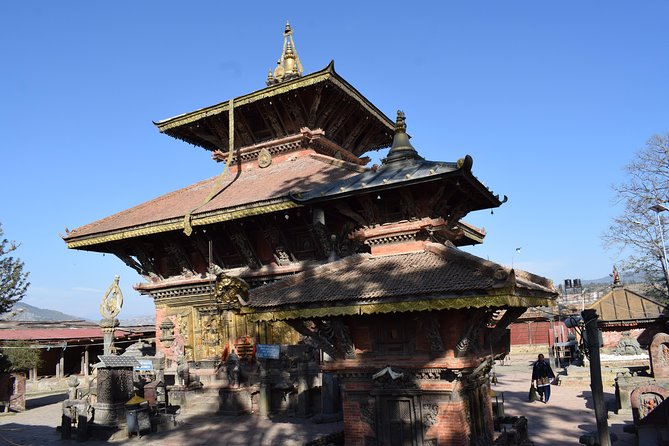
If there’s a moment where the tour slows down slightly, it’s Changu Narayan Temple. The description says it dates back to the Licchavi period, making it one of the oldest temples in the Kathmandu Valley. It’s built with lovely stone and wooden carvings, and the schedule gives it about 1 hour—a rare chunk of time compared with other stops.
This is the stop where you’ll likely want to focus on details:
- Carvings and stonework aren’t just decoration here; they tell you the temple’s age and craftsmanship.
- If you’ve been sprinting through courtyards, this is where you can settle into a calmer rhythm.
One practical consideration: you’ll still be walking. “Oldest temple” doesn’t mean “easy access.” But the longer time slot means you’re not forced to rush past the best parts.
Pashupatinath and Boudhanath: From River-Side Hindu Complex to Giant Stupa Stillness
The tour ends (and/or frames the later afternoon) with two iconic sites: Pashupatinath Temple and Boudhanath Stupa.
Pashupatinath Temple Complex
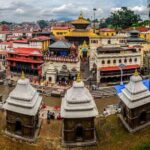
The description explains Pashupatinath as one of Nepal’s largest temple complexes, with more than 500 temples and shrines in the area. It also notes the complex covers about 0.64 hectares and is made up of many buildings within the riverside setting.
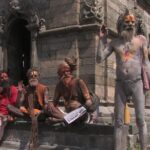
What makes this stop feel different is scale. You’re not seeing one temple; you’re entering a dense religious complex. A guide makes a big difference here because it can otherwise feel like you’re surrounded by “a lot of stuff” without a way to prioritize what to notice.
The tour lists about 1 hour here. That’s enough time to orient yourself and see key structures, but not enough for total absorption if you want to linger on every small shrine.
Boudhanath Stupa
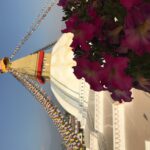
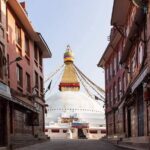
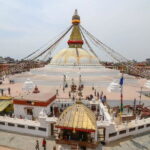
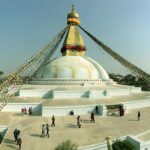
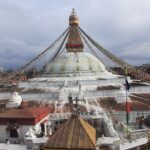
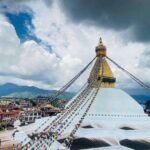
Then comes Boudhanath Stupa, described as a major Buddhist pilgrimage site and a huge mandala-style complex. The text says the stupa is 36 meters tall and there are over 50 gompas built around it.
This is the emotional contrast after Pashupatinath. Boudhanath is more about visual geometry and the feel of collective devotion. It’s also a place where the guide can help you understand what you’re seeing beyond the obvious.
You’ll get about 1 hour in this area, and the time is usually just right for a circuit around the stupa and a chance to sit and watch for a few minutes.
Price and Value: What $180 Buys in a 12-Hour Heritage Day
At $180 per person, you’re paying for a tightly packed day that includes:
- Private vehicle
- English-speaking guide
- Hotel pickup and drop-off
- Entry fees for the seven heritage sites
The value here is mostly about what you avoid. When entry fees are included and transportation is handled, your day stays “clean.” You don’t get stuck solving logistics at the exact moment you want to be looking at carvings or listening to explanations.
Also, the tour is typically booked about 37 days in advance on average, which suggests people plan this as a reliable first-day or first-week highlight rather than a last-minute gamble.
One caution on value: because this is a long day, it’s easiest to justify if you’re sure you want to see a lot in one shot. If you’d rather slow down and re-visit neighborhoods, you might not feel the same “bang for the time” at every stop.
What to Wear, What to Bring, and How to Keep the Day Comfortable
The tour description mentions a smart casual dress code. In practice, the bigger question is comfort.
I’d treat this as a “good shoes + sun protection” day:
- You’ll climb many stairs, including at Swayambhunath.
- You’ll walk through courtyards and temple zones that can be uneven.
- It’s a full-day schedule, and energy dips are real after a few hours.
In the feedback, people consistently call out that it’s long and that comfortable walking shoes matter. Bring water if you can and pace yourself right from the first hill climb.
Who This Tour Fits Best (and Who Might Prefer Something Else)
This one-day UNESCO tour is a strong fit if:
- You have limited time in Kathmandu Valley and want the big names covered.
- You want a guide to explain why Hindu and Buddhist art and spaces overlap here.
- You prefer private logistics rather than public transport and self-planning between distant sites.
- You like a schedule that’s flexible enough to adjust without going off the rails.
It may be less ideal if:
- You want a slow, leisurely day with minimal walking.
- You’re highly sensitive to steps or uneven ground.
- You’re the type who wants to pick 2–3 places and go deep at each one rather than sampling everything.
Should You Book This UNESCO Seven-Sites Tour in Kathmandu?
If you’re aiming for a first visit that gives you orientation fast, I think this tour is a smart booking. The combination of private car, English guide, and included heritage entry fees turns what could be a stressful logistics day into a guided cultural route.
Book it if your priority is: see the seven UNESCO sites, understand the story behind them, and come out with the confidence to explore on your own later. Skip it if your legs need a break or you’d rather do a smaller, slower circuit.
If you do book, wear your best walking shoes, start the day with energy, and tell your guide what you want most—temples, carvings, views, or religious context. That’s the kind of tour where the right pacing makes all the difference.
FAQ
What sites are included in this UNESCO Kathmandu Valley tour?
The tour is designed to cover the region’s seven UNESCO World Heritage sites in one day, including major stops like Swayambhunath, Kathmandu Durbar Square areas, Bhaktapur, Changu Narayan, Pashupatinath, and Boudhanath.
How long is the tour?
It’s listed as about 12 hours (approx.).
Is hotel pickup and drop-off included?
Yes. Hotel pick up and drop off are included.
What about admission tickets and entry fees?
All required entry fees in the seven heritage sites are included.
What is the tour price?
The price is $180.00 per person.
Is lunch included?
No. Lunch in Bhaktapur is not included, and you can choose from eateries there.
Do I need to bring money for tips?
Tips and gratuities are not included.
Is this tour private or shared?
This is a private tour/activity. Only your group participates.
What should I wear?
The dress code is listed as smart casual.
Can I cancel for a full refund?
Yes, you can cancel up to 24 hours in advance for a full refund.
How far in advance do people usually book this tour?
On average, it’s booked about 37 days in advance.