REVIEW · ROME
Private Tour of Colosseum & Ancient Rome Wonders
Book on Viator →Operated by Vatican Private Tour Guide · Bookable on Viator
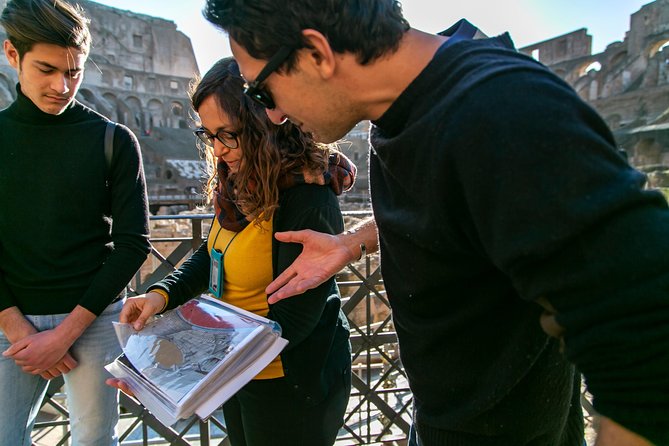
Three hours, three Roman legends, one smart plan. This private tour strings together the Colosseum, Roman Forum, and Palatine Hill with a professional art historian guide, plus reserved entry that helps you spend your time looking instead of waiting. I really like how the guide brings the sites to life with visual aids and graphic reconstructions, so the stones turn into stories you can actually follow.
My other favorite part is the personal attention. This is a private experience (just your group), so if you want to linger on an arch, a temple ruin, or a detail in the arena, the pacing can stay human. The one drawback to consider is that 3 hours goes fast across a lot of ground, so you need to be ready for steady walking at a world-famous, often crowded site.
In This Review
- Key points that make this tour worth your time
- Private Colosseum, Forum, and Palatine Hill: what you’re really buying
- Colosseum entry and the arena hour that actually makes sense
- Roman Forum hour: politics, religion, and the ruins you can place
- Palatine Hill: temples, power, and the Michelangelo square
- Why the art historian guide changes the experience
- How the private format works (and who it’s best for)
- Price and value: $359.68 per person, and what you get for it
- Practical tips so you have an easier day at the ruins
- Should you book this Private Tour of the Colosseum & Ancient Rome Wonders?
- FAQ
- What’s the duration of the tour?
- Where does the tour start and end?
- Is the tour private?
- What’s included in the ticket price?
- Do I need to bring ID?
- Is the tour refundable if I need to cancel?
Key points that make this tour worth your time
- Private, English-speaking art historian guide means you get explanations that connect the Colosseum, Forum, and Palatine Hill instead of treating them like three separate stops.
- Reserved Colosseum entry is built in, including admission plus a reservation fee, so timing is handled for you.
- Visual aids and graphic reconstructions help you make sense of what you’re seeing, even when ruins look like… well, ruins.
- Roman Forum focus covers the Senate House area and major landmarks like the Temple of Vesta and the Altar of Julius Caesar.
- Palatine Hill highlights include the area associated with the most important Roman gods and the square designed by Michelangelo, plus the Marcus Aurelius statue.
- Meeting right at Piazza del Colosseo keeps the start simple and avoids a long scramble across town.
Private Colosseum, Forum, and Palatine Hill: what you’re really buying
Rome’s top ancient sites are famous for a reason. The problem is that they’re also famous for crowds and chaos. This kind of private, timed tour is basically a time-management tool. You’re paying for an art historian guide to point you to what matters, explain it in clear language, and keep the experience moving without the usual “stand here, shuffle now” feeling.
And because it’s private, you’re not stuck listening to a loud group’s questions or competing for the guide’s attention. The guide can shape the hour around your interests—whether that’s gladiators and the arena system at the Colosseum, big-picture Roman politics in the Forum, or the symbolism of Palatine Hill.
The itinerary is built to give you a “whole ecosystem” view:
- the arena (Colosseum),
- the civic and religious center (Roman Forum),
- and the elite residential hill (Palatine Hill).
That combo is what makes the time feel more complete than a single-site visit.
You can also read our reviews of more private tours in Rome
Colosseum entry and the arena hour that actually makes sense
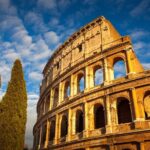
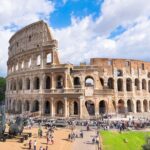
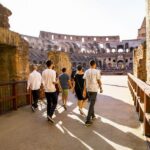
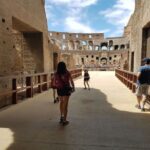
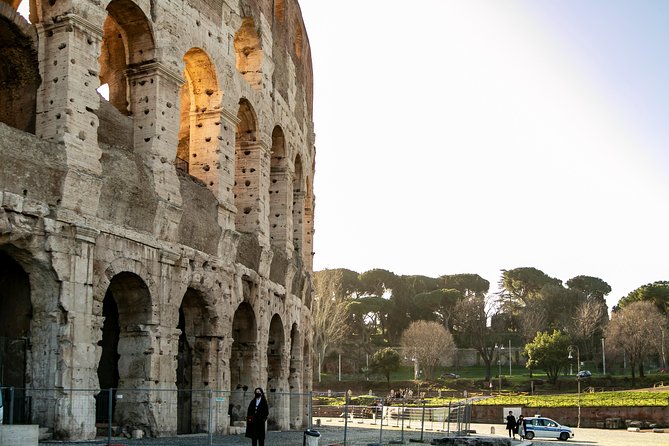
The tour starts at Piazza del Colosseo, 23, right by the Colosseum. You’ll enter the arena area with an admission ticket included, plus a Colosseum reservation fee. In plain terms, this is about managing entry and helping you avoid losing your best energy standing in line.
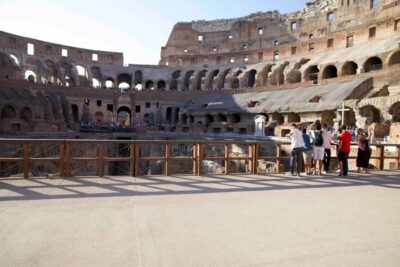
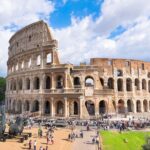
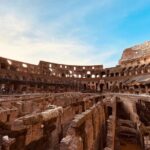
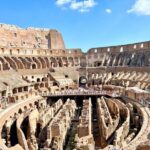
At the Colosseum stop, you get about an hour. The key details matter here: the arena was a masterpiece of Roman engineering, with 80 entrances and seating for more than 50,000 spectators. That’s huge on paper, but it clicks faster when someone points out the scale, how entrances worked, and how the space was designed to handle crowds.
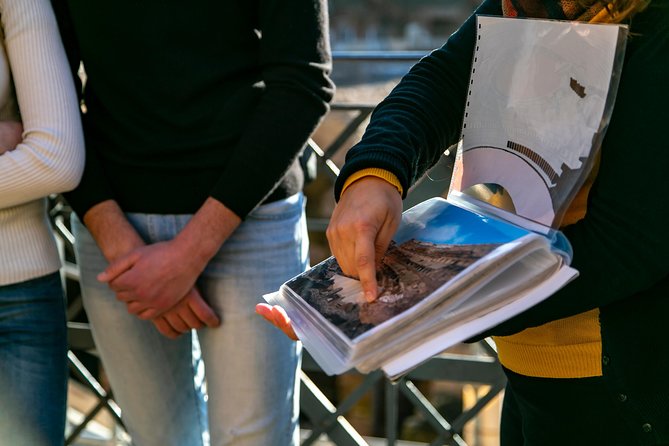
This is also where the visual aids really earn their keep. When you’re standing in a partially standing structure, reconstructions can clarify questions you didn’t even think to ask, like how different sections would have looked and functioned during major events.
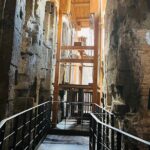
If you like specific “how did it work” facts, you’ll probably enjoy the way art historian guides often connect architecture and political messaging. One guide named Giovanni is noted for sharing niche details about the underground system—the kind of fact you’d never guess just by reading a sign.
Roman Forum hour: politics, religion, and the ruins you can place
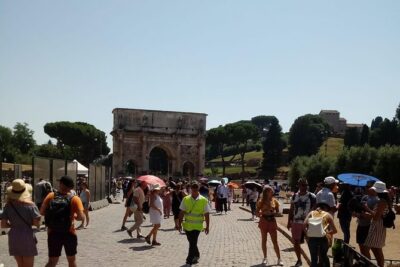
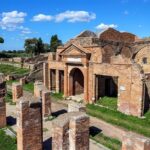
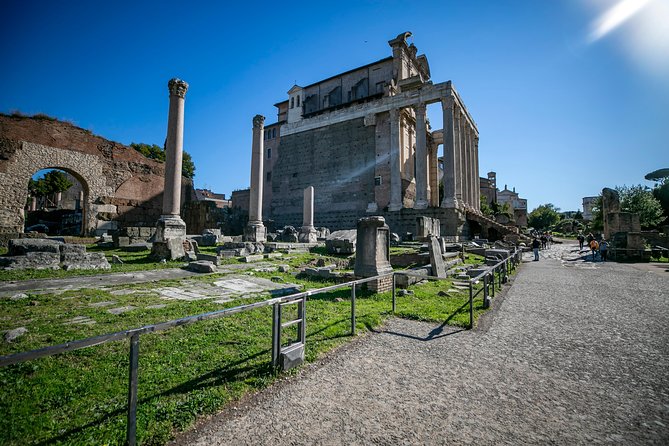
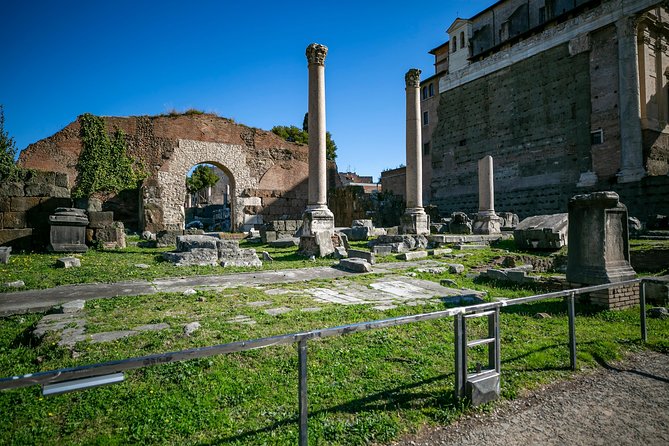
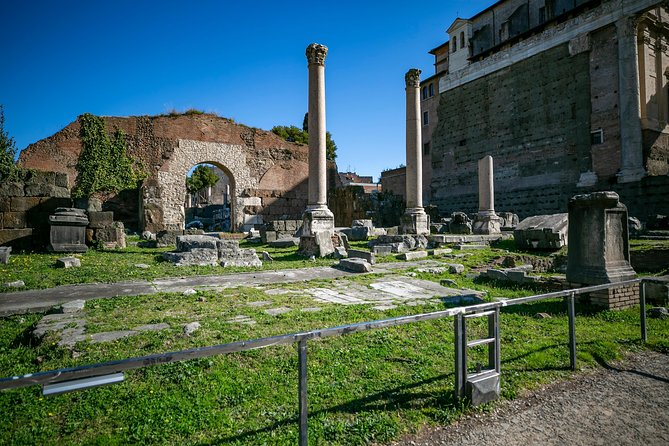
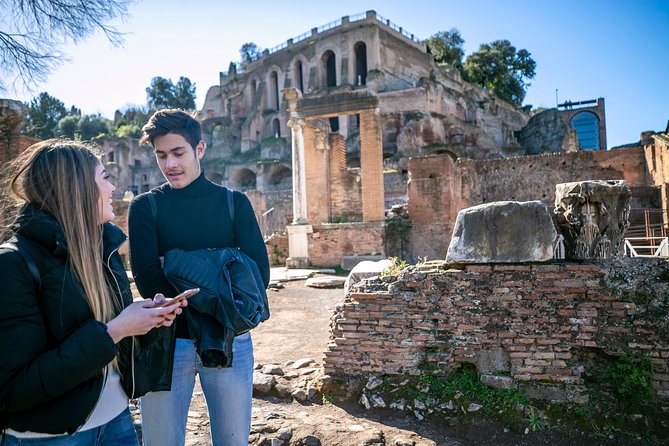
After the Colosseum, you move to the Roman Forum. This is the epicenter of daily life in Ancient Rome, and the ruins spread out in a way that can feel confusing if you show up alone. Here you get about an hour, with a guide who can keep you oriented.
You’ll cover landmark clusters including:
- the ruins of the Senate House,
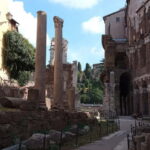
- the Temple of Vesta,
- the Temple of Saturn,
- the Altar of the Divine Julius Caesar,
- the Temple of Gemini,
- the Basilica Emilia,
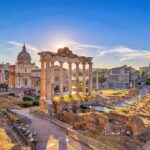
- the Arch of Septimius Severus,
and more around the Forum’s core.
The best value of a guided Forum visit is simple: you learn what you’re looking at, and you start placing it in a mental map. The Forum isn’t just “ancient buildings.” It’s power made visible. Temples, civic buildings, and monuments were part of how Rome announced who mattered and what rules people were supposed to follow.
Some guides have been praised for tailoring the pace to what you care about. Lia Caso is specifically described as quick to discern interests and highlight the parts worth your attention. If you’re the type who hates being rushed, that style is a plus.
Also, even when the Forum feels crowded, having headsets and staying with your guide can make it easier to keep the story straight. One guide, Nina, was praised for clear English and a pace that felt consistent rather than chaotic.
Palatine Hill: temples, power, and the Michelangelo square
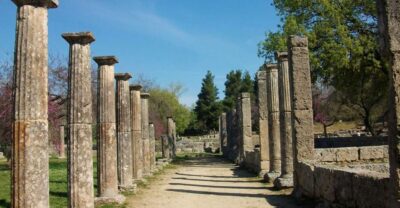
The final stop is Palatine Hill, where you’ll spend about an hour. This hill was tied to the most important Roman gods and to the elite side of Rome’s social structure.
Two Palatine highlights are especially useful for first-time visitors:
1) You get the “where the religion and politics overlap” feeling. Even if you don’t catch every detail, you’ll understand why the hill mattered.
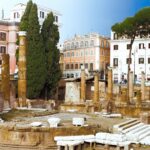
2) You’ll see the square designed by Michelangelo and the Statue of Marcus Aurelius.
Those elements matter because they connect the ancient site to later Rome. Palatine Hill isn’t stuck in time. You’re looking at a layered city where Renaissance design and Roman-era symbolism sit inside the same overall setting.
If you’re picturing Palatine as a “nice walk with views,” you might miss the political meaning. A strong guide helps you see how the spaces relate to status, myth, and authority. Guides like Lucina are praised for using materials that bring the ruins to life, turning the area from scattered foundations into something that reads like a place with intent.
Why the art historian guide changes the experience
A regular sightseeing tour can tell you what something is. An art historian guide can help you understand why it was built and what it signaled.
That shows up in a few practical ways:
- The guide uses graphic reconstructions and visual aids, so you’re not stuck guessing how the Colosseum or Forum looked when whole.
- You get explanations that connect buildings across stops, so you’re not treating the Colosseum, Forum, and Palatine Hill like three unrelated checkboxes.
- The pacing can stay comfortable in a place that usually chews people up with crowds.
In reviews, you’ll see guide names repeatedly associated with this kind of clarity and energy: Faby at the Colosseum, Raffa (born and raised in Rome), Alba for a passionate and well-worth-it hour, Giada for friendly knowledge, and Lucina for turning ruins into something you can feel.
You also get headsets during the tour, which is a small detail that makes a big difference when you’re walking with dozens of eyes and ears competing in open-air spaces.
How the private format works (and who it’s best for)
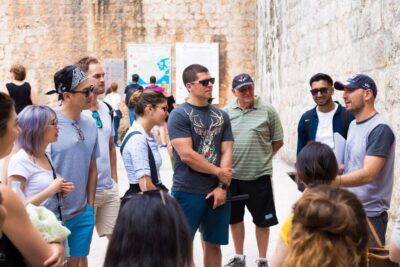
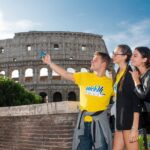
This is a private tour/activity, meaning only your group participates. In a city where many tours feel like guided stampeding, that alone is a quality-of-life upgrade.
Private tours work best if:
- you want clear explanations without rushing,
- you’re traveling as a small group and want flexibility,
- you appreciate details and context, not just highlights,
- you’re the type who gets more out of a site when you can ask questions.
It’s also a great fit if you’re visiting Rome for the first time and want one high-impact plan that covers the three “big” ancient anchors in a short window.
One more practical point: this tour is in English, and it lasts about 3 hours. That duration is compact enough to keep you from exhausting your entire day, but long enough that the walking adds up. Plan on wearing shoes that won’t punish you by hour two.
Price and value: $359.68 per person, and what you get for it
At $359.68 per person for about 3 hours, this is not a budget add-on. The value is in what’s included and what it saves you.
What’s covered:
- local guide,
- a professional art historian guide,
- Colosseum admission ticket and Colosseum reservation fee (listed as valued at €18 + €2 per person),
- and a mobile ticket so entry handling is simpler.
So you’re paying for the guided interpretation plus the entry pieces that reduce friction at the Colosseum. If you were to try to do all three sites on your own, you’d spend real time figuring out routes, managing entry timing, and working out what each ruin actually was. Here, that effort is replaced with a guided narrative and a paced visit across three connected locations.
Also consider the booking timing. This is commonly booked about 55 days in advance, which is a clue that entry windows matter. If you’re traveling in peak season or on popular dates, planning ahead can make your whole trip smoother.
Practical tips so you have an easier day at the ruins
A few basics that matter here, based on the tour requirements and what you’ll experience on the ground:
- Bring a valid ID that matches the name used at booking. You’ll need it for successful entry.
- Wear comfortable shoes. This is a walking-heavy ancient site day.
- Come ready for outdoor time in open-air ruins. Even with headsets and a guiding plan, your body does the walking part.
- You’re not getting food or drinks included, and there’s no private transportation. If you want a long lunch afterward, plan it after the tour ends back at Piazza del Colosseo.
And because the experience is private and timed, try not to schedule another tight appointment immediately after. Give yourself a little cushion to reset.
Should you book this Private Tour of the Colosseum & Ancient Rome Wonders?
Book it if you want:
- one focused plan that hits Colosseum + Roman Forum + Palatine Hill in about 3 hours,
- an art historian guide using visual aids so ruins become understandable,
- reserved entry and a smoother start at the Colosseum,
- a private format where your group isn’t swallowed by the biggest-tour crowd.
Skip it (or consider another style) if you:
- prefer a slow, self-guided wandering pace,
- hate walking with tight timing,
- or you’re traveling with very limited mobility needs (this tour doesn’t spell out accessibility details beyond noting that most travelers can participate, so it’s better to check directly if that’s a concern).
If you’re aiming for maximum meaning per hour, this is a strong choice: it turns three famous sites into one connected story you can actually remember.
FAQ
What’s the duration of the tour?
The tour runs for approximately 3 hours.
Where does the tour start and end?
It starts at Piazza del Colosseo, 23, 00184 Roma RM, Italy and ends back at the same meeting point.
Is the tour private?
Yes. It’s a private tour/activity, and only your group will participate.
What’s included in the ticket price?
Included are a local guide, a professional art historian guide, the Colosseum admission ticket, and a Colosseum reservation fee (both listed as valued per person). You also receive a mobile ticket.
Do I need to bring ID?
Yes. Each traveler must present a valid ID card or document that matches the name provided at booking.
Is the tour refundable if I need to cancel?
No. The experience is non-refundable and cannot be changed for any reason.