REVIEW · LONDON
Tower of London Crown Jewels and English Royal History Tour
Book on Viator →Operated by LetzGo City Tours GBP · Bookable on Viator
The Tower reads like a thriller. I love the Crown Jewels timed access, and you get the big-name pieces up close instead of losing time in lines. I also like the way it handles the dark stuff head-on, including a stop at the Lower Wakefield Tower. One catch: this is a lot of walking on uneven cobblestones with stairs, and it is not the right pick if you have limited mobility.
This tour runs about 3 hours with a small group (up to 30), and it is led by a Blue Badge London guide who can answer your questions as you go. You start outside the fortress for orientation, which helps a lot because the Tower is both a palace and a prison, built up over centuries by different monarchs. Expect it to feel intense, not just scenic, especially once you get into the church and the armory areas.
In This Review
- Key points to know before you go
- Why the Tower of London still hits hard
- Price and what $122.49 really buys you
- Meeting point at Starbucks: quick start, less stress
- Stop 1: The Tower of London and Crown Jewels Exhibition
- White Tower: Henry III to the Princes in the Tower
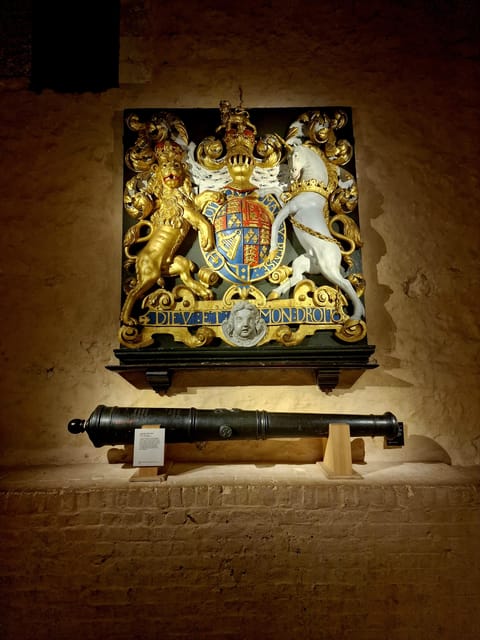
- Tower Armory: Tudor weapons, not just pageantry
- St Peter ad Vincula and St John’s Chapel: a quieter kind of story
- Battlements and Raven House: a small breather with atmosphere
- Lower Wakefield Tower: the torture instruments and what the guide does with them
- The walking and weather reality check
- Who should book this Tower of London Crown Jewels tour
- Should you book this tour?
- FAQ
- How long is the Tower of London Crown Jewels and English Royal History tour?
- What does the tour include for ticketed entry?
- Which Crown Jewels will I see?
- Where does the tour start and end?
- Who leads the tour?
- Is the tour suitable if I have limited mobility?
- Does the tour run in bad weather?
Key points to know before you go
- Timed access to the Crown Jewels means more sightseeing time and less waiting
- Blue Badge guide with room for questions as you walk through each major stop
- White Tower + Armory connects Norman power to Tudor weapons and pageantry
- Church of St Peter ad Vincula + St John’s Chapel adds a quieter, human layer to the story
- Battlements and Raven House give a brief change of pace without leaving the Tower’s world
- Lower Wakefield Tower focuses on the grim side, including instruments of torture and the tales tied to them
Why the Tower of London still hits hard
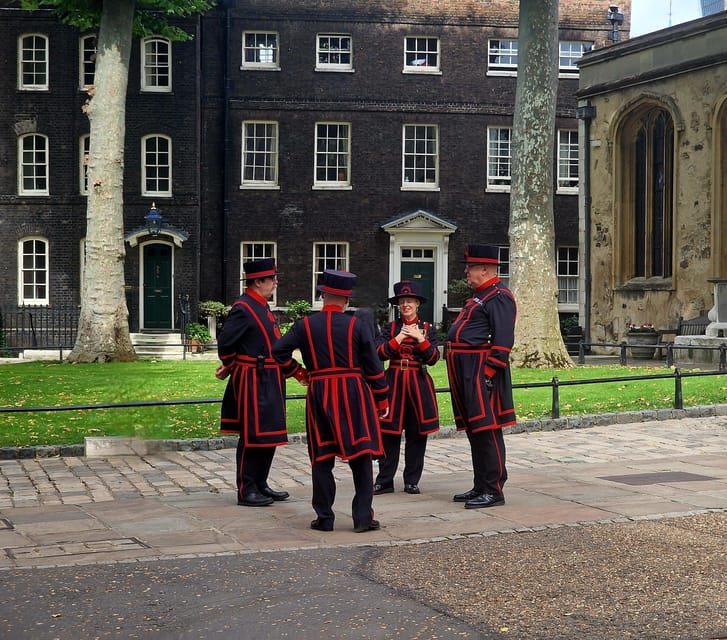
The Tower of London has a way of turning history into something you can feel in your feet. Even when you know the broad story of English monarchs, the place still feels like it has opinions. It is not just stone and signage. It’s a living outline of who held power, who lost it, and what happened when the rules changed.
What I like most about this tour format is the pacing. You’re not shuffled room to room at random. You move through the Tower in a logical order that connects the crowns and gemstones to the prisons, the royal residences to the captivity. That makes the famous artifacts easier to appreciate because you understand the setting that produced them.
And yes, the Tower is dark. This experience doesn’t pretend otherwise. You’ll see places tied to imprisonment, executions, and the famous prisoners people still talk about today. If you enjoy history that includes consequences, it works. If you’d rather keep things light, you might find the tone heavy in a few spots.
You can also read our reviews of more historical tours in London



Price and what $122.49 really buys you
At $122.49 per person, this is not a budget add-on. The value is in two things you can’t easily replicate on your own: guaranteed timed entry and guided context that ties stops together.
Timed access is especially meaningful at the Tower. Crown Jewels lines can eat up your day. Here, you get entry to the Tower of London and the Crown Jewels Exhibition as part of the ticket bundle, with a planned start that helps you avoid wasted hours. For a roughly 3-hour outing, that’s a big deal.
You also get access to multiple high-demand areas, including the White Tower and Tower Armory, plus key chapel and church spaces, battlements, and the Lower Wakefield Tower. When you add all those entrances together, the tour price starts to look like paying for convenience plus interpretation—not just a ticket.
Finally, the guide element matters more than people think. Being able to ask questions in real time can turn a visit from fact-gathering into understanding. The one review we have calls out that the guide answered questions and shared their passion for history—exactly the kind of payoff you want from a guided format.
Meeting point at Starbucks: quick start, less stress
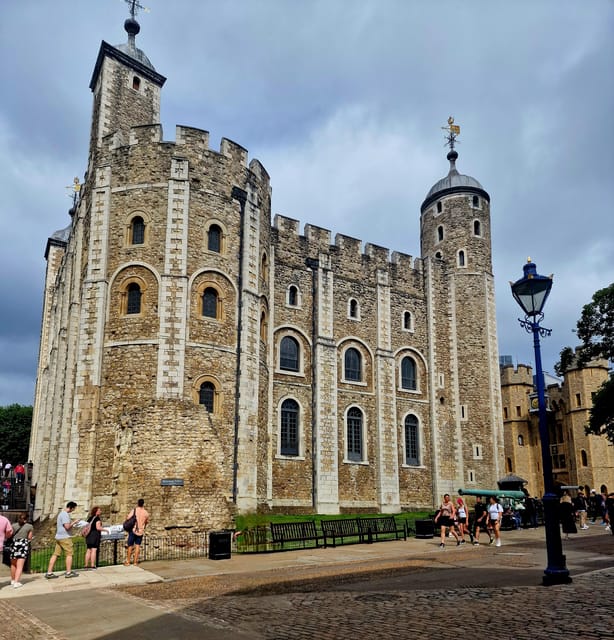
You meet at Starbucks Coffee on Tower Place (3 Tower Place, London EC3R 5BT). Ending is at the Tower of London (London EC3N 4AB). Starting in a clear public location helps you get your bearings fast, and it also sets a tone: this is a guided walk into a fortress site, not a drop-off-and-figure-it-out situation.
The tour begins outside the Tower. That sounds like a small detail, but it helps you understand what you’re looking at once you step inside. The guide introduces the fortress structure and the idea that the Tower was built for control—under the William the Conqueror era—and then adapted by later monarchs with new purposes.
Because the group can be up to 30, you move as a unit but not in a chaotic way. That size is usually workable for questions and for staying together without losing the thread of the story.
Stop 1: The Tower of London and Crown Jewels Exhibition
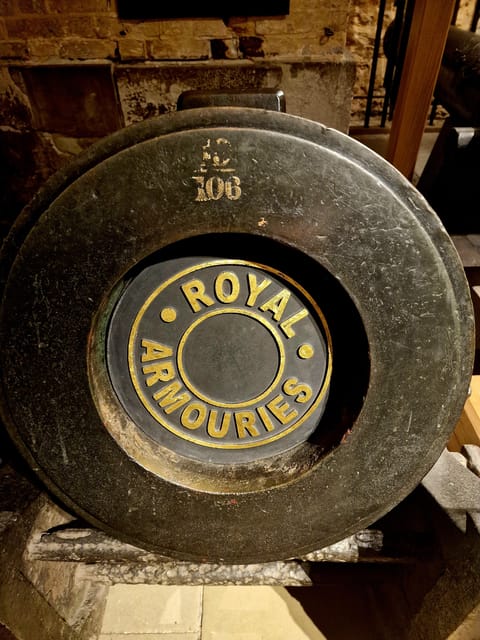
Your main entry and first big focus is the Tower of London itself, a former 11th-century fortification, prison, and execution site. The story begins with construction under William the Conqueror in the 1070s, which gives you the Tower’s original logic: strong walls, defensive layout, and a center of authority.
From there, you step into the Crown Jewels Exhibition. This is where the “wow” factor becomes concrete. You get to see the Imperial State Crown, the Koh-I-Noor Crown, and the Sovereign’s Sceptre with Cross. Seeing these in person does something photos can’t. The scale and the detail land differently when you’re standing close.
There’s also a specific kind of visual overload here: you are told the display includes 100 objects and over 23,000 gemstones. That number can sound like marketing, but it helps set expectations. You’ll want to slow down in a couple of spots rather than sprinting. Even a short pause makes it easier to notice how these pieces were designed to signal power.
One consideration: because you’re seeing both the Tower’s grim reputation and its royal display, it can be emotionally whiplashy if you’re expecting just glamour. If you want the crowns without the darker context, this might feel too honest. On the flip side, if you like connected storytelling, it hits the right balance.
White Tower: Henry III to the Princes in the Tower
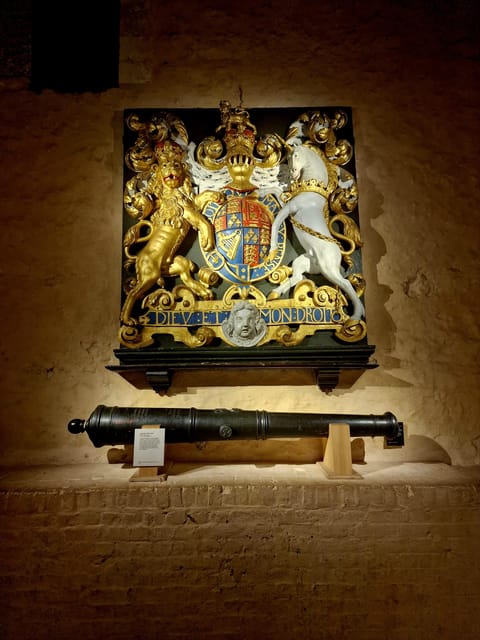
After the Crown Jewels, the tour shifts to the White Tower area. This is the heart of the fortress you can’t separate from royal politics. The guide’s framing makes it clear that England’s monarchs didn’t just “visit” the Tower. Different rulers reshaped it to match their goals.
You hear how Henry III transformed the fortress into a lavish royal residence. Then Edward I comes in as the next wave of fortification and strategy. After that, the Tower turns sharper and darker with rulers who ended up using it for imprisonment and control.
This is also where the Tower’s most famous mystery gets attention: the Princes in the Tower—Edward V and his brother Richard—who disappeared while under the guardianship of their uncle, Richard III. The tour doesn’t just toss names at you. It places the story where it belongs: inside a fortress that functioned as both throne-adjacent space and detention space.
What’s useful for you here is the timeline. Once you understand that monarchs built, rebuilt, and repurposed the Tower, you stop viewing it as one fixed monument. It becomes an evolving machine for power. That makes the next stops—armory, chapels, and memorial spaces—feel less random.


Tower Armory: Tudor weapons, not just pageantry
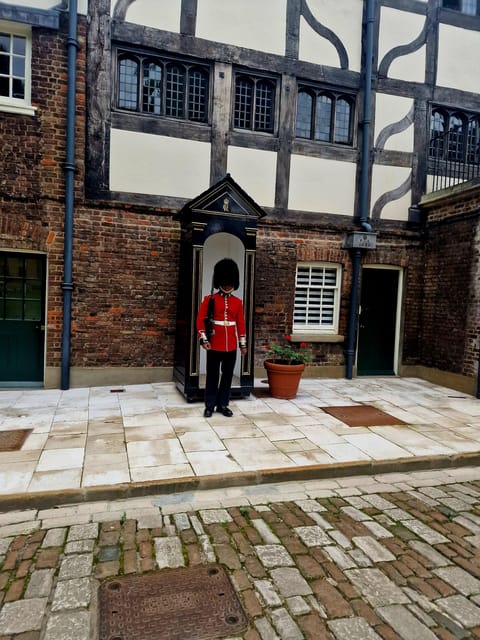
One of the smartest parts of this tour is that it doesn’t treat the Tower as only royal bling and sad prisons. The Tower Armory brings in the practical side of monarchy: the arms that supported rule.
You’ll enter the armory to view tournament armour associated with Henry VIII, plus armor linked to other kings. This is a great counterpoint to the Crown Jewels display. The crowns show authority as a symbol. The armor shows authority as something you can enforce.
There’s also a pacing win here. After the concentration of names, politics, and prisoner stories, the armory gives your eyes a new kind of focus. You get to look at objects—materials, shapes, craftsmanship—while the guide ties it back to what royal power meant on the ground.
If you’re a person who likes to see how technology and craftsmanship mattered, you’ll likely enjoy this stop. If you’re not into armor, the guided explanation is what makes it worth your time, because it connects the exhibits to the Tower’s role as a strategic stronghold.
St Peter ad Vincula and St John’s Chapel: a quieter kind of story
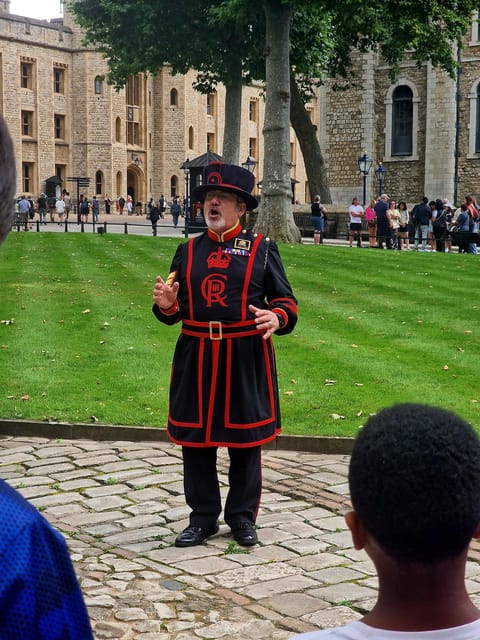
Between the dramatic political tales and the grim instruments of torture, you’ll also visit the Church of St Peter ad Vincula and St John’s Chapel. These stops add a human layer that is easy to miss if you only race through the loudest sights.
This is where you shift from battles and imprisonment to remembrance and place-based memory. The chapels are not just rooms to look at. They anchor the Tower’s legacy in a religious and memorial context, which changes the tone of what you’ve seen.
You also get a better understanding of why the Tower kept mattering even when the monarchs changed. It wasn’t only a fortress. It was part of how England marked important lives—especially those tangled in power.
If you’re the type who likes a short moment of quiet while still learning, this is a good segment of the tour. Take your time. Don’t rush it just because it’s between heavier parts.
Battlements and Raven House: a small breather with atmosphere
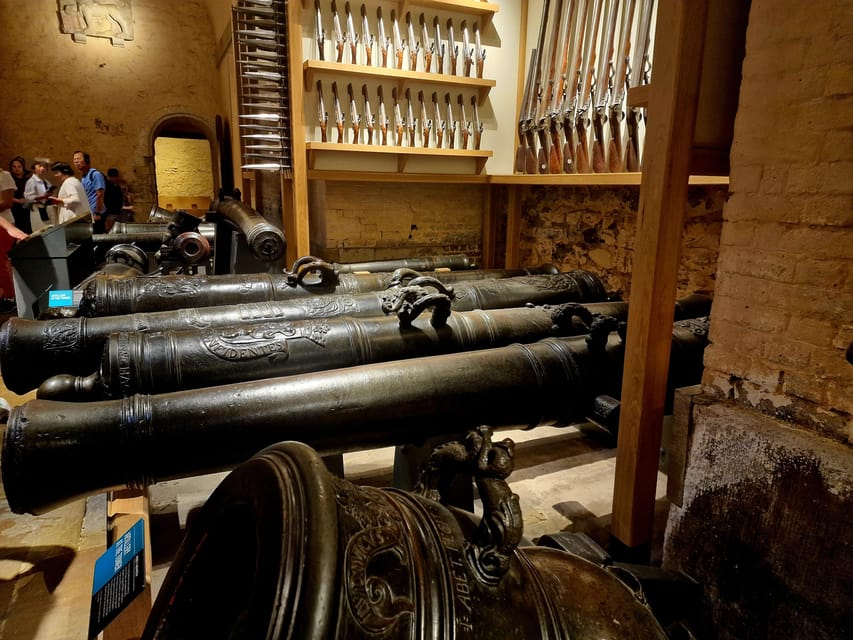
Next comes the battlements and Raven House. This part is a useful reset because it lets you see the Tower from a different angle—literally. Being up at the battlements helps you appreciate the fortress logic. You start to understand lines of sight, movement, and why the Tower’s layout mattered.
Raven House is where the tone shifts even more. You visit it to see the famous ravens, described as home to the most well-known birds in London. It’s a charming contrast, but not in a fake way. It still fits inside the Tower’s world as a place that attracts rituals and long-standing traditions.
Practical tip: if you want photos, this is a better time to slow down and choose your spots. Lower areas inside the Tower can get crowded, and light can change quickly. Up here, you can get steadier views while your guide keeps the story moving.
Lower Wakefield Tower: the torture instruments and what the guide does with them
This is the stop most people think they know from headlines, and that makes it important to get it with a guide. You enter the Lower Wakefield Tower, where you’ll see instruments of torture and hear the tales tied to them.
Even if you already know the general theme, a guided explanation changes the experience. It helps you interpret what you’re seeing as part of the Tower’s historical function rather than as a pile of scary objects. The difference is respectful context and clear storytelling.
A consideration: this area will feel intense. If gore-style details bother you, you might want to mentally prepare for a grim subject. On the other hand, if you’re interested in how power was applied—physically and psychologically—this is one of the most direct ways to understand the Tower’s reputation.
I also think the guide’s role matters here. A strong guide can keep the tone factual and grounded, so you leave with understanding rather than just shock.
The walking and weather reality check
This tour involves a fair amount of walking, including over uneven surfaces, cobblestones, hills, inclines, declines, and stairs. You’ll be on your feet for most of the 3 hours. Comfortable shoes are not optional here.
The tour operates in all weather conditions, so dress appropriately. If you plan to bring a rain jacket, choose something you can move in easily. You do not want a bulky coat that slows down your step on stairs or slippery surfaces.
Health-wise, you should be in good condition for regular walking. There’s also an age rule: anyone under 18 must be accompanied by someone aged 18 or older.
Finally, this is not recommended for travelers with limited mobility. That’s worth taking seriously because the Tower’s historic surfaces aren’t designed for easy access.
Who should book this Tower of London Crown Jewels tour
This is the right fit if you want three things at once: famous royal objects, real political context, and a guide who can explain the Tower’s shifting role over centuries.
If you like guided history with an emphasis on asking questions, you’ll probably feel more engaged than doing it alone. The tour leader is Blue Badge-qualified, which usually means strong command of local history and interpretation.
I also think this suits first-timers to London who want a centerpiece experience that is still more than a photo stop. The Tower of London works as a bucket-list site, but this tour gives it structure and meaning.
On the other hand, if you are extremely sensitive to dark historical topics, or if walking and stairs are a challenge, you may want to choose a different pace or different format.
Should you book this tour?
Yes, you should book if your priority is maximizing your time at the Tower while seeing the Crown Jewels Exhibition and multiple landmark areas in one guided flow. The guaranteed timed access is the practical win, and the guide’s ability to answer questions is the “why it matters” win.
Book it sooner rather than later. The average booking lead time listed is about 82 days, which hints at steady demand. If you’re traveling in a busy season, you’ll want your tickets locked in.
If you’re fit for walking, comfortable with stairs, and you want royal history plus the Tower’s darker side in one coherent story, this tour is a solid value. If you’re hoping for a light, purely glamorous Crown Jewels outing, this experience may feel too serious. Choose based on the tone you want, not just the famous crowns.
FAQ
How long is the Tower of London Crown Jewels and English Royal History tour?
It runs for about 3 hours (approx.).
What does the tour include for ticketed entry?
Your ticket includes entry to the Tower of London, the Crown Jewels Exhibition, the White Tower, the Tower Armory, Church of St Peter ad Vincula, St John’s Chapel, the battlements, Raven House, and Lower Wakefield Tower.
Which Crown Jewels will I see?
The tour includes up-close viewing of the Imperial State Crown, the Koh-I-Noor Crown, and the Sovereign’s Sceptre with Cross.
Where does the tour start and end?
You start at Starbucks Coffee, 3 Tower Place, London EC3R 5BT, UK. The tour ends at the Tower of London, London EC3N 4AB, UK.
Who leads the tour?
The tour leader is a Blue Badge-qualified guide.
Is the tour suitable if I have limited mobility?
It is not recommended for travellers with limited mobility, since the route includes uneven surfaces, cobblestones, hills, and stairs.
Does the tour run in bad weather?
Yes, it operates in all weather conditions. You should dress appropriately for the conditions.