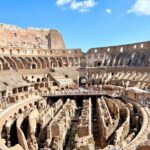
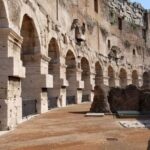
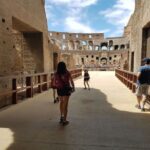
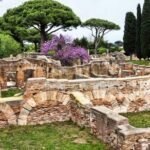
A quiet Roman ruin that feels personal. Ostia Antica is often called the better Pompeii, and this private tour lets you see why. I like that you get a local guide who helps you make sense of the preserved remains, instead of wandering like you lost your map.
Two things I really like: first, the relaxed private format means time for questions and a pace that works for your group. Second, the tour uses pre-booked entry tickets, so you spend more time inside the ancient city. Guides named Massimo, Valentina, Andy, Xander, and Michela come up in the praised experiences, and the common thread is clear explanations with patience for families and slower walkers.
One possible drawback: Ostia Antica involves walking on uneven archaeological ground, so you’ll want moderate physical fitness and good shoes. If anyone in your group has limited mobility, this is the part you should think through first.
In This Review
- Key things to know before you go
- Why Ostia Antica feels like a quieter side of Rome
- Private tour + pre-booked entry: less hassle, better time use
- Ostia Antica in 2.5 hours: what your walk is really for
- The guide makes or breaks Ostia Antica
- Logistics that actually matter: meeting point, walking, timing
- Price check: what $240.96 per person buys you
- Who should book this Ostia Antica private tour
- Should you book this private Ostia Antica tour?
- FAQ
- How long is the private Ostia Antica tour?
- What does it cost?
- Is the tour offered in English?
- Is this a private tour?
- What is included in the tour price?
- Where do we meet for the tour?
- Do I get a mobile ticket?
- Is the tour suitable if I have moderate physical fitness, and can I bring a service animal?
- Is there free cancellation?
Key things to know before you go
- Private, just your group: You won’t be stuck waiting on others or tuning out at the back.
- Pre-booked entry tickets included: Less friction at the start, more time in the ruins.
- A guide who interprets the layout: The site can feel huge—this tour helps you understand how it fits together.
- Ostia Antica away from central Rome crowds: You get a calmer atmosphere than the headline sites.
- Family-friendly Q&A energy: Several guides are described as patient with kids and question-heavy groups.
- Return to the meeting point afternoon: You keep the rest of your day free.
Why Ostia Antica feels like a quieter side of Rome
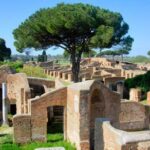
Ostia Antica is the kind of place that changes how you picture the Roman world. It wasn’t just a town of ruins—it was a once flourishing, cosmopolitan harbor city on Rome’s outskirts, built to move people and goods. That means your visit isn’t only about pretty stones. It’s about systems: trade routes, neighboring communities, and the engine that helped Rome grow.
What I like about the way this tour is set up is that it steers you away from the usual approach—show up, take photos, leave. With a guide, you start connecting the dots: how a major trade site could feed Rome’s growing population and supply everyday needs. The result is that the site stops feeling like scattered rooms and starts feeling like a real place that once worked.
And yes, it’s often compared to Pompeii. The point of that comparison isn’t just marketing. It’s about the preservation that lets you read the city more clearly than you might expect from ruins.
You can also read our reviews of more city tours in Rome


Private tour + pre-booked entry: less hassle, better time use
This is a private tour, which sounds simple until you feel it. You stay with your guide and your group only. That usually means fewer interruptions, less waiting, and a smoother flow—especially at a site where orientation matters.
The tour also includes entry tickets, pre-booked so logistics are easier. That matters because Ostia Antica is not a quick stop you can squeeze in between other major sights. Your time window is about 2.5 hours. Pre-arranged entry helps protect that time.
You’ll also use a mobile ticket, which is a practical win in Rome. No paper hunt. No last-minute scrambling.
One more detail that helps: the tour is designed around a relaxed pace. That’s not just comfort talk. When you can slow down, you can actually ask the questions that turn ruins into understanding.
Ostia Antica in 2.5 hours: what your walk is really for
This tour focuses on one stop: Ostia Antica. Expect a guided walk across the large former settlement at a pace that gives you time to process what you’re seeing.
Here’s the value of the time allocation. Ostia Antica covers enough ground that many visitors miss the “why” behind the layout. A good guide helps you understand the city’s structure without turning it into a lecture. You start to grasp how a harbor city functioned as part of Rome’s wider network.
You can think of the experience in three layers:
1) Getting oriented fast
Guides are praised for explaining the layout clearly. That’s important at Ostia Antica because the site is big enough that it’s easy to lose your mental map. Once you get bearings, the ruins become easier to read.
2) Seeing the city as daily life, not just monuments
One reason this site hits emotionally is that it’s a reminder of how quickly things change. Several guided experiences emphasize the contrast between how advanced life had been for residents and what’s left today. A guide helps you hold both ideas at once: the human scale of daily routines and the fact that everything can be abandoned.
3) Understanding trade and growth
The tour frames Ostia Antica as a driver of wealth and growth through trade and neighboring communities. You’re not only looking at places. You’re connecting what you see to how the Roman Empire fed its population and moved goods.
By the end, you’re back in Rome’s city center in the afternoon, with time to keep exploring without feeling like you used your whole day on one ruin.
The guide makes or breaks Ostia Antica
At Ostia Antica, interpretation isn’t optional—it’s the whole point. The ruins are preserved enough that you can learn a lot, but they still won’t explain themselves.
What comes through in the best experiences is the guide style: clear, structured explanation plus real attention to pacing and questions. Names that show up in highly praised guides include:
- Massimo, noted for being informative and explaining the layout of a large settlement.
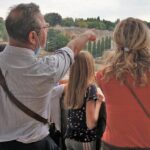
- Valentina, described as an archaeologist guide with clear passion, taking families through the site in a way kids can follow.
- Andy, praised for being thorough and thoughtful about a slower walking pace.
- Xander, recognized for helping visitors understand the site and answering questions, with patient engagement.
- Michela, highlighted for extensive knowledge and for making descriptions feel like the city was lively and functioning.
You don’t need a “super fan” background to enjoy this. You do need guidance that turns space into meaning. That’s what these experiences are built around.
A practical tip: bring a couple of questions about how a port city might work—trade, supply, connections to communities. When your guide hears your questions, you’ll get a better story tailored to what you want to understand.
Logistics that actually matter: meeting point, walking, timing
This tour meets at Viale dei Romagnoli, 717, 00119 Roma RM, Italy and ends back at the meeting point. It’s set up so you can plan the rest of your day after the tour without juggling complicated drop-offs.
It also notes that the meeting area is near public transportation, which helps on a city day when you’re switching between neighborhoods. And since it’s an English tour with confirmation at booking time, you can avoid the uncertainty that sometimes comes with day-of meeting instructions.
Physical side: the tour asks for moderate physical fitness level. So plan for walking on uneven ground typical of archaeological sites. If your group includes anyone who tires quickly, a private format helps because you can adjust on the spot.
Finally, since it’s offered with a mobile ticket and pre-booked entry tickets, you won’t be stuck trying to figure out last-minute paperwork.
You can also read our reviews of more private tours in Rome



Price check: what $240.96 per person buys you
At $240.96 per person, the sticker shock is real—until you compare what’s included.
You’re paying for:
- A private local guide for about 2 hours 30 minutes
- Entry tickets to get you into the site without extra hassle
Then you’re getting the big intangible value: interpretation. Ostia Antica is not the kind of place where a quick look gives you the full story. The tour is built to help you understand why this harbor city mattered to Rome’s growth—trade, supply, and the network behind the empire’s reach.
Also, there are group discounts, which can make the price feel far more reasonable if you’re traveling with a few people who want the same experience at the same time.
Is it “cheap”? No. But it is focused. You’re not paying for a bus tour that stops at many places. You’re paying for a guided, time-protected visit to a specific site where your guide’s explanation is the difference between seeing ruins and understanding a working city from long ago.
Who should book this Ostia Antica private tour
I’d send this tour to you if you want:
- A quieter Roman site away from central crowds
- A private pace where you can ask questions
- A guide-led visit so the site’s layout and meaning actually land
- A day activity that still leaves you energy for the afternoon
It’s also a good match for families, based on praised experiences where kids were encouraged to ask questions and guides handled different energy levels.
If you strongly prefer self-guided wandering with no structure at all, this might feel a bit guided for your taste. But if you want to leave with a clearer picture of how a port city worked within Rome’s network, you’ll likely feel the difference.
Should you book this private Ostia Antica tour?
Book it if you want a calmer, more meaningful Rome day—one that turns ruins into understanding. The combination of pre-booked entry, a local guide, and a private format makes the experience feel efficient and personal, especially at a large archaeological site.
Skip it only if walking on uneven ground is a concern for your group, or if you’d rather use your time for other top-tier sights with no guiding required.
If you’re deciding between doing Ostia Antica on your own versus with a guide, I’d choose the guided version. At this site, the guide is what helps you turn preserved remains into the story of a city that once kept Rome supplied and growing.
FAQ
How long is the private Ostia Antica tour?
The tour lasts about 2 hours 30 minutes.
What does it cost?
The price is $240.96 per person.
Is the tour offered in English?
Yes, it’s offered in English.
Is this a private tour?
Yes. Only your group participates.
What is included in the tour price?
Entry tickets and a local guide are included.
Where do we meet for the tour?
The meeting point is Viale dei Romagnoli, 717, 00119 Roma RM, Italy, and the tour ends back at the meeting point.
Do I get a mobile ticket?
Yes, the tour provides a mobile ticket.
Is the tour suitable if I have moderate physical fitness, and can I bring a service animal?
The tour notes a moderate physical fitness level and that service animals are allowed. It also lists the meeting area as near public transportation.
Is there free cancellation?
Yes, you can cancel for a full refund if you cancel up to 24 hours in advance of the experience start time.