REVIEW · KATHMANDU
Kathmandu World Heritage Sites Tour Sightseeing
Book on Viator →Operated by NBM Travel Company Pvt. Ltd. · Bookable on Viator
One day. Four UNESCO sites. Kathmandu turns spiritual fast. This private sightseeing run links Hindu and Buddhist places into one clear story, with a guide who talks you through what you’re seeing as you go. I love that it’s built around real landmarks people still visit every day, not just photo stops.
I especially like the mix of atmospheres: the river-side stillness of Pashupatinath and the prayer-wheel hum around Boudhanath feel like two different worlds that somehow make sense together. I also like that the day includes a proper midday break with lunch and admission tickets already handled.
The main thing to consider is that this is a long, full-feeling day (about 6 to 8 hours starting at 9:15am), so you’ll want comfortable shoes and patience for crowds around popular temples.
In This Review
- Key things I’d plan around
- Kathmandu’s Four UNESCO Stops in a Single Day
- Pashupatinath Temple: Shiva, River Views, and Monkey Moments
- Boudhanath Stupa: Tibetan Monasteries, Mani Walls, and Prayer Wheels
- Swayambhunath Monkey Temple: Buddha Carvings and Big Viewpoints
- Kathmandu Durbar Square and the Living Goddess Kumari
- Price, Pickup, and What the Day Really Costs You in Time
- What a Private Guide Adds to Shiva, Stupas, and Royal Squares
- Timing, Comfort, and Temple Etiquette You Can Actually Use
- Should You Book This Kathmandu UNESCO Heritage Tour?
- FAQ
- What sites are included in the Kathmandu World Heritage Sites sightseeing tour?
- How long is the tour, and when does it start?
- Is hotel pickup and drop-off included?
- Are admission tickets included?
- What’s included in the price besides sightseeing?
- Is the tour private?
- What’s not included?
- Can I cancel for a full refund?
Key things I’d plan around
- Four UNESCO World Heritage sites in one organized route, so you don’t waste time figuring it out
- Private vehicle + pickup/drop in Kathmandu, which helps a lot when traffic and walking add up
- Admission tickets included at each of the major stops
- Mani walls and prayer wheels at Boudhanath, plus Tibetan monasteries nearby
- Monkey Temple views from Swayambhunath, with Hindu and Buddhist elements in the same complex
- Durbar Square highlights like Hanuman Dhoka and Kumari’s home, built for Malla and Shah-era legends
Kathmandu’s Four UNESCO Stops in a Single Day
This tour works because it’s not just a checklist. You’re moving through sacred spaces that overlap in surprising ways—Shiva-side devotion, Buddhist stupa culture, and the way Kathmandu’s old royal squares still shape everyday belief.
The schedule is straightforward: you start in the morning, hit each site with time to look around, then finish back at the meeting point. You’re also not doing it as a big herd. It’s a private experience with only your group in the vehicle, and the guide communicates in English/Chinese/Hindi.
The “value” here is practical. When admission is included, transport is included, and a guide is included, you stop paying small add-ons all day. You also get someone to help you interpret the visual chaos: flags, carvings, masks, ritual setups, and the meaning behind why each place looks the way it does.
That said, you are covering a lot of ground. Expect walking through temple areas and up and down steps in at least one or two locations. Build the day for comfort, not speed.
You can also read our reviews of more historical tours in Kathmandu
Pashupatinath Temple: Shiva, River Views, and Monkey Moments
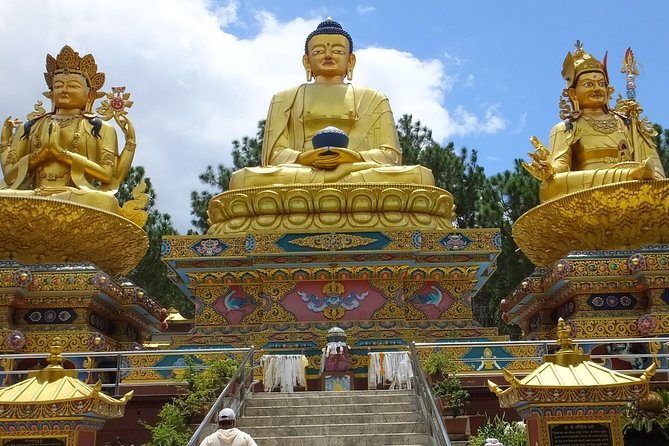
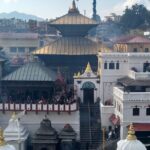
Your first major stop is Pashupatinath Temple, one of the most important Hindu pilgrimage sites in the Kathmandu Valley. The core idea here is devotion. The temple complex is dedicated to Lord Shiva, and you can sense that sacred focus the moment you arrive.
What I’d look for (because it helps you understand the place fast) is the way the complex is surrounded by Hindu activity. The setting isn’t just architecture. It’s about rituals and the atmosphere of people coming with religious intention. The experience notes also mention numerous Hindu deities in the area, so as you walk around you’ll see that this isn’t a single-shrine stop—it’s a larger religious environment.
There’s also a natural connection to the landscape. You can examine the Bagmati River as part of the overall setting. Even if you’re not an expert in local practice, having the river in view helps you understand why this kind of temple location matters.
One more thing that keeps popping up at Pashupatinath: monkeys. The site is famous for them, so don’t be shocked if you see monkeys around temple edges and pathways. Keep your phone secure and don’t feed animals.
Practical note: this stop includes admission, and the time set aside is about 1 hour. That’s usually enough to see the main areas and absorb the vibe without rushing.
Boudhanath Stupa: Tibetan Monasteries, Mani Walls, and Prayer Wheels
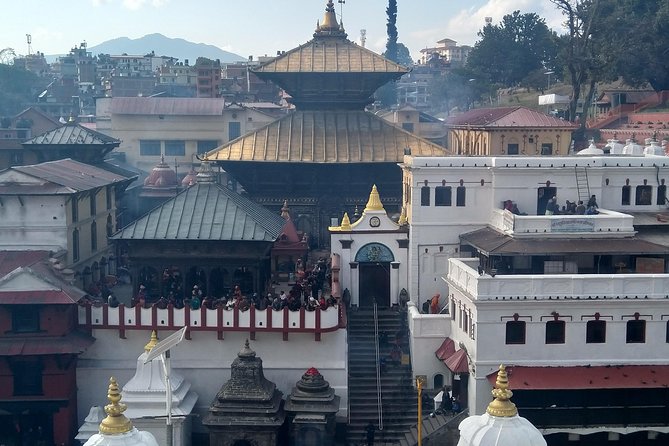
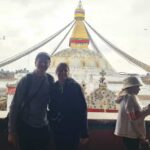
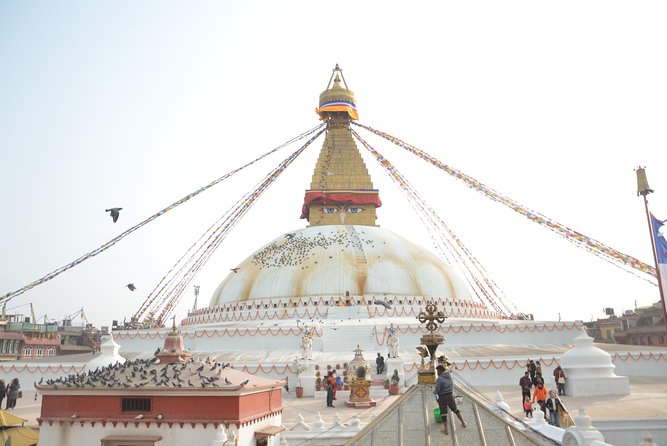
Next up is Boudhanath Stupa, which the tour describes as one of the largest stupas in South Asia. If Pashupatinath feels like a Hindu river-temple world, Boudhanath feels like a Buddhist order of sound and motion—especially around prayer wheels.
Look around and you’ll spot Mani walls (covered with mantra writing) and prayer wheels placed throughout the area. The tour also points out Tibetan monasteries around the stupa, which matters because it helps you see why this site has such a Tibetan Buddhist feel. It’s not just one statue and a few photos—it’s a whole ecosystem of practice.
The atmosphere is described as serene, and that matches how these places usually function: people come to walk, watch, and reflect rather than compete for space. If you’re the type who enjoys small details, Boudhanath rewards you. The textures—stupa surfaces, colored fabrics, and the repeating rhythm of text and wheels—turn into a calm visual pattern.
There’s also a cultural bonus noted in the tour information: you can explore Tibetan-style cuisine around the area. I like this because it shifts you from “temple time” to “real local food time,” which helps you keep your energy for the rest of the day.
Like the other sites, this stop is about 1 hour and includes admission. Try to use that time to look up as well as forward—stupas tend to surprise you when you step back and see the full shape.
Swayambhunath Monkey Temple: Buddha Carvings and Big Viewpoints
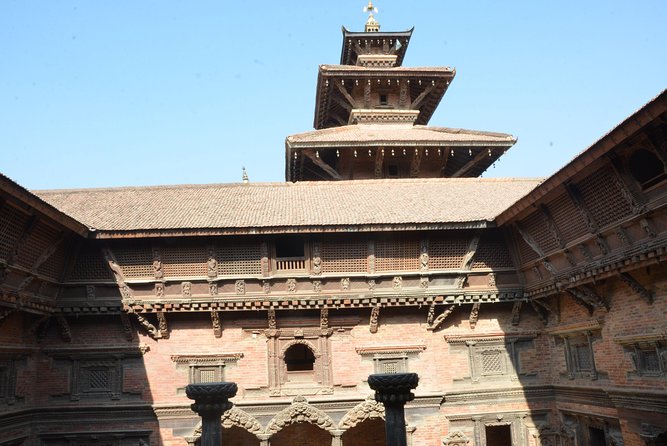
Your third stop is Swayambhunath, often called the monkey temple. The nickname is accurate in the sense that you can expect monkeys around the area, but the bigger point is the site’s spiritual cross-current.
The tour highlights how Swayambhunath connects Buddhist and Hindu culture. That’s a big deal in Kathmandu, where identities mix in the architecture and iconography. As you wander, you may notice how Buddhist symbolism and Hindu temple elements can sit side by side in a way that feels natural rather than forced.
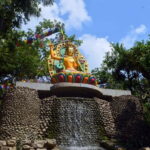
One of the specific visual highlights mentioned is the life cycle of Buddha carved in stones, along with various sculptures. If you’ve ever seen people pause in front of carvings without understanding why, this is the kind of place where explanation makes the art click. You’ll also hear about the way the site links those symbols into a broader message of unity in diversity.
There are also Hindu shrines inside the story. The tour notes Harati Temple and Saraswati Temple as part of what you can see. If you’re curious how Hindu practice shows up inside a traditionally Buddhist-looking site, this is one of the places that makes that answer visible.
Finally, don’t miss the viewpoint angle. The tour notes that you can position yourself to view beautiful Kathmandu from atop a hill. Even if your photos are just for your own memory, this is worth the climb. The view helps you understand why sacred sites often sit above the city—visibility builds meaning.
This stop also includes admission and is planned for about 1 hour. Expect it to feel busier than you might want, but it’s also the most rewarding for anyone who likes variety in one place.
Kathmandu Durbar Square and the Living Goddess Kumari
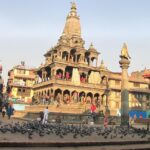
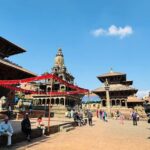
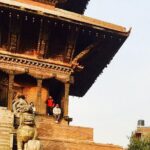
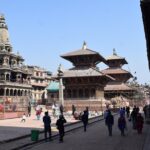
To close the day, you visit Kathmandu Durbar Square, a complex associated with the Malla and Shah Dynasty eras (the tour description places it from the 12th to the 18th century). Here the focus shifts from stupa and river-temple spirituality to royal-era sacred art and political religion.
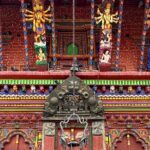
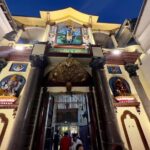
The key idea is craftsmanship and power made visible. The tour describes the square as filled with handmade arts, and that’s exactly what you’ll notice: carved forms, temple shapes, and monuments that feel built for both rulers and gods.
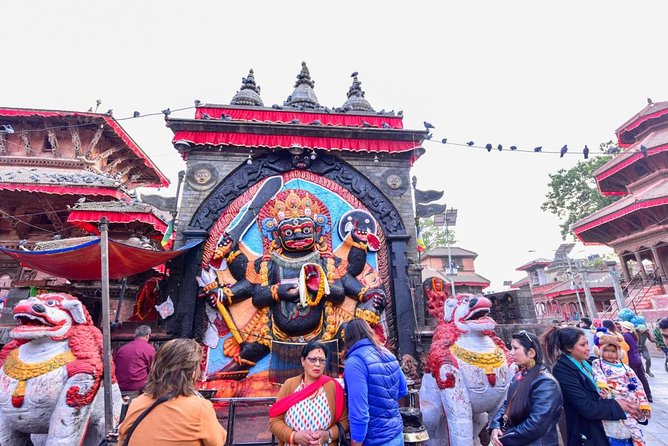
You’ll want to look for the named highlights: Hanuman Dhoka, Taleju Mandir, Hanuman Temple, the Royal Palace, and Kal Bhairab temple. These names are useful because they steer you toward the main visual landmarks rather than getting lost in a sea of stone details.
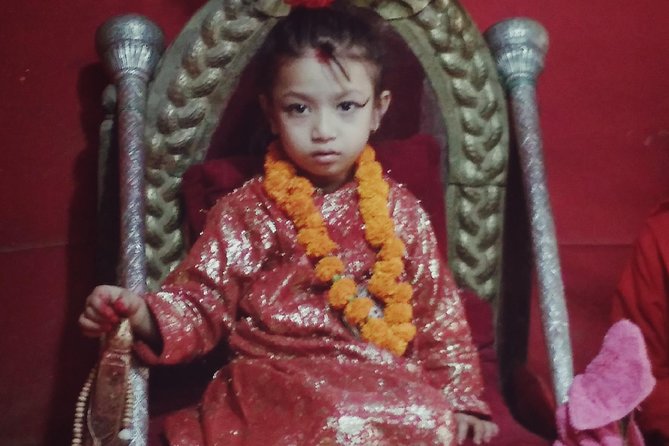
One of the most distinctive parts of this stop is the reference to the sacred Shiva-Parvati space and the living goddess, Kumari. The tour calls Kumari part of what you should see, so if that’s the kind of cultural ritual detail you came for, Durbar Square is where you’ll feel that most strongly.
The area is also described as divine in a way that can even change how people think they feel about religion. I’d translate that into simpler travel language: the architecture is so intense that it can make you pay attention, even if you’re more skeptical than spiritual.
Like the other stops, admission is included and time is about 1 hour. The square is dense, so don’t plan to photograph everything. Plan to understand a few key structures well.

Price, Pickup, and What the Day Really Costs You in Time
The tour costs $183 per person for about 6 to 8 hours. On paper, that might sound like a lot for a sightseeing day. But once you break down what’s included, it starts to make sense.
Here’s what you’re paying for:
- A private vehicle with hotel pickup and drop
- A guide who can speak English/Chinese/Hindi
- Admission tickets included for each of the UNESCO sites
- Lunch
- Government taxes and office service charges
That package matters because Kathmandu navigation can eat time, and paying for multiple admissions adds up. When everything is bundled, you buy back mental energy. You also get someone to keep the day moving at a sensible pace rather than waiting while you hunt for tickets or decide what order makes sense.
The tradeoff is time management. You’re starting at 9:15am, and with four major stops you’ll be on the move most of the day. If you like slow travel—half-hour coffee breaks and wandering with no agenda—this may feel structured. If you like seeing a lot with interpretation, it’s a good fit.
Also, the tour notes group discounts. If you’re traveling with friends or a small party, you might get even better value than solo.
What a Private Guide Adds to Shiva, Stupas, and Royal Squares
The sites on this tour are visually impressive, but they’re also concept-heavy. A good guide turns “stone and symbols” into “why this matters.”
This tour includes an experienced guide and specifically mentions multiple language options: English, Chinese, and Hindi. That’s not a small detail. Being able to ask questions and understand explanations in your chosen language changes how much you get out of the day.
What your guide is likely doing, based on the focus of the tour, is connecting the dots:
- At Pashupatinath, explaining Shiva’s role and the Hindu deity presence
- At Boudhanath, framing Tibetan monasteries plus the meaning of prayer wheels and mani walls
- At Swayambhunath, showing how Buddhist and Hindu traditions overlap, including specific carvings and sculptures
- At Kathmandu Durbar Square, tying the Malla/Shah-era royal art to specific temples and the story of Kumari
When this works, you stop treating each place like a separate stop. You start seeing a shared cultural logic.
And in the real world, a private guide also means less downtime. You don’t spend your time negotiating unclear meetups or trying to figure out what’s “important” on your own.
Timing, Comfort, and Temple Etiquette You Can Actually Use
This is the part people often skip, then regret.
You’re going to multiple sacred areas where you’ll want to move respectfully and comfortably. The tour gives you about an hour at each main stop, so you’ll likely be walking and standing for parts of the visit. I’d plan around that.
Bring:
- Comfortable walking shoes (steps and uneven stone are common in older temple areas)
- A light layer (temples can feel cooler/shaded in parts)
- A secure way to carry your phone/cash (because monkeys can be present at Pashupatinath and Swayambhunath)
And mentally, adjust your expectations: temple sightseeing is not a museum where everything is quiet and controlled. These places are active religious spaces, with people praying, moving, and interacting.
If you treat it like real life happening around you, the day feels more authentic—and way less stressful.
Should You Book This Kathmandu UNESCO Heritage Tour?
Yes, I’d book it if your goal is to see the major UNESCO highlights of Kathmandu in one organized day and you want help understanding what you’re looking at.
It’s especially worth it when:
- You want private pickup and transport rather than piecing together routes
- You care about Hindu + Buddhist connections (this itinerary is built for that)
- You like the idea of admissions and lunch already included, so you can focus on the sites
I’d think twice if:
- You hate structured schedules and want long, slow wandering without time limits
- You’re sensitive to crowds at popular temples (these stops can be busy by nature)
- You’d rather spend multiple days doing fewer places at a relaxed pace
For many first-timers, this is a strong “get your bearings fast” day—then you can come back later for deeper, slower exploration.
FAQ
What sites are included in the Kathmandu World Heritage Sites sightseeing tour?
The tour includes visits to Kathmandu Durbar Square, Swayambhunath Stupa/Temple, Pashupatinath Temple, and Boudhanath Stupa.
How long is the tour, and when does it start?
It runs about 6 to 8 hours and starts at 9:15am.
Is hotel pickup and drop-off included?
Yes. The tour includes hotel pickups and drops in a private vehicle, and it returns you to the meeting point.
Are admission tickets included?
Yes. Admission tickets are included for each stop listed in the itinerary.
What’s included in the price besides sightseeing?
Included items are the guide and taxes, private transportation, lunch, and an English/Chinese/Hindi-speaking guide.
Is the tour private?
Yes. It’s a private tour/activity, and only your group will participate.
What’s not included?
Personal expenses, insurance, tips (tipping is expected), and services not listed in the itinerary are not included.
Can I cancel for a full refund?
Yes. You can cancel up to 24 hours in advance for a full refund. If you cancel less than 24 hours before the start time, the amount paid is not refunded.