REVIEW · KATHMANDU
Private Kathmandu Sightseeing Tour | UNESCO World Heritage sites
Book on Viator →Operated by Breakfree Adventures Pvt. Ltd. · Bookable on Viator
One day, seven UNESCO stops, zero stress. This private Kathmandu tour strings together some of Nepal’s most famous Hindu and Buddhist landmarks, and you can pick 2, 4, or 7 UNESCO sites. I love the hotel pickup that gets you out of the traffic-and-meetup mess fast, and I love how guides like Dipesh and Deepak turn stones into stories with clear, on-the-ground commentary.
One thing to plan for: monument entry fees are extra, paid per site in Nepali rupees, and inner Hindu temple access can be limited depending on your nationality and faith.
In This Review
- Key highlights worth getting excited about
- Why This UNESCO Tour Works as a First Kathmandu Day
- Hotel Pickup, Private Car, and Real-World Pacing
- Stop 1: Swayambhunath (Monkey Temple) and the Viewpoint Reset
- Stop 2: Boudhanath Stupa, Where the Buddhist Atmosphere Hits Hard
- Stop 3: Pashupatinath Temple and the River-Ritual Reality Check
- Stop 4: Patan Durbar Square, Courtyards, and Old-City Craft
- Stop 5: Patan Museum as Your Fast Context Builder
- Thamel and Kathmandu Drives: Getting Your Bearings Fast
- Stop 7: Swayambhunath Again (And Why That Second Look May Help)
- Stop 8: Changu Narayan Temple for a Slower, Older Feeling
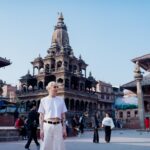
- Stop 9: Bhaktapur Durbar Square, Where the City Looks Like It Still Lives
- Stop 10: Kathmandu Durbar Square, the Royal-Center Finale
- What the Guides Do That Makes This Tour Worth It
- Price and Value: What You’re Paying For (Plus Entry Fees)
- Practical Tips That Make the Day Smoother
- Should You Book This Private Kathmandu UNESCO Tour?
- FAQ
- FAQ
- What sites are included in the UNESCO options?
- Is the monument entry fee included in the price?
- How do I pay the entry fees?
- Does the tour include hotel pickup and drop-off?
- Is transportation private and air-conditioned?
- Is there an English-speaking guide?
- Can I choose how long the tour is?
- Can I take lunch during the tour?
- Is this a group tour or truly private?
- Are there limits on entering temple inner premises?
Key highlights worth getting excited about
Hotel pickup and drop-off keeps the day simple, especially after a long flight.
Choose your UNESCO count (2/4/7) so you don’t overbook your energy.
Swaymbhunath + Boudhanath give you big viewpoint drama plus deep Buddhist atmosphere.
Pashupatinath with guide context helps you understand what you’re seeing at the river.
Patan and Bhaktapur add craft-and-courtyard beauty beyond the usual “temples only” day.
Flexible pacing with a private vehicle means you can slow down, linger, and ask questions.
Why This UNESCO Tour Works as a First Kathmandu Day
Kathmandu Valley can feel like a tangle of streets on day one. This tour is built to fix that. You get a private vehicle, a professional English-speaking guide, and a logical loop through the valley’s signature heritage sites. Instead of figuring out routes, entrances, and ticket lines yourself, you follow a plan designed around what’s important and what pairs well.
The other big win is variety. You’ll mix Hindu temples, Buddhist stupa space, and royal-square architecture in one day. That contrast is exactly why the UNESCO sites matter here. They are not all the same “type” of sight. One stop might center on ritual and river views; another is about courtyards, carvings, and old-city layout.
You can also read our reviews of more private tours in Kathmandu
Hotel Pickup, Private Car, and Real-World Pacing
If you’ve ever tried to “meet somewhere central” in Kathmandu, you already know the stress. Here, pickup and drop-off from Kathmandu city centers are included. Your day starts when it should, not when you finally find the right street or the right landmark.
You travel in a private air-conditioned vehicle. That matters because drives between sites can be long, and Kathmandu traffic is its own category. Reviews repeatedly mention smooth, patient driving—names like Sajan and Shyam come up—plus the fact that the guide keeps things moving without making it feel like a race.
Also, this is truly private. You’re not squeezed into a larger bus plan. Your guide can slow down when someone wants photos, or adjust timing if you want more time at one stop.
Stop 1: Swayambhunath (Monkey Temple) and the Viewpoint Reset
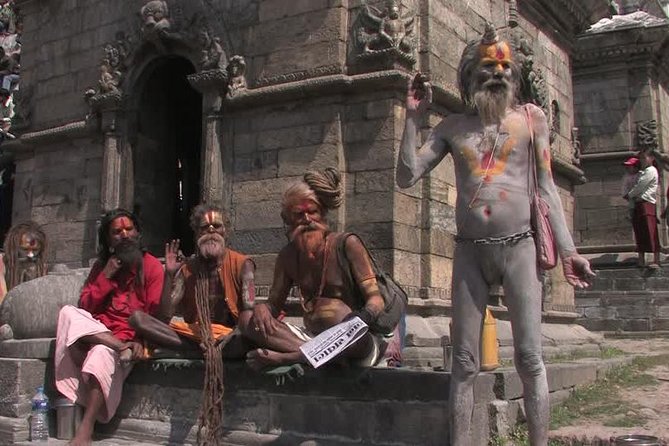
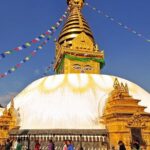
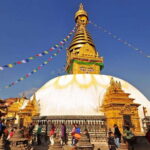
Swayambhunath, often called the Monkey Temple, is a classic opener for a reason: it helps you orient. You’ll walk through a temple complex that sits above the city, where the view gives your brain a map. The monkey presence is part of the scene, so keep your phone and snacks secure and stay alert on steps.
What I like about starting here is that it sets the “Nepal” context right away. You’re not just looking at monuments—you’re stepping into the living mix of Hindu and Buddhist symbolism that defines Kathmandu Valley.
Time on this stop is short—around 30 minutes on the listed schedule—so treat it as a quick arrival-to-understanding moment. If you want longer, ask your guide. In this kind of private setup, they can usually nudge the pacing if your schedule allows.
Stop 2: Boudhanath Stupa, Where the Buddhist Atmosphere Hits Hard
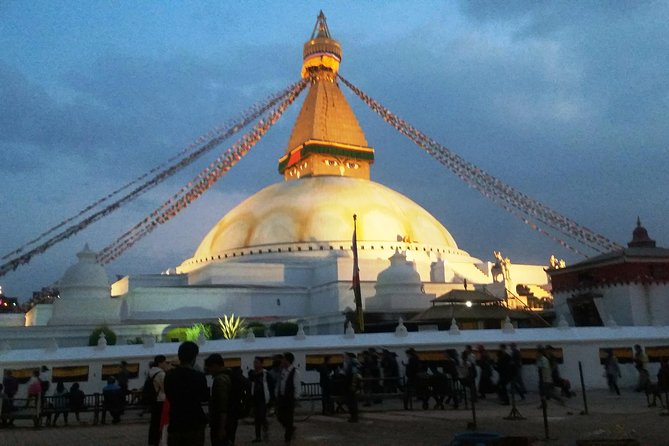
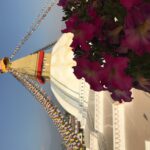
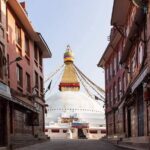
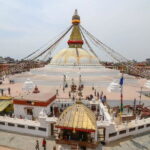
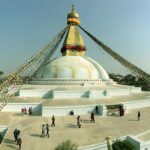
Then you drop into Boudhanath, one of the valley’s most recognizable Buddhist landmarks. The stupa’s scale makes it feel important even before you read a single sign. This stop is listed at about 1 hour, which is a good amount of time: you can walk around, watch how people move, and take in the surrounding monastery and prayer-activity vibe.
I love Boudhanath on a tour because your guide can explain the meaning behind the rituals you’re seeing—things like circumambulation (walking around) and the way devotees engage with the space. That context turns “cool monument” into “I understand what this place is for.”
One practical tip: bring a light layer. Even if Kathmandu is warm, stupa areas can feel breezy, and you’ll be standing and walking at a steady pace.
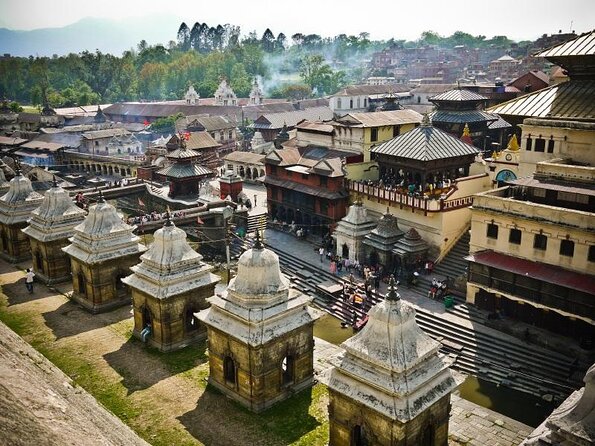
Stop 3: Pashupatinath Temple and the River-Ritual Reality Check
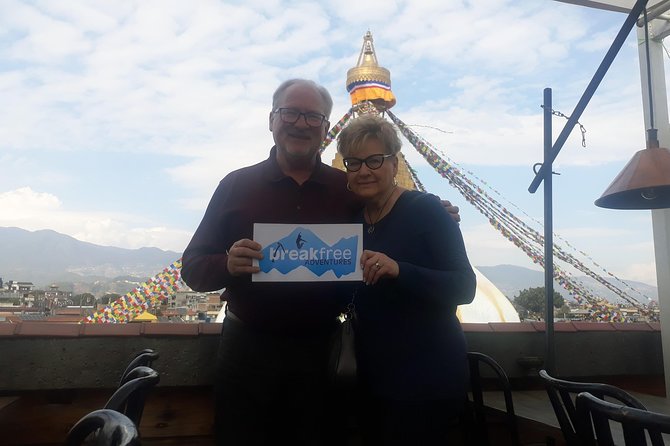
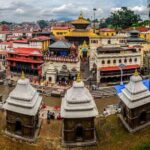
Pashupatinath is one of those places where the guide’s job becomes essential. It’s not just a temple. It’s a powerful religious center on the Bagmati River, and the rituals you may see can be intense and emotionally charged.
The schedule lists Pashupatinath for about 1 hour (and it appears again later on the itinerary). That time lets you get past the first shock of scale and focus on what you’re actually looking at.
Here’s a consideration you should know up front: only Nepali and Indian nationals of the Hindu faith are permitted to enter the inner premises of Hindu temples during the tour. If you’re not in that group, you can still enjoy the exterior views and the guide’s explanation, but you may not access the inner areas.
If your tour day happens to overlap with a cremation ceremony, your guide may help you watch respectfully from appropriate viewpoints. One review described a guide patiently waiting while the guest observed a ceremony nearby—exactly the kind of thoughtful guidance that makes this stop feel meaningful rather than intrusive.
You can also read our reviews of more historical tours in Kathmandu
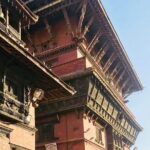
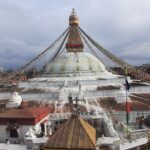
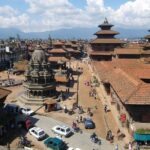
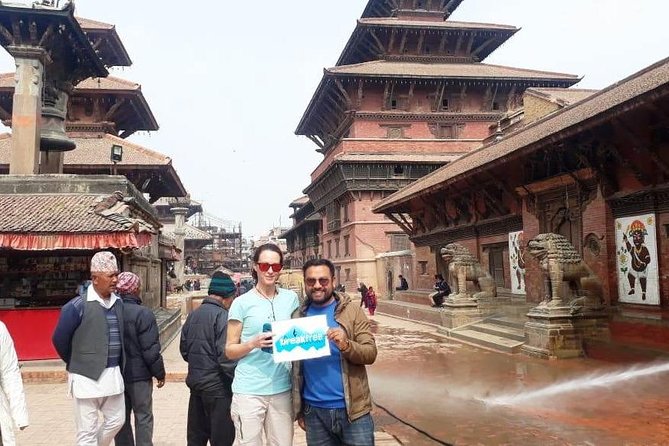
Stop 4: Patan Durbar Square, Courtyards, and Old-City Craft
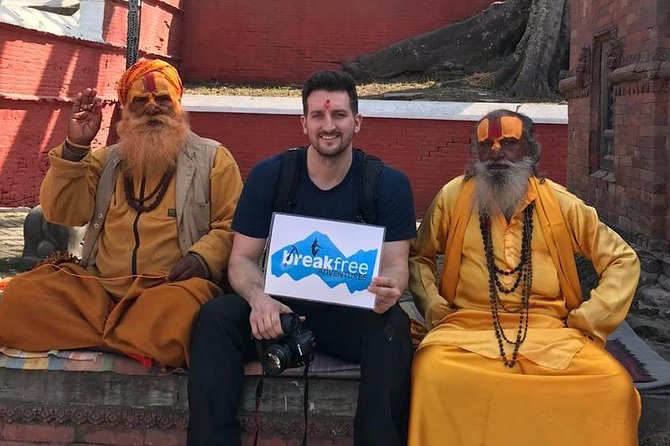
From Pashupatinath, the tour moves toward Patan, where you’ll visit Patan Durbar Square. This is where the valley’s heritage shifts from major religious centers to royal-square architecture and artisan culture. The listed time is about 1 hour.
Patan Durbar Square is a good stop for travelers who like details. Think carvings, doorways, temple forms, and the “old city” feel of a complex built for generations of daily life. If you want your day to include more than just stupas and temples, this is a strong pivot.
The itinerary also mentions the Patan Gate (as an entrance point into Patan). You might pass through or have it as a reference along the way, which helps you understand how Patan is laid out.
Stop 5: Patan Museum as Your Fast Context Builder
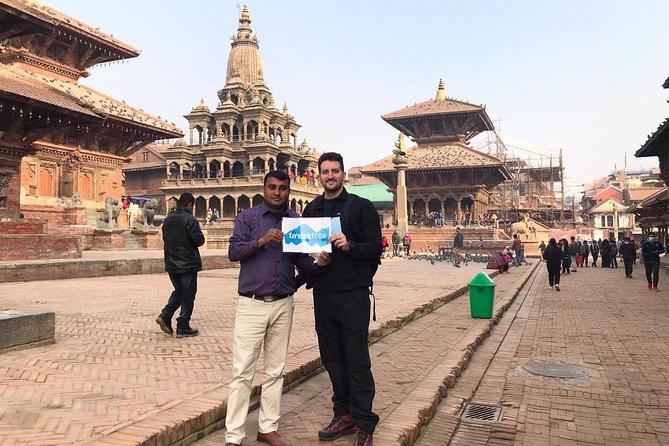
Between big outdoor monuments, the tour includes a Patan Museum stop. The listed time is about 30 minutes, which is short—but that’s the point. You don’t need a half-day museum detour when you’re also seeing multiple UNESCO sites.
This is described as a collection of old palaces, courtyards, and temples, with areas like Sundari Chowk. Even if you only catch the highlights, you’ll walk away with more “why” behind what you’re seeing in Patan’s squares and streets.
If you’re the type who likes learning in small bites, this museum stop is a good match. If you hate museums, you can still use it to fill in gaps your guide will likely mention later.
Thamel and Kathmandu Drives: Getting Your Bearings Fast
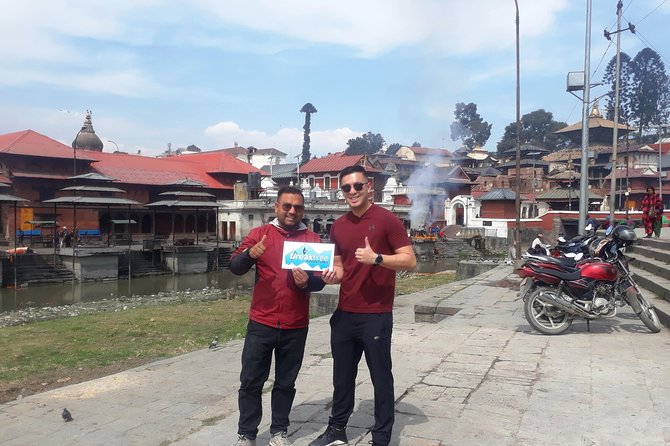
The itinerary notes Thamel as Kathmandu’s central tourist hub, plus driving through Kathmandu Valley. Thamel is mostly useful as a reference point—where you’ll likely eat, shop for supplies, and arrange future plans. Seeing it on the loop helps you mentally place the rest of the valley sites.
Those drives also matter because Kathmandu Valley isn’t flat and uniform. Roads and sightlines shape what you experience. When you’re on a tight schedule, a guided drive is often the easiest way to understand “where you are” relative to everything else.
Stop 7: Swayambhunath Again (And Why That Second Look May Help)
The itinerary shows Swayambhu twice: once as Monkey Temple and again as a later stop described as closer to Kathmandu city, featuring a Buddhist stupa. This could work in your favor if the timing is different. A second viewpoint angle can make it easier to connect what you saw earlier to how the site sits within the valley.
In practical terms: keep it flexible. If the first stop gave you enough, you can use the second time for photos or a slower walk rather than cramming in more sightseeing.
Stop 8: Changu Narayan Temple for a Slower, Older Feeling
Changu Narayan is another UNESCO stop on the route, listed for about 30 minutes. This is often the kind of stop that feels quieter and more focused than the big-town feeling of major squares and stupa complexes.
Because time is shorter, you want your guide to explain what makes the temple important—so you notice the right carvings, architecture cues, and religious symbolism instead of just walking through.
If you’re choosing between UNESCO-count options, Changu Narayan is a strong reason to lean toward more sites. It gives you variety without turning the day into a marathon.
Stop 9: Bhaktapur Durbar Square, Where the City Looks Like It Still Lives
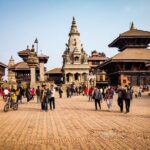
Bhaktapur Durbar Square is scheduled for about 2 hours, making it one of the longer blocks in the day. That’s the right amount of time for this stop, because Bhaktapur’s heritage is about more than a single building. It’s about the old-city layout, the square’s structure, and the way details show up as you keep walking.
This is the part of the tour that often rewards travelers who like to wander between monuments. If your guide balances guided explanation with free time, you’ll feel the difference. One review specifically praised the balance of guided guidance and time alone to roam.
Stop 10: Kathmandu Durbar Square, the Royal-Center Finale
Kathmandu Durbar Square closes out the set, listed for about 30 minutes. That shorter time can feel fast, but it also fits the purpose of a UNESCO overview tour: you get the key parts without draining your entire day.
Kathmandu Durbar Square is a living heritage zone. Even with limited time, you’ll be able to see why the royal-center story matters in Kathmandu’s broader history and city identity.
If you’re tight on energy, focus on your guide’s explanation and take a few solid photos rather than trying to see everything. With a private guide, you can ask for a “what’s most important” route.
What the Guides Do That Makes This Tour Worth It
The tour’s biggest value isn’t the list of monuments. It’s the human translator between you and the site.
In reviews, guides like Dipesh, Deepak, Bidhya, Shankar, Mukesh, Prasant, Kabin, and Razz are praised for being warm, patient, and flexible. You’ll notice it in small ways:
- they pace the walk so you can actually watch and understand
- they explain rituals before you hit the most confusing spots
- they adjust timing when your interests change
One review described a guide guiding a guest toward a monastery-style interest surprise. Another mentioned the guide inviting the group to try local yogurt. Those small touches don’t replace the big UNESCO stops—but they help the day feel personal.
Price and Value: What You’re Paying For (Plus Entry Fees)
At $17 per person, this tour looks like a bargain. The real test is what you get for that price.
You’re paying for:
- private hotel pickup and drop-off
- a professional English-speaking guide
- a private air-conditioned vehicle
- taxes included
The key catch: monument entry fees are not included. The tour notes separate rates in NPR:
- NPR 1400 for 2 UNESCO sites
- NPR 2600 for 4 UNESCO sites
- NPR 5800 for 7 UNESCO sites (some info also lists NPR 6000 for 7 sites)
On top of that, there are personal expenses, meals, and gratuities for guide and driver. Lunch is not included, but you can take a lunch break and ask your guide for recommendations. One review even mentioned having lunch at a rooftop café overlooking Boudhanath, which sounds like the kind of reward that turns a schedule into a story.
If you split the day on your own, you’d still need transport, tickets, and a clear plan. This tour bundles the hard parts and leaves you to focus on the seeing.
Practical Tips That Make the Day Smoother
Bring the basics and you’ll enjoy the day more:
- Wear shoes you can walk in. You’ll do steps at temple complexes and square areas.
- Keep your phone secure near Monkey Temple. If you’re holding food, you’ll have a closer relationship with the monkeys than you planned.
- Plan for a day that mixes guided time and walking. Even with a private setup, you’re still moving across the valley.
- Ask your guide what order works best for your priorities. One review recommended visiting in the same order because the Buddha Stupa is especially beautiful in the evening.
Also, temple rules matter. The tour notes restrictions for entering inner Hindu temple premises (based on nationality and Hindu faith). If that might affect your expectations, ask your guide in advance so you know what you can access on your day.
Should You Book This Private Kathmandu UNESCO Tour?
I’d book this tour if you want a smart, low-stress way to get your bearings and see the biggest UNESCO landmarks without turning your trip into logistics homework. The private vehicle plus hotel pickup is a major win when traffic and distances are part of your daily reality.
Choose the number of UNESCO sites based on your energy. If you’re short on time or tired from travel, the 2- or 4-site options make sense. If you want the full Kathmandu Valley overview, the 7-site route gives you the kind of packed day that most first-timers crave—just be ready for a lot of walking and a lot of new information.
If you hate museums, want very long independent exploration at every site, or strongly prefer only one religion tradition, you might find the itinerary too structured. But for most people, the balance of guide explanation, site variety, and private comfort is exactly what makes Kathmandu Valley feel understandable fast.
FAQ
FAQ
What sites are included in the UNESCO options?
The tour offers options that include 2, 4, or 7 UNESCO World Heritage Sites. The sites on the route include Swayambhunath, Boudhanath Stupa, Pashupatinath Temple, Patan Durbar Square, Changu Narayan Temple, Bhaktapur Durbar Square, and Kathmandu Durbar Square.
Is the monument entry fee included in the price?
No. Monument entry fees are listed as extra: NPR 1400 for 2 UNESCO sites, NPR 2600 for 4 UNESCO sites, and NPR 5800 (or NPR 6000 in one place) for 7 UNESCO sites.
How do I pay the entry fees?
Entrance fees in Nepali rupees can be paid at the entrance of each site. SAARC nationalities have lower fees.
Does the tour include hotel pickup and drop-off?
Yes. Hotel pickup and drop-off by a private vehicle are included for hotels located in Kathmandu city centers. Extra charges may apply outside those areas.
Is transportation private and air-conditioned?
Yes. You get private transportation with air conditioning.
Is there an English-speaking guide?
Yes. The tour includes a professional English-speaking tour guide.
Can I choose how long the tour is?
The tour duration is listed as 4 to 10 hours, depending on the option you select (2, 4, or 7 UNESCO sites).
Can I take lunch during the tour?
Yes. You can take a lunch break during the tour, and your guide can recommend restaurants.
Is this a group tour or truly private?
It’s private. Only your group will participate.
Are there limits on entering temple inner premises?
Yes. Only Nepali and Indian nationals of the Hindu faith are permitted to enter the inner premises of Hindu temples during the tour.