REVIEW · KATHMANDU
Folklore and Everyday Life in Ancient Patan
Book on Viator →Operated by Travel Nextdoor · Bookable on Viator
Patan makes sense on foot. This 2–2.5 hour walk through ancient Patan uses courtyards, shrines, and folklore to explain how Newar Buddhism and Tantric Hinduism shape daily life. I like how it stays practical and local, not museum-only sightseeing.
I also like the way the guide connects small details—like resting areas and ancestral shrines—to bigger ideas about faith, art, and change in the Kathmandu Valley. Sandip, a commonly mentioned guide name, is especially praised for clear explanations and an easy sense of humor.
One thing to plan around: Patan Durbar Square is not included, so if you want the palace complex and museum, you’ll need extra ticket time and fees on your own.
In This Review
- Key highlights to look for
- Walking the Courtyards of Ancient Patan (Without Durbar Square)
- Patan Dhoka Meet-Up, Timing, and the Pace You’ll Actually Want
- Stop 1: Pimbahal Courtyard Monastery and Newar Buddhist Daily Life
- Stop 2: Nyakhachowk’s Falchaa Resting Areas and Vernacular Homes
- Stop 3: Nagbahaa Courtyard and the Greek Influence in Iconography
- Stop 4: Swotha Square Finish, Tea Shops, and Your Durbar Square Choice
- Faith in Everyday Life: What You’re Learning While You Walk
- Price and Value: Is $65 Worth It for This Kind of Walk?
- Practical Tips to Make the Courtyards Experience Easier
- Who Should Book This Patan Walk (And Who Might Skip It)
- Should You Book Folklore and Everyday Life in Ancient Patan?
- FAQ
- How long is the Folklore and Everyday Life in Ancient Patan walking tour?
- Where do I meet the guide?
- Where does the tour end?
- Is Patan Durbar Square included?
- What is included in the price?
- Are there admission fees for the courtyard stops?
- What happens if the weather is bad?
Key highlights to look for
- Pimbahal’s Newar Buddhist monastery scale with more than 4,000 ordained monks and standout woodwork
- Nyakhachowk’s courtyard life, including falchaa resting areas and family shrines
- Nagbahaa’s Greek/Hellenistic threads showing up in Buddhist and Hindu iconography
- Swotha Square as a gentle finish, with temples, shrines, and tea shops
- Small groups (max 10) so questions about everyday religion feel natural
- Mobile ticket and an organized start at Patan Dhoka with free courtyard stops
Walking the Courtyards of Ancient Patan (Without Durbar Square)
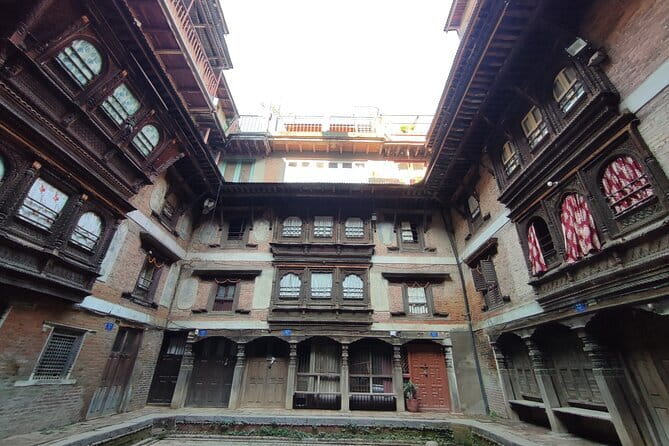
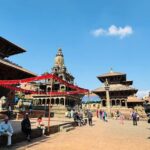
Patan’s old town can feel like a maze until someone shows you the logic: courtyards aren’t leftovers. They’re the stage where daily life, worship, and community knowledge overlap.
This walk is built around that idea. You move through narrow lanes and open courtyard spaces next to palaces and shrines, where spirituality isn’t separated from routine. The tour focuses on how the Kathmandu Valley’s traditions show up in ordinary habits—where people rest, where families keep ancestral shrines, how iconography gets interpreted, and how faith practices keep rolling forward as younger Nepalis balance cultural norms with modern values.
The result is a type of sightseeing that feels useful. Instead of collecting random sights, you learn how Patan’s built environment carries meaning. You’ll come away with a clearer sense of why courtyards matter, and why different religious styles share space in this part of Nepal.
You can also read our reviews of more tours and experiences in Kathmandu.

Patan Dhoka Meet-Up, Timing, and the Pace You’ll Actually Want
The tour starts at Patan Dhoka (Patan Dhoka Road, Lalitpur) at 10:00 am, and it ends at Swotha Square, which is just a short walk from Patan Durbar Square.
A couple practical points matter here:
- Duration: about 2 to 2.5 hours. This is long enough to feel like you understand a neighborhood, but short enough to keep your energy for the rest of your day.
- Group size: up to 10 travelers, so you’re not stuck in a long line moving like a tour bus.
- Mobile ticket: convenient if you’re already juggling tickets and entry lines elsewhere.
You’ll also want good conditions. The experience notes that it works best in good weather, so if rain is in the forecast, expect rescheduling or an alternative plan.
Finally, there’s no pick-up or drop-off, so build in time to reach the meeting gate near Patan Dhoka. The route is also described as near public transportation, which helps if you’re staying somewhere around the valley.
Stop 1: Pimbahal Courtyard Monastery and Newar Buddhist Daily Life
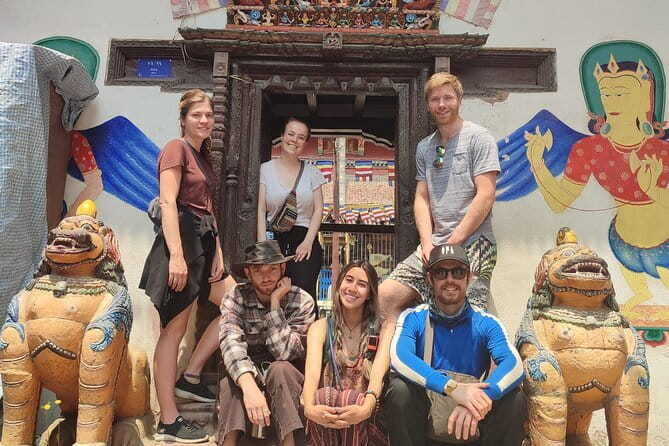
The walk begins with Pimbahal, a Newar Buddhist monastery in the old town area. This is where the tour sets its tone: faith isn’t just about big temples. It’s also about daily systems—monastic organization, artistic traditions, and the way sacred space shapes what people do around it.
Pimbahal is described as one of the most respected and embellished Buddhist monasteries in the Patan area, with more than 4,000 ordained monks. That scale changes your perspective fast. You’re not just looking at a pretty courtyard; you’re seeing evidence of a long-standing spiritual institution that has operated at real depth for a long time.
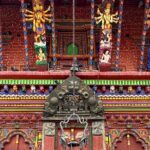
As you look around, pay attention to the craftsmanship. The tour points out intricate woodwork and the kind of detail you usually miss when you’re rushing. In a place like Pimbahal, those details aren’t decoration. They’re visual language—part of how Buddhism and local tradition stay legible to people who pass through these spaces every day.
What I like about this stop: it connects the monastery to urban life. Courtyards here aren’t isolated islands; they are part of an everyday settlement plan where spiritual practice and local knowledge reinforce each other.
Watch-outs: this is a monastery setting, so keep your tone respectful and your pace steady. Also, remember this tour is not about full-duration time inside Patan Durbar Square. Your focus is the old-town fabric around it.
Stop 2: Nyakhachowk’s Falchaa Resting Areas and Vernacular Homes

From Pimbahal, you head to Nyakhachowk, another courtyard-centered neighborhood stop. This is where the tour gets very practical about everyday life in Patan.
Nyakhachowk is presented as a place to observe traditional architecture and the rhythms of communal living. You’ll learn about falchaa, which are resting areas, and you’ll see how these spaces fit into the larger courtyard pattern. Even if you don’t catch every technical term, you’ll understand the function: resting points aren’t just amenities. In old cities, they’re part of how people move, pause, and socialize within a tight urban layout.
The tour also mentions ancestral shrines and vernacular houses. That matters because it shifts your gaze from monuments to continuity. In many historic towns, people treat family worship spaces like background scenery. Here, they’re treated as central to how identity stays intact.
There’s also a religious-site thread at Nyakhachowk. The description notes one of the mos… (cut off in the provided text), pointing to the fact that old Patan’s courtyard life isn’t purely one-faith-only. That’s a useful reminder: in Kathmandu Valley neighborhoods, religious variety can be woven into daily space.
Potential drawback: this part of the walk is more about observing built form than about buying tickets or entering big rooms. If you’re the type who wants doors opening constantly, you may wish the tour had a bit more interior time—but the courtyard approach is exactly the point.
Stop 3: Nagbahaa Courtyard and the Greek Influence in Iconography
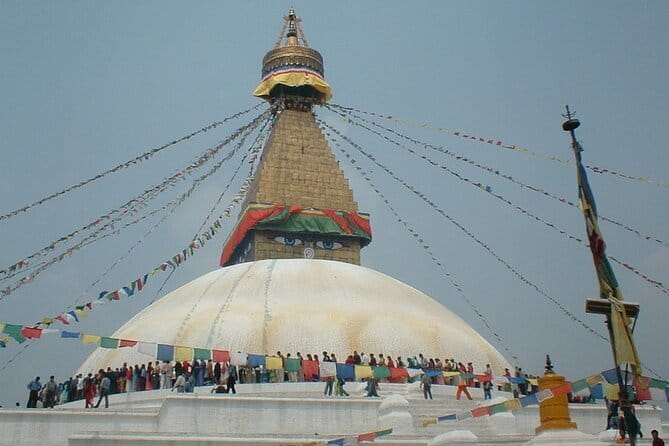
Next comes Nagbahaa (Nag Bahal), described as one of the largest courtyards in old Patan. If Pimbahal gives you institutional scale, and Nyakhachowk gives you daily settlement rhythm, Nagbahaa leans into how ideas travel and mutate over time.
This stop is where the tour brings up globalization in ancient times and how it left marks on traditional art. The highlight: Greek influence and Hellenistic impressions appearing in Buddhist and Hindu iconography.
That’s not a casual trivia moment. It’s a theme that helps you read art differently. When you learn that iconography can carry foreign stylistic influences and local reinterpretations, you stop treating carvings as isolated decorations. You start seeing them as part of a wider conversation across regions—art as a record of contact, trade, and translation.
What to do during this stop: slow down. Courtyards can look visually busy, and it’s easy to miss the shapes and symbols your guide points out. Let the guide’s explanations guide where you look, then keep your eyes open for recurring motifs.
This is one of the most distinctive angles of the whole experience. Many tours stay inside national borders and never talk about how older art absorbed outside stylistic pressure. Here, it’s woven into the story of a place you’re physically standing in.

Stop 4: Swotha Square Finish, Tea Shops, and Your Durbar Square Choice
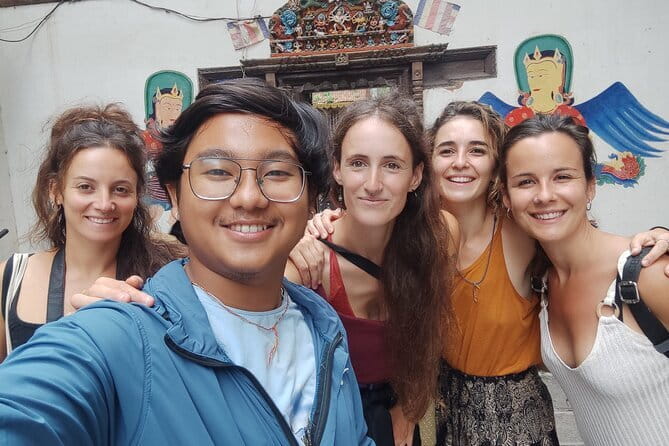
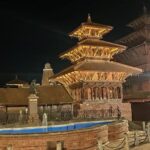
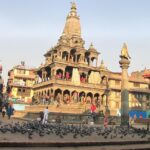
The tour ends at Swotha Square, a tidy payoff area with temples, shrines, and tea shops. By this point, you’ve walked through several courtyard spaces, and the square gives you a less cramped feeling—a place to regroup and let what you learned settle in.
You’ll also get a clear option: if you want, the guide can direct you toward Patan Durbar Square, the main palace temple complex, so you can visit it independently after the walking portion.
Here’s the practical catch: Patan Durbar Square is not included in this tour. The description explicitly notes that the museum inside the old palace is worth visiting, but it has extra admission fees. So plan that as a separate add-on, not something that’s already covered.
Why this works: you get two different kinds of Patan viewing in one day plan. The walking part helps you understand the town’s living structure. Then Durbar Square gives you the grand focal monument. Put together, it’s a stronger day than trying to force everything into one rushed visit.
Faith in Everyday Life: What You’re Learning While You Walk

The tour’s big promise is about how faith practices show up in real life. It explicitly points to Newar Buddhism and Tantric Hinduism, and it frames those traditions as living forces, not relics locked in the past.
That means your guide isn’t just telling you what a symbol means. The tour connects symbols to people’s routines and the way neighborhoods function:
- Courtyards act like a home base for spiritual and communal activity
- Resting spaces like falchaa show how everyday movement is structured
- Ancestral shrines reinforce identity through generations
- Art and iconography can reflect older cross-cultural influences (like Hellenistic impressions)
You’ll also hear the tour thread that ties past traditions to the future. The description notes young Nepalis embracing cultural norms while engaging modern values. Even without a long lecture, you’ll feel that the guide is describing continuity rather than only change.
Price and Value: Is $65 Worth It for This Kind of Walk?
At $65 for about 2 to 2.5 hours, the value here depends on what you want from your day.
You’re paying for an experienced local guide, a small-group format, and access to interpretive context—how to look at courtyards, shrines, and iconography so it stops being just a visual blur. The tour also notes mobile ticket use, and each courtyard stop is marked with admission ticket free in the description.
So where does your money go? Mainly into:
- someone local who can explain why the space is shaped the way it is
- the ability to ask questions without a crowd bottleneck
- a route that focuses on the old town fabric around the main square
If you’re the type who enjoys walking, asking questions, and turning “I’m just seeing buildings” into “I understand why this matters,” the price feels fair. If you mainly want major monuments and interior museum time, you may prefer an itinerary that includes Patan Durbar Square directly.
Practical Tips to Make the Courtyards Experience Easier
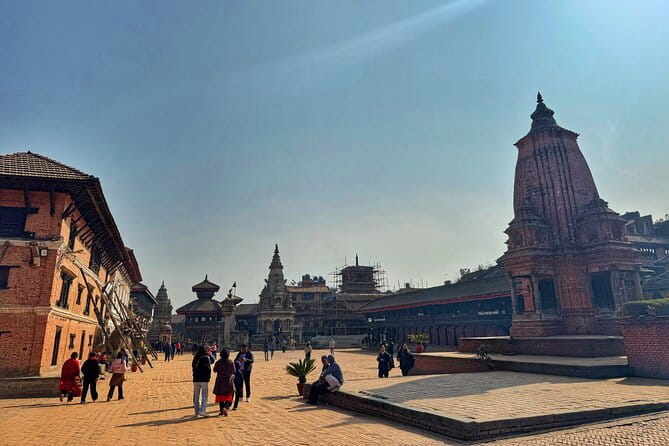
This walking tour is described around narrow streets and courtyard stops, so a few practical choices can make the day feel smoother:
- Wear comfortable shoes. You’ll be on your feet through old-town lanes and courtyards.
- Keep your pace flexible. Courtyard conversations take time because the guide is tying architecture to belief.
- Bring a light layer. Patan mornings can feel cooler than you expect.
- Keep an eye on weather. The experience states that good weather is required.
Also, since there’s no pick-up/drop-off, plan how you’ll reach Patan Dhoka at 10:00 am. A short buffer helps, especially if you’re arriving on foot through nearby lanes.
Who Should Book This Patan Walk (And Who Might Skip It)
This tour is a strong fit if you want:
- a local-feeling route in Patan, not just the main highlight
- an explanation of how Buddhism, Hinduism, and Tantric influences show up in daily space
- a small group where you can hear details and follow the story
It might be less ideal if you mainly want:
- full coverage of Patan Durbar Square as part of the timed ticketed circuit
- lots of indoor museum time (this experience is built around outdoor courtyards and urban observation)
- an itinerary starting far from Patan Dhoka without your own transport plan
If you do book it, I’d pair it with an after-walk plan to see Patan Durbar Square on your own. The walking portion helps you understand what you’ll later see in the palace complex.
Should You Book Folklore and Everyday Life in Ancient Patan?
I’d book it if you like learning through walking—when a place makes more sense because someone connects it to how people actually live and worship. The mix of Pimbahal’s monastic scale, Nyakhachowk’s courtyard architecture, and Nagbahaa’s Greek-influenced iconography gives you variety without sending you all over the map.
The main reason to skip is simple: if Durbar Square is your priority and you don’t want to manage extra tickets and time afterward, this one may feel incomplete. Since this tour intentionally focuses on the old town around the square, it’s best as part of a bigger Patan day.
If your goal is Patan that feels real—courtyards, shrines, and folklore in the same frame—this is a solid pick.
FAQ
How long is the Folklore and Everyday Life in Ancient Patan walking tour?
The tour lasts about 2 hours to 2 hours 30 minutes.
Where do I meet the guide?
You meet at Patan Dhoka (Patan Dhoka Road, Lalitpur 44600, Nepal).
Where does the tour end?
The tour ends at Swotha Square (M8FG+W63, Lalitpur 44600, Nepal), a couple minutes walk from Patan Durbar Square.
Is Patan Durbar Square included?
No. Patan Durbar Square is not covered in this tour, though you can visit it independently afterward. Extra admission fees apply.
What is included in the price?
An experienced local guide is included. Tickets are mobile for this experience.
Are there admission fees for the courtyard stops?
The stops listed (Pimbahal, Nyakhachowk, Nagbahaa, and Swotha Square) show admission ticket free in the provided tour info.
What happens if the weather is bad?
The experience requires good weather. If it’s canceled due to poor weather, you’ll be offered a different date or a full refund.