REVIEW · KATHMANDU
Pick 2-Wonders of Kathmandu: A 3-Hour Heritage Hop
Book on GetYourGuide →Operated by Cordial Trek Pvt. Ltd. · Bookable on GetYourGuide
Two UNESCO stops in a tight 3-hour loop. This is a smart way to see Kathmandu Valley’s big cultural beats without burning a whole day. I especially like the private pickup/drop convenience and the rare chance to look for Kumari, the living goddess.
You choose your pairing from six UNESCO World Heritage sites, and your guide connects the dots between palaces, temples, and the street-level rituals you’d miss if you just wandered. The pace is built for doing meaningful stops fast, with an air-conditioned private vehicle and bottled water keeping you comfortable.
One consideration: because it’s only three hours and you’re picking two sites, you’ll want to be ready for short walks, stairs, and some crowds, especially at the hilltop and river areas.
In This Review
- Key highlights to pay attention to
- Two UNESCO Stops in 3 Hours: The core idea
- How pickup from Thamel shapes the timing
- Option 1: Kathmandu Durbar Square and Swayambhunath (Monkey Temple)
- Kathmandu Durbar Square: palaces plus Kumari tradition
- Swayambhunath: hilltop stupa, Mahachaitya, and 360° views
- Option 2: Pashupatinath Temple and Boudhanath Stupa
- Pashupatinath: Shiva devotion on the Bagmati River
- Boudhanath: huge stupa energy with a quieter feel
- Option 3 and 4: Patan Royal Squares or Bhaktapur Durbar Square
- Patan Durbar Square + Kathmandu Durbar Square
- Bhaktapur Durbar Square: five-storied Nyatapola Temple
- Private guide power: how you actually learn in 3 hours
- Price and entrance fees: is $3.94 good value?
- Practical temple tips and what to bring
- Should you book this Kathmandu heritage hop?
- FAQ
- How long is the tour?
- Where does pickup happen?
- Is it a private tour or shared group?
- Can I choose which sites I visit?
- Are entrance fees included?
- Does the tour include skip-the-line service?
- What languages are the guides available in?
- What should I bring with me?
- Is luggage allowed?
- Is it suitable for everyone?
Key highlights to pay attention to
- Kumari temple access (in the Durbar Square option) for a truly Kathmandu-only tradition
- 360-degree viewpoints from Swayambhunath, with monkeys and the Mahachaitya area nearby
- Bagmati River rituals possibility at Pashupatinath, where you may witness cremation rites
- Boudhanath’s calm scale at one of Nepal’s largest Buddhist stupas and a major Tibet trade-route site
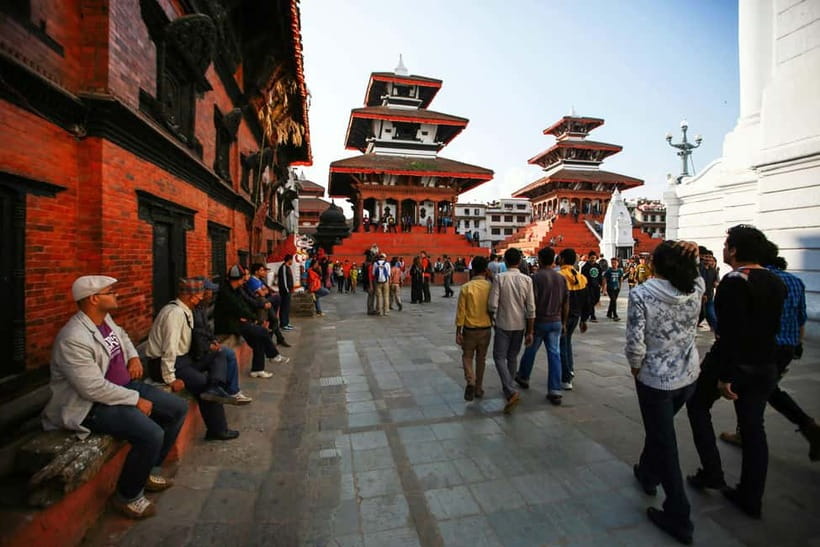
- Newari craft and red brick detail at Durbar Squares, where buildings do the storytelling
- Private guide + private vehicle means fewer logistics headaches and a more flexible pace
Two UNESCO Stops in 3 Hours: The core idea
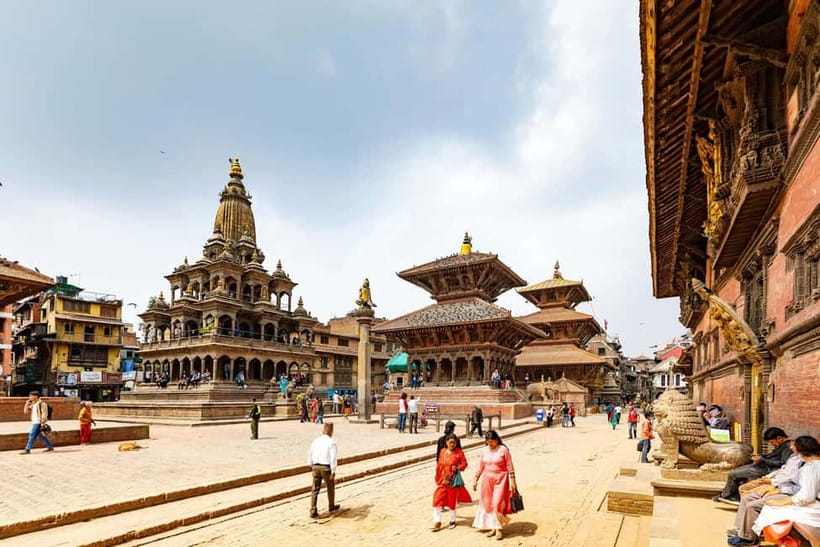
This tour is built around one simple choice: in just 3 hours, you pick two World Heritage sites from the Kathmandu Valley area. That format is perfect when you’re short on time, want a guided “starter pack,” or you don’t want to spend half a day traveling between scattered sights.
What makes it work is the focus. Instead of cramming five stops into an exhausting circuit, you get one serious urban heritage stop (usually a Durbar Square) plus one spiritual or viewpoint stop. Your guide’s job is to explain what you’re seeing in real-world terms—symbols, rituals, dynasties, and how all that shows up in architecture and everyday life.
And yes, the “pick your two” setup is the big advantage here. You can tailor the experience based on what you care about most: living traditions and royal squares, Buddhist stupa atmosphere, or Hindu temple spirituality.
You can also read our reviews of more historical tours in Kathmandu
How pickup from Thamel shapes the timing
The tour starts with pickup from your Kathmandu hotel area (Thamel is where it’s based around), and you return to the same area. The pickup window is tight—05–10 minutes early is the right move—because you’re on a guided schedule built to protect your time.
Because it’s private transport in an air-conditioned vehicle, you avoid the slow swap-and-wait feeling you get on shared tours. In a city where traffic and walking times can swing, private wheels help your day stay “on plan,” even if the sights themselves get busy.
You also get a bottle of drinking water. It’s a small inclusion, but after walking through courtyards and climbing around temples, it keeps you from turning the day into a snack hunt.
Option 1: Kathmandu Durbar Square and Swayambhunath (Monkey Temple)
If you want a Kathmandu introduction that mixes royalty, living culture, and views, this pairing is a strong pick.
Kathmandu Durbar Square: palaces plus Kumari tradition
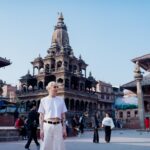
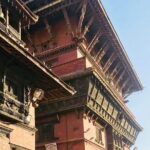
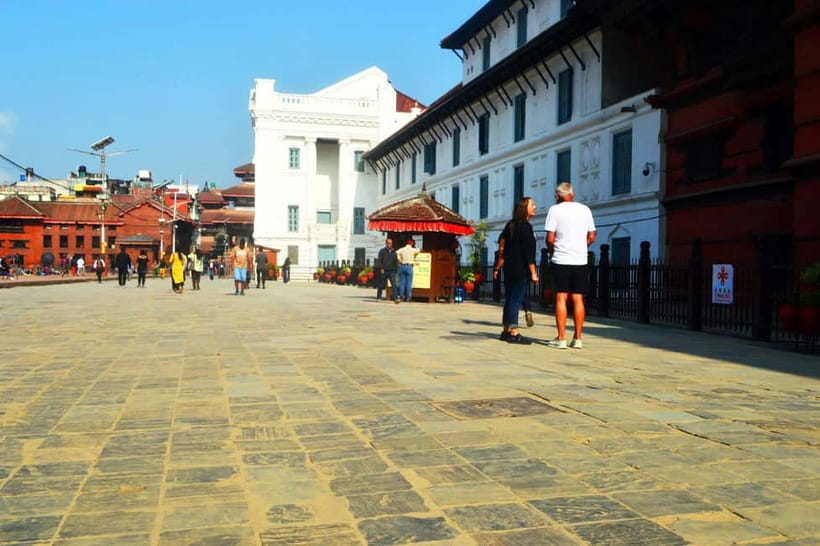
At Kathmandu Durbar Square, you’re in the heart of old-city royal spaces tied to both Malla and Shah dynasties. The star details include the palace complex areas and a famous nine-storied structure called Nautale Durbar. In practical terms, Durbar Squares aren’t just pretty courtyards—they’re where you see how power, religion, and craftsmanship were built into the city.
The other big draw is the rare chance to see Kumari, the living goddess, associated with her temple there. Even if you don’t catch every moment of a specific ritual, just knowing how the tradition works gives you a whole new lens for what you’re seeing.
One drawback to consider: Durbar Squares can mean crowds and lots of small buildings to process in a short window. If you’re the type who likes to linger, tell your guide early. Your time will stretch to match your attention span.
Swayambhunath: hilltop stupa, Mahachaitya, and 360° views
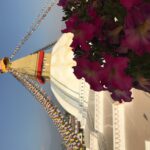
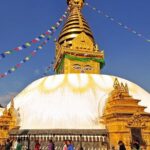
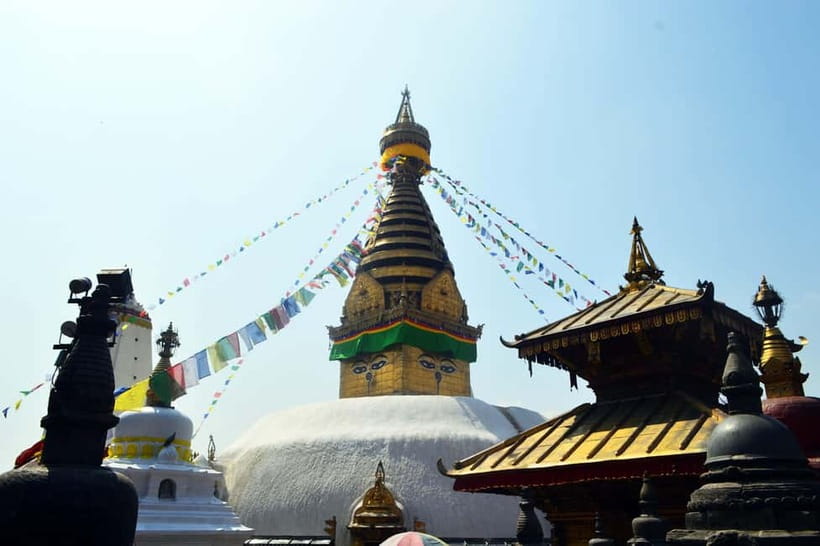
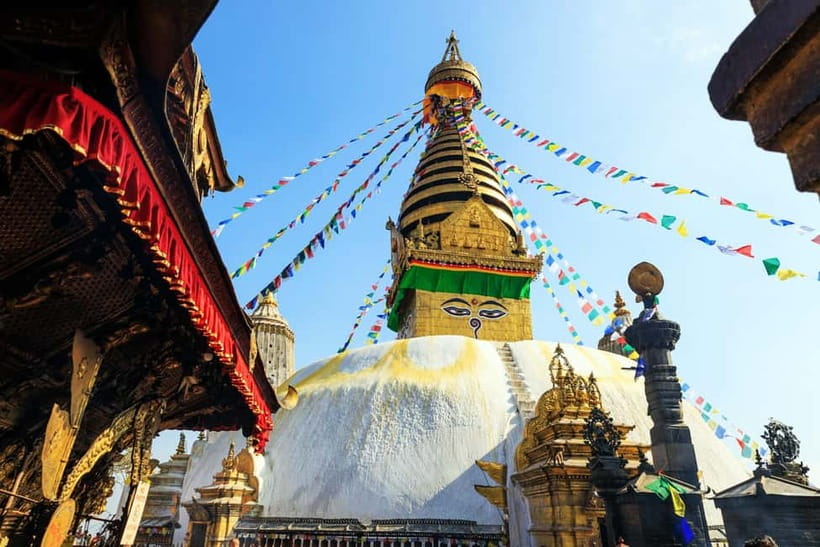
Then you head up to Swayambhunath (Monkey Temple), a UNESCO site on a hill. It’s the classic Kathmandu view stop for a reason: you get panoramic 360-degree vistas of the valley, and you’ll spot the stupa complex elements around Mahachaitya.
Yes, there are monkeys. But the bigger point is how the stupa’s presence changes the mood—this feels like a place where people come to reflect, not just take photos. Even in a quick visit, you’ll feel the shift from urban square energy to spiritual hilltop focus.
Practical note: expect stairs and uneven footing on approaches. If your legs are tired or you hate stairs, this option is the one that tests you.

Option 2: Pashupatinath Temple and Boudhanath Stupa
This is the pairing for people who want a deeper spiritual contrast—Hindu temple focus first, then Buddhist stupa calm.
Pashupatinath: Shiva devotion on the Bagmati River
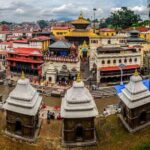
Pashupatinath Temple is dedicated to Lord Shiva and sits by the Bagmati River. The experience here is about ritual gravity—standing close enough to see how the temple works with the river setting and how ceremonies play out in a holy public space.
The tour may also include a moment where you may witness traditional cremation rituals along the riverbanks. You should come ready for emotion and realism. This is not an “Instagram-clean” sightseeing stop. A good guide helps by explaining what the symbols mean and what you’re actually looking at, without turning it into spectacle.
If you’re sensitive to intense sights, you might prefer one of the Durbar Square + viewpoint combos. This one can be powerful in a way that lingers.
Boudhanath: huge stupa energy with a quieter feel
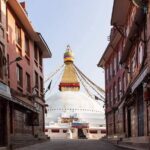
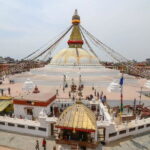
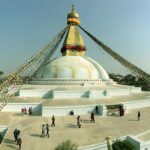
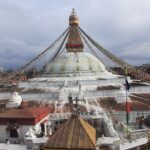
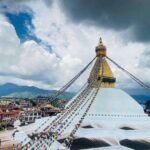
Then you go to Boudhanath Stupa, one of Nepal’s major Buddhist sites and UNESCO-listed. It’s described as the largest mandala in Nepal and is tied to the ancient trade route to Tibet—which matters because it explains why this place feels both historical and spiritually central.
This stop is often where people exhale. The stupa’s scale makes it hard to stay restless, and the atmosphere tends to be slow and watchful. You’ll see the stupa structure and surrounds as a living religious zone, not just a monument.
If you love Buddhist art and the feeling of being small in front of big spiritual architecture, this is your option.
Option 3 and 4: Patan Royal Squares or Bhaktapur Durbar Square
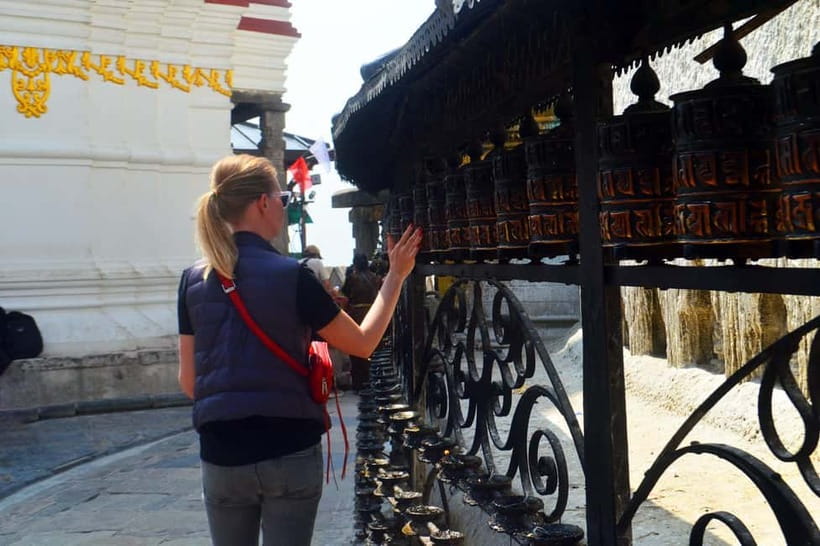
If you already know Kathmandu’s core, or you want more Newari craftsmanship and city textures, these choices are excellent.
Patan Durbar Square + Kathmandu Durbar Square
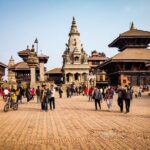
Patan Durbar Square is often the art-first stop, tied to Lalitpur and known for exquisite Newari architecture. It’s UNESCO-listed and famous for the red brick pavement that frames temples, statues, and palace-era details.
Pairing Patan with Kathmandu Durbar Square gives you a comparison feel: two major royal squares, two sets of architectural fingerprints. It’s a great choice if you like looking at buildings and wanting your guide to explain how the design reflects culture and power.
Bhaktapur Durbar Square: five-storied Nyatapola Temple
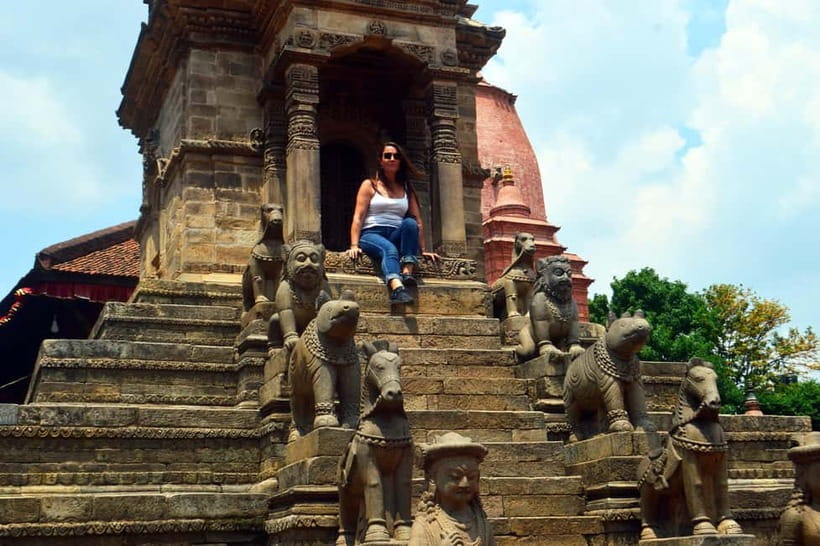
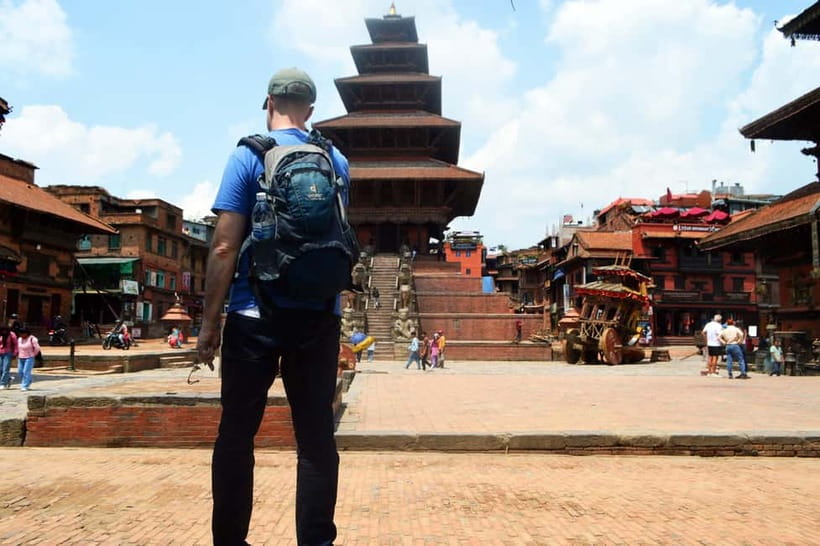
Bhaktapur Durbar Square is a time-travel kind of stop in a smaller district, yet it’s known for having the largest Durbar Square in Nepal. The area is said to include four smaller squares, which helps you understand the city as an organized set of spaces rather than one big blur.
The headline structure is Nyatapola Temple, described as the tallest in Nepal, with five stories. If you like dramatic vertical architecture, this is the moment you’ll remember.
Downside for some people: Bhaktapur options can feel more “walk-and-look” than “quick photo and move on.” If you want to sit often or you’re short on stamina, plan your pace carefully and ask your guide to prioritize the most important buildings first.
Private guide power: how you actually learn in 3 hours
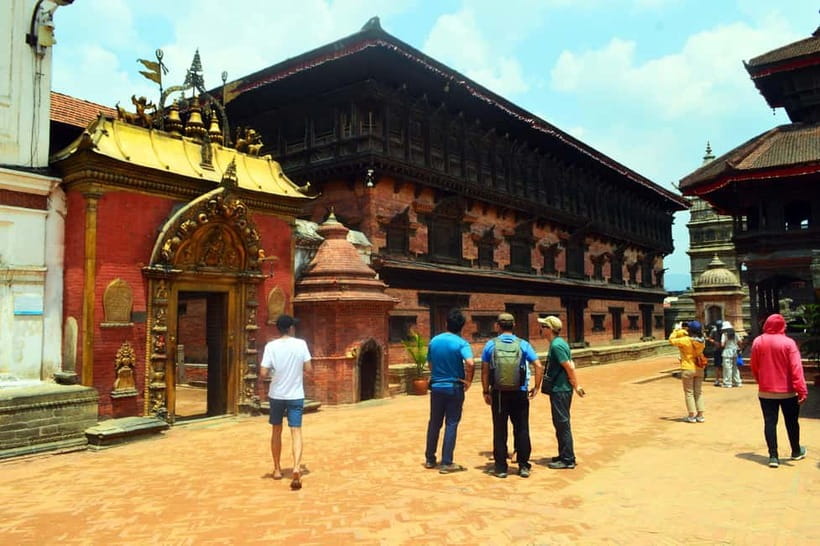
The biggest payoff of this tour isn’t the checklist of sights. It’s the way a live guide turns monuments into meaning—fast.
In the field, you’ll often see guides like Nilakantha Acharya explain things clearly at Durbar Square and the Monkey Temple, and guides such as Prakash and drivers like Hari or Ram help keep the route smooth. What I like about the best versions of this experience is that the guide adapts to your pace and questions instead of forcing a scripted sprint.
You can also get practical attention for photography and timing. Some guides are known to take and share lots of photos after the tour, which can help if you’re the one who usually ends up with fewer travel pictures.
One small tip: if you’re planning lots of photos, tell your guide upfront. A good guide can slow down just enough without throwing off the day.
Price and entrance fees: is $3.94 good value?
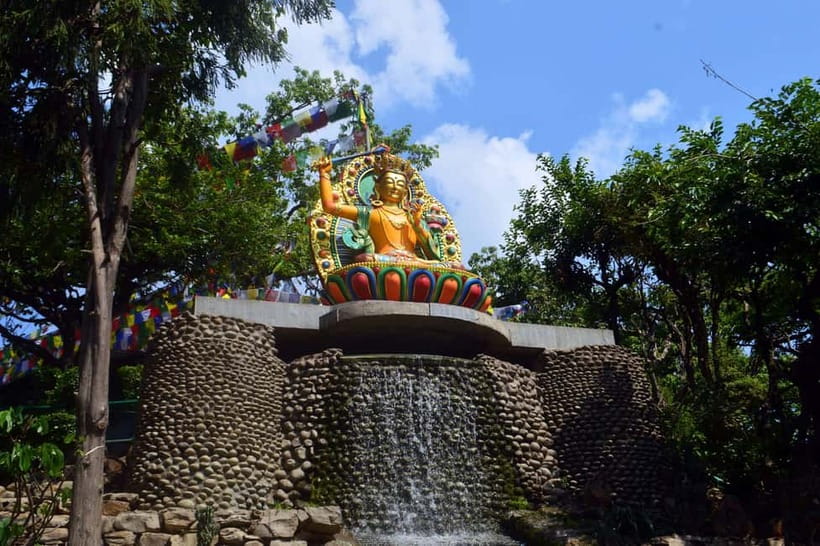
The price listed is $3.94 per person, and the inclusions matter because that’s what creates value, not just the ticket number.
You get:
- Private pickup and drop-off from your hotel
- An experienced tour guide
- An air-conditioned private vehicle
- Bottled drinking water
- A tour to any two of the six UNESCO options
- Help with skipping the ticket line
What’s not included:
- Monument entrance fees (with an add-on option available)
So the real budgeting question is whether you’ll pay entrance fees separately. If you’re counting every dollar, ask what add-on route includes those charges before you confirm. But even with entrance fees added, the combination of private transport + guide + two UNESCO stops in 3 hours often feels cost-effective for short stays.
One more practical point: you’re saving time. Time in Kathmandu is not just hours—it’s energy. Compressing two heritage sites into one guided session can be a better value than trying to manage routes on your own.
Practical temple tips and what to bring
This kind of tour is active, but it’s not complicated. Your job is simple: come prepared so you can focus on seeing.
Bring:
- Passport
- Cash
Also plan for what you might need on-site. Since monument entrance fees are not included by default, cash can save a scramble if you decide to do the add-on option or pay for anything that comes up.
What to wear and carry:
- No luggage or large bags
- Alcohol and drugs are not allowed
If you choose the options involving Swayambhunath or the river area at Pashupatinath, wear shoes you trust on uneven surfaces. For the stupa and temple areas, it’s smart to dress respectfully and keep shoulders and legs covered in a way that feels comfortable for you.
And because this is a private tour, you can usually adjust in-the-moment for what you care about—temple rituals, architectural details, or viewpoint time.
Should you book this Kathmandu heritage hop?
Book it if:
- You have a tight schedule and want a guided hit of major UNESCO heritage sites.
- You like choosing based on interest: Kumari + views, temples + stupa calm, or Newari city architecture.
- You’d rather pay for private comfort (pickup, vehicle, guide) than fight logistics.
Skip it (or choose a different style) if:
- You’re very mobility-limited; some options involve stairs and uneven walking.
- You’d rather avoid the intensity that can come with the Bagmati River ceremonies at Pashupatinath.
If your Kathmandu plan is short, this is one of the simplest ways to get oriented fast. You’ll leave with two clear stories: one told through royal squares and living traditions, and the other through spiritual spaces that change the way the city feels.
FAQ
How long is the tour?
The tour runs for 3 hours.
Where does pickup happen?
Pickup is included from your hotel in Kathmandu. The tour experience is based around Thamel, and pickup is arranged there.
Is it a private tour or shared group?
It’s a private group tour.
Can I choose which sites I visit?
Yes. You select any two of the six World Heritage sites offered in the options.
Are entrance fees included?
Monument entrance fees are not included, but there is an add-on option available.
Does the tour include skip-the-line service?
Yes, the tour includes a skip the ticket line feature.
What languages are the guides available in?
The live tour guide speaks English and Hindi.
What should I bring with me?
You should bring your passport and cash.
Is luggage allowed?
No. Luggage or large bags are not allowed.
Is it suitable for everyone?
It is not suitable for wheelchair users, babies under 1 year, or people over 95 years.