REVIEW · KATHMANDU
“Explore Kathmandu Rich Heritage: City Highlights Bus Tour”
Book on GetYourGuide →Operated by Anjil Manjil Travels and Tours · Bookable on GetYourGuide
Five heritage stops, one efficient day. This driver-led Kathmandu heritage highlights bus tour strings together classic UNESCO sights—Swayambhunath, Pashupatinath, Boudhanath, Kathmandu Durbar Square, and Budhanilkantha—without making you bounce around town all day. I like the value here: for about $10 you get a full round-trip loop plus time to look, photo, and shop. One watch-out: the experience is very schedule-and-site-based, so you may find some places are limited by religion and the bus comfort can vary.
What keeps it interesting is how practical it feels once you’re on board. You meet near Thamel, get picked up, then ride from stop to stop with short breaks—great for first-timers who want orientation fast. The tone is local and functional, with an English/Hindi-speaking driver, not a long lecture-style guide; that can be a plus if you’re just here to see the sights, and a minus if you want deeper context at every turn.
In This Review
- Key highlights worth planning around
- Price and pace: why $10 feels like a deal here
- The Thamel meeting point: how pickup really affects your day
- Swayambhunath: the viewpoint stop that sets the tone
- Pashupatinath Temple: powerful views, strict respect
- Boudhanath Stupa: where the tour’s mood shifts
- Kathmandu Durbar Square: short time, lots to notice
- Budhanilkantha: a different kind of temple visit
- Guide vs. driver: what the experience really feels like
- What can go wrong (and how to prevent it)
- Who this Kathmandu heritage bus tour suits best
- Should you book this Kathmandu heritage bus tour?
- FAQ
- What sites are included on the Kathmandu Rich Heritage bus tour?
- How long is the tour?
- Where do I meet the tour?
- What time should I arrive for pickup?
- Are there pickup options besides Thamel?
- What is included in the price?
- Are meals included?
- What languages does the driver speak?
- Is free cancellation available?
- Should you book this tour for a first day in Kathmandu?
Key highlights worth planning around
- Five major Kathmandu Valley sites in one 6-hour circuit
- UNESCO World Heritage stops at Swayambhunath, Pashupatinath, Boudhanath, and Durbar Square
- Driver-led, shared local bus that keeps the pace moving
- Temple viewing plus real culture moments you can watch and photograph
- Limited entry at some sites depending on where you’re allowed to go
- Thamel-friendly meeting point so you’re not hunting across the city
Price and pace: why $10 feels like a deal here
At around $10 per person for a roughly 6-hour day, this tour is built for travelers who want maximum first-day sightseeing with minimal fuss. You’re paying for the routing, the transfers, and the convenience of being collected near Thamel and returned there. That’s the core value.
The pace is the trade-off. This is not a slow, sit-down tour with long explanations and lingering time. You’ll likely get enough time for photos and general sightseeing, but if you’re the kind of traveler who likes to relax inside temples for a long stretch, you may feel a bit time-pressed. That time pressure shows up most at bigger, high-interest sites.
You can also read our reviews of more city tours in Kathmandu
The Thamel meeting point: how pickup really affects your day
The pickup setup matters a lot on tours like this, because missing the bus doesn’t just mean waiting—it can mean losing your first stop window.
Plan to arrive early: you’re asked to be at the meeting spot between 9:50 and 10:20 am, across the road from Hotel Malla, at the entrance facing the street (the opposite side of the main entrance gate). The bus won’t make extended roadside stops for sightseeing; it’s there to collect you and keep moving. That’s efficient, but it also means you should be ready on time.
There are also stated pickup options beyond Thamel, including Amrit Science Campus, Pokhara Lakeside, Sorhakhutte, and Barahi Chouk, plus the Malla Hotel area and Thamel. If you’re staying outside central Kathmandu, confirm which pickup time window applies to your exact location.
Swayambhunath: the viewpoint stop that sets the tone
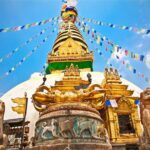
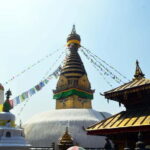
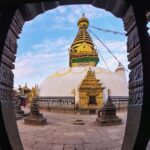
Swayambhunath is one of those places that makes you understand Kathmandu’s geography fast. The complex sits above the city, so your first impression is built around views as much as the temple structures themselves. On this tour, you’re there as one of the main heritage stops, with time for sightseeing and photos.
Even if you’re not there for religious reasons, the visual storytelling is strong: religious art, architecture, and the everyday flow of people all happening around you. It’s also a good place to get oriented—after Swayambhunath, the rest of the city’s landmarks start to make more sense.
One practical note: some areas can be easier to access than others, and rules can vary by site. For travelers who aren’t Hindu, you may find you can enter only some sections while still being able to see plenty from allowed areas. The value here isn’t just entry—it’s the overall atmosphere and the layered visuals across the hillside complex.
Pashupatinath Temple: powerful views, strict respect
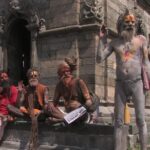
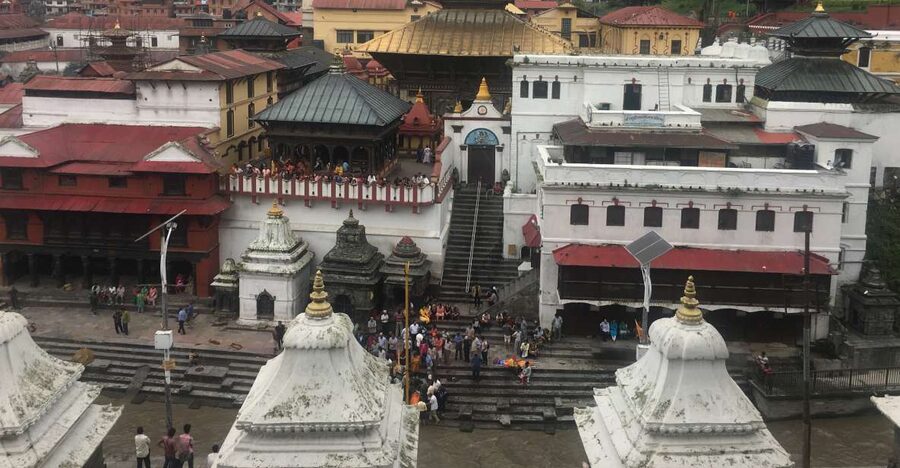
Pashupatinath Temple is a major pilgrimage site, and that shows in how people move, how they dress, and how seriously visitors are expected to behave. On this tour, you’ll go specifically for the views and temple experience around the complex.
What I like about including Pashupatinath is that it’s not only about buildings. It’s about watching a living religious site in real time. You’ll get close to a place that many people come to for devotion, not tourism checklists.
What to consider: rules can be firm, and access can depend on the area and the visitor’s status. If you’re hoping to enter everywhere, adjust your expectations. Still, you can get a lot out of observing from viewpoints you’re allowed to use and focusing on architecture and river-adjacent surroundings.
Boudhanath Stupa: where the tour’s mood shifts
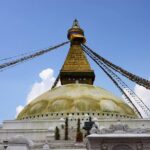
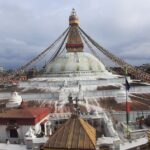
Then comes Boudhanath Stupa, another UNESCO-listed stop and a key site for Buddhist practice in Kathmandu. This is often where the vibe changes from temple viewing to slower, more meditative observation.
The stupa itself is the headline, but the surrounding activity is part of the experience: people moving around in reverent patterns, religious markings, and the way the crowd forms around the structure. You’ll have time to visit and see the site in a way that feels less like a quick photo and more like a cultural scene you can read with your senses.
For non-Hindu travelers, Boudhanath tends to be especially rewarding because it’s recognizable as Buddhist sacred space even if you’re not following a specific ritual. You don’t need a lot of background to appreciate the symbolism and the sheer visual presence of the stupa.
You can also read our reviews of more historical tours in Kathmandu

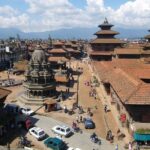
Kathmandu Durbar Square: short time, lots to notice
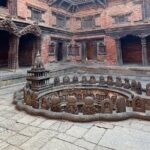
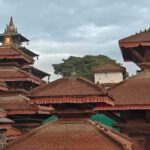
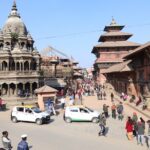
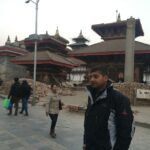
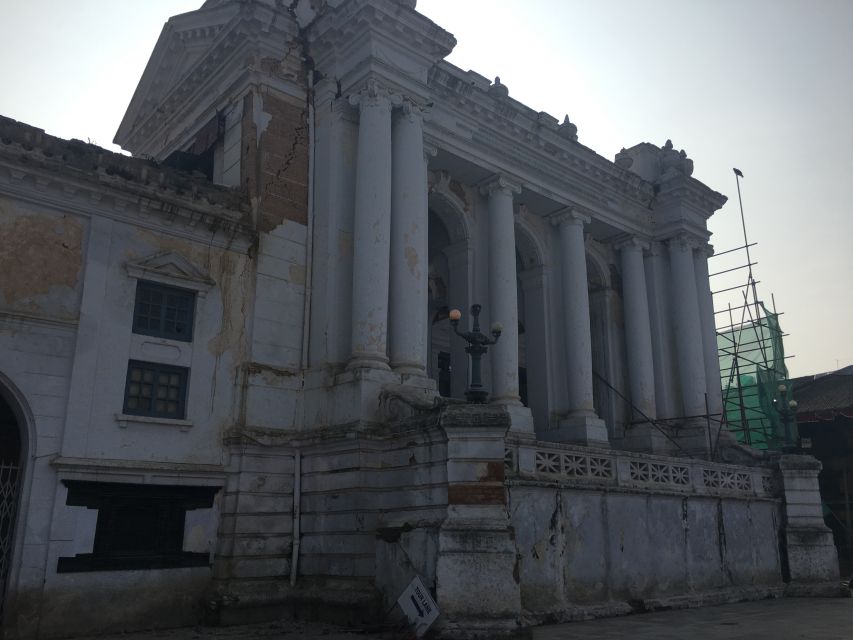
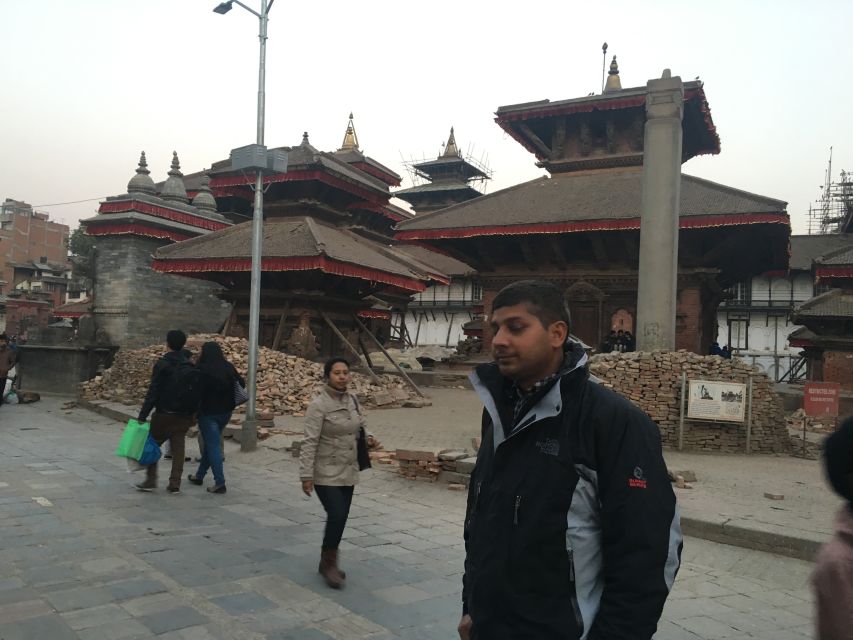
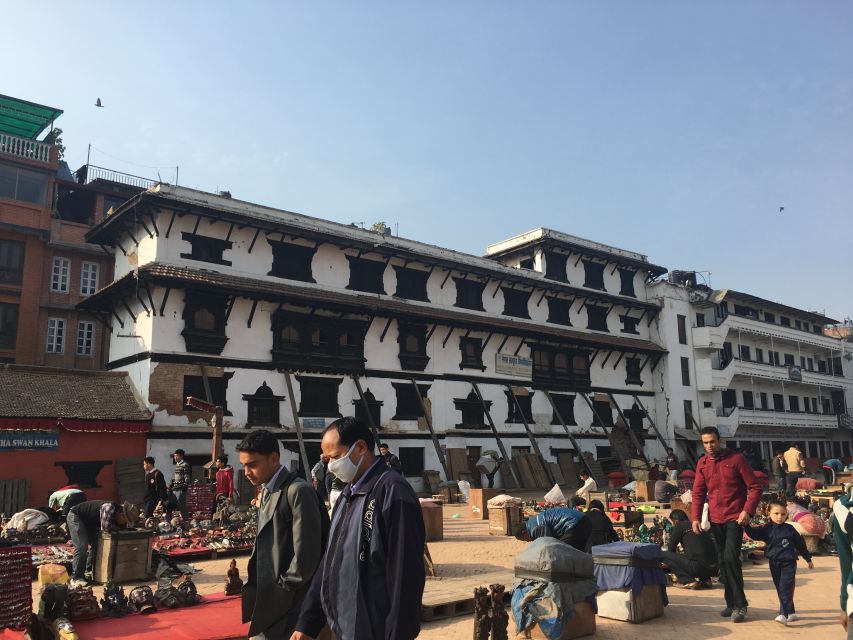
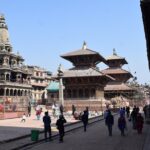
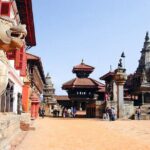
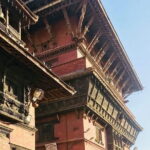
Kathmandu Durbar Square is the destination most likely to feel like a classic sightseeing stop: photo moments, temple-and-palace architecture, and the normal Kathmandu mix of people and commerce nearby. Your time here is planned as about 1 hour, which includes sightseeing and some opportunity for shopping.
In that hour, you’ll want a simple strategy. Pick a couple of things to focus on—main buildings or the courtyard views you can’t replicate elsewhere—and use the time to walk, look up, and capture photos quickly. With only an hour, trying to do everything can make the stop feel rushed.
If you enjoy street-level texture—craft shops, busy lanes, and real daily Kathmandu energy—this is one of the better matches on the route. If you’re hoping for a long, guided deep dive into royal history, you may find the time doesn’t support that. The best approach is to treat Durbar Square like a “see it now, understand more later” stop.
Budhanilkantha: a different kind of temple visit
Budhanilkantha rounds out the itinerary and adds variety beyond the big headline temples. It’s included as one of the planned sites, giving you another heritage experience after Durbar Square and the major stupa/temple stops.
What makes it worth keeping in your schedule is contrast. After sites like Swayambhunath, Pashupatinath, and Boudhanath, you get a fresh perspective with a different temple setting and a change in how the crowds and visitor flow typically feel. Even if you’re not spending ages inside (time is limited), you’re still getting a strong sense of Kathmandu’s religious geography.
Because the tour is timed, don’t expect this to be a slow wandering day. Think of Budhanilkantha as the finishing chapter—one more landmark you’ll be glad you checked off before heading back.
Guide vs. driver: what the experience really feels like
This tour is described as a shared local bus with a driver. That’s an important detail. You may get English/Hindi support, but you should not assume a full, stop-by-stop briefing that explains significance right as you arrive.
Some travelers do get a friendly, helpful presence, and the overall experience can feel authentic simply because you’re riding with other people and moving through neighborhoods like locals do. Still, the lack of structured explanations can be frustrating if you’re someone who wants context before walking into sacred spaces.
My practical advice: come with basic curiosity. If you know the rough identity of each site—who they’re associated with, what type of place it is—you’ll get more out of the time you have. If you don’t, you can still enjoy the visuals, but your “why this matters” moments may come later when you look things up on your phone.
What can go wrong (and how to prevent it)
This tour is mostly about efficient sightseeing, and efficiency has a few common weak points.
1) Waiting and timing quirks
Because pickup depends on you being at the right spot and the group flow on the bus route, being early is your best safety net. If you arrive on time but still find the bus late, it can feel stressful—so treat early arrival as part of the plan, not an optional extra.
2) Bus comfort and cleanliness
One review flagged that the bus wasn’t clean. That doesn’t mean every ride will be the same, but it’s enough to tell you to bring a small travel wipe or tissue and expect basic “local bus” standards rather than a polished tourist coach.
3) Not all areas are open to everyone
At some Hindu temple locations, access can be restricted and signage can limit entry. If you’re visiting for architecture and atmosphere, you’ll still get value. If your goal is maximum entry across every stop, adjust your expectations and focus on allowed viewpoints.
4) Time can feel short
A few mentions pointed to limited visiting time at certain sites. This is consistent with the tour’s structure: multiple stops inside a 6-hour window. You can reduce the feeling of rush by planning what you want to photograph before each arrival.
Who this Kathmandu heritage bus tour suits best
This is a good fit if you:
- are a first-timer in Kathmandu and want a fast orientation of the main heritage sites
- care about seeing major UNESCO-listed landmarks rather than spending all day in one place
- like structured movement with a shared bus and don’t mind a few schedule constraints
- value good price-to-sightseeing ratio and can work with “enough time” rather than “perfect time”
It may be a weaker fit if you:
- want a highly detailed guide briefing at each site
- need lots of entry access for non-Hindu visitors at multiple stops
- are sensitive to basic local transport standards
- hate even short waiting periods
Should you book this Kathmandu heritage bus tour?
If you want a first-day Kathmandu crash course—Swayambhunath views, Pashupatinath significance, Boudhanath spiritual atmosphere, Durbar Square texture, and Budhanilkantha variety—this $10, 6-hour bus tour can be a smart purchase. The main reason to book is simple: you’ll hit the big names without the headache of self-planning transport between sites.
Book it if you’re flexible and your goal is to see the landmarks and feel the city. Skip it if you want a slow, deeply explained, entry-everywhere experience.
FAQ
What sites are included on the Kathmandu Rich Heritage bus tour?
The tour includes Swayambhunath Stupa, Pashupatinath Temple, Boudhanath Stupa, Kathmandu Durbar Square, and Budhanilkantha.
How long is the tour?
The duration is listed as 6 hours for one day.
Where do I meet the tour?
You meet opposite the main entrance gate of Hotel Malla in Thamel, Kathmandu. The bus pickup is described as being across the road from the entrance.
What time should I arrive for pickup?
You’re asked to be there between 9:50 and 10:20 am, with participants needing to be at the meeting place at 11:00 am for the group.
Are there pickup options besides Thamel?
Yes. The tour lists multiple pickup location options, including Amrit Science Campus, Pokhara Lakeside, Sorhakhutte, Barahi Chouk, The Malla Hotel, and Thamel.
What is included in the price?
Included are round-trip transfers by basic local sharing bus and the city tour by locals via a sharing bus with the driver.
Are meals included?
No. All meals are not included and are available for purchase.
What languages does the driver speak?
The driver is listed as English and Hindi.
Is free cancellation available?
Yes. Free cancellation is listed as available up to 24 hours in advance for a full refund.
Should you book this tour for a first day in Kathmandu?
If your goal is to see the main UNESCO heritage sites efficiently in about 6 hours, this tour can work well, especially given the low price. If you want longer time at each location or lots of detailed site briefing, you may want a different format.