REVIEW · KATHMANDU
UNESCO Five World Heritage Tour in Kathmandu
Book on Viator →Operated by Himalayan Advisor Pvt. Ltd. · Bookable on Viator
Kathmandu rewards people who plan their routes well. This private, full-day UNESCO World Heritage tour is designed to cover the key religious and royal sites without spending your time negotiating taxis or waiting around. You get a single guide and private car, plus hotel transfers within the Ring Road area.
I especially like that entry fees are handled and that the stops are packed with context, not just sightseeing checkmarks. The guide-led commentary can turn places like Swayambhunath and Patan Durbar Square into something you can actually explain to your friends later. In the same spirit, guides such as Shanti, Sarita, Tej, and Shanthi are repeatedly highlighted for being professional, attentive, and quick to answer questions.
One thing to consider: this is a long, concentrated day (about 7 to 8 hours, starting at 9:00 am), with many short temple-square visits. Also, food and drinks are not included, so you’ll want to plan ahead for lunch and water.
In This Review
- Key Points Worth Knowing Before You Go
- Why This UNESCO Kathmandu Valley Route Works So Well
- Swayambhunath and Amideva Buddha Park: A Hilltop Start (and a Smart Pace)
- Kathmandu Durbar Square: Royal Courtyards, Reconstruction, and the Living Goddess Connection
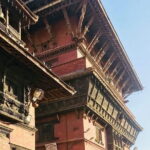
- Patan Royal Palace and Patan Durbar Square: Newari Architecture You Can Actually Spot
- Patan’s Temples and the Museum Break: A Day Without Feeling Like a Blur
- Pashupatinath and Boudhanath: Two Religions, One Long Finish
- Price and Value: What You Get for $130
- Who This Private UNESCO Tour Suits Best
- The Timing Reality: How to Prepare for a Packed 7–8 Hour Day
- Should You Book This UNESCO Five World Heritage Tour in Kathmandu?
- FAQ
- What time does the tour start?
- How long is the UNESCO World Heritage tour in Kathmandu?
- Is pickup available, and where does the tour drop you off?
- Are entry fees included?
- Does the tour include food or drinks?
- Is the tour private?
- What is the cancellation window?
Key Points Worth Knowing Before You Go
- Private car plus Ring Road hotel pickup: you’re not starting your day by figuring out transport.
- Entry tickets included at every heritage stop you visit.
- Buddhist and Hindu sites in one circuit: Swayambhunath and Boudhanath balance Pashupatinath.
- Durbar Square stops in Kathmandu and Patan: expect royal-courtyard energy and plenty of architectural detail.
- Multiple “micro-stops” (5 to 15 minutes) that still matter when you’re short on time.
- Guides like Shanti and Sarita are described as service-minded and strong on answering questions.
Why This UNESCO Kathmandu Valley Route Works So Well
If Kathmandu is on your itinerary for only a day, your biggest enemy is time. This tour solves that by turning one day into a logical loop: you start with the hilltop religious complex at Swayambhunath, then move through the royal squares in Kathmandu, continue south/east to Patan’s heritage zone, and finish with the two heavyweights—Pashupatinath and Boudhanath.
The “private” part matters more than it sounds. You’re not dealing with multiple drivers, arguing over where to go next, or losing momentum each time you change location. Instead, you’ll follow a set flow, with a professional guide keeping the story straight and the schedule moving.
You also get a big practical win: entry fees are included. In a place where you’ll pay at multiple heritage sites, that can shave off stress and keep your day from turning into a pile of receipts and delays.
You can also read our reviews of more historical tours in Kathmandu

Swayambhunath and Amideva Buddha Park: A Hilltop Start (and a Smart Pace)
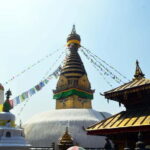
You begin at Swaymbhunath, a UNESCO-listed stupa complex that’s described as holy ground equally important to both Buddhist and Hindu communities. Starting here makes sense because it’s a defining Kathmandu landmark. It’s also a good way to set the tone for the rest of the day: you’re about to see how the city weaves religious life into daily space.
You’ll spend about 1 hour at Swaymbhunath. Expect a walking-heavy, viewpoint-and-temple kind of stop rather than a quick photo break. The guide’s job here is crucial: it helps you notice what to look for and understand what you’re seeing beyond the surface.
Just nearby is Amideva Buddha Park, a short 15-minute stop with three large statues of Shakyamuni Buddha. This is one of those “small detours” that keep the day from feeling monotone. It’s quick, but it adds variety—another layer of Buddhist art and symbolism while you’re already in the area.
Practical tip: since the morning is your best energy window, wear comfortable shoes. This is the kind of tour where you’ll be grateful you’re not guessing about footing on uneven paths.
Kathmandu Durbar Square: Royal Courtyards, Reconstruction, and the Living Goddess Connection
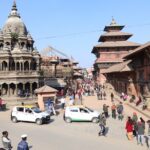
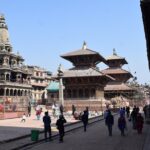
Next comes Kathmandu Durbar Square, around 1 hour. This is one of those places where “just walking around” actually gives you something—because it’s a royal courtyard loaded with historic and religious structures. You’ll also see that parts of it are being reconstructed, which can make the site feel active rather than museum-static.
Within Durbar Square, you’ll hit a chain of landmarks that each tell a slightly different story:
- Basantapur Tower (about 30 minutes): a standout feature inside the Durbar Square area. This stop gives you time to look up, orient yourself, and understand why this square became a central stage for power and worship.
- Degu Taleju Temple (about 10 minutes): built in 1564. Even as a shorter stop, it gives you a hard date to connect architecture to political eras.
- Kumari Chowk (about 10 minutes): the courtyard associated with Kumari, described as a girl selected to be the town’s living goddess until she reaches puberty. This is the kind of detail that makes you slow down and pay attention, because it’s not abstract history—it’s a real cultural institution tied to a specific place.
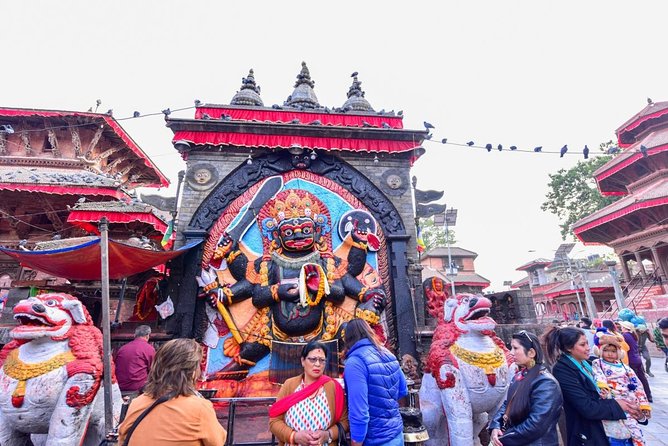
- Kaal Bhairab (about 5 minutes): a statue of Bhairav in Kathmandu Durbar Square. This is a quick stop, but it adds a different flavor—more protective, more intense, and tied to the local religious imagination.
If you’re the kind of traveler who likes architecture, this is where you’ll feel the day “click.” But if you prefer one or two sites per day, Durbar Square can feel like drinking from a firehose. The guide helps here: you’re not just collecting random images; you’re building a mental map.
Patan Royal Palace and Patan Durbar Square: Newari Architecture You Can Actually Spot
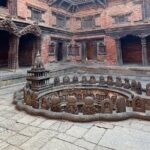
After Kathmandu, you shift to Patan—starting with the Patan Royal Palace area for about 1 hour. You’ll be in Lalitpur, and the tour frames this as part of the oldest royal palace complex of Patan. The value of this stop is that it bridges the concept of “royal square” into something more layered: it’s not just a courtyard with a temple or two. It’s a whole zone where multiple religious and artistic elements overlap.
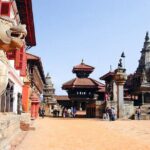
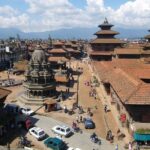
Then comes Patan Durbar Square for about 45 minutes. This is where you’ll start noticing Newari craftsmanship more clearly. The tour description emphasizes that it’s the adobe for Newari architecture, with temples and artistic creations established by the Newar community. You’re also told it’s an ancient “Mall” (a traditional gathering/market-courtyard kind of space). That wording matters because it helps you understand the square as a social stage, not only a sacred backdrop.
If you’re traveling with someone who loves details, this part tends to land well because you get enough time to compare elements: doorways, temple forms, and the way the square is organized. Even if you only spend 45 minutes, the guide’s narration helps you look with purpose.
Patan’s Temples and the Museum Break: A Day Without Feeling Like a Blur
Patan’s second half feels like a careful mix of worship spaces and culture stops, so the day doesn’t just become another temple sprint.
You’ll visit Taleju Mandir Temple (about 15 minutes). The tour notes it was rebuilt by Srinivasa Malla after a fire in 1676. That’s a useful historical thread, because fires, rebuilding, and changing patronage are part of how old places survive and evolve.
Next is Patan Museum for about 15 minutes. This is a short museum stop, but it can be a big payoff because it lets you switch from outdoors-only observing to seeing carved pieces up close. The description calls out old statues and carved windows and wooden pillars. If you like learning how craftsmen shaped materials, this stop helps you interpret what you saw back in the squares.
Then comes Golden Temple (Hiranya Varna Mahavihar) for about 10 minutes. You’re told it’s a 12th-century temple with bronze statues, covered in silver and golden decorations, and that it has a pagoda-style structure with a golden image of Lord Buddha. Even with limited time, this stop is visually memorable—and it acts like a contrast point before you move back into more Hindu-focused sights later.
After that, you’ll find two additional temples:
- Vishwanath Mandir Temple (about 5 minutes): built during the reign of Siddhi Narsingh Malla, dedicated to God Shiva.
- Bhimsen Temple (about 15 minutes): built in 1680 by Srinivasa Malla and worshiped as a god of business and trade by the Newar community.
Those two short stops matter because they show how the city’s sacred spaces aren’t all one-note. Even within one area of Patan, the “why” behind a temple can shift—from devotion to Shiva, to trade and daily life.

Pashupatinath and Boudhanath: Two Religions, One Long Finish
The tour closes with two of the most widely known religious sites in the Valley—Pashupatinath and Boudhanath—which makes the ending feel intentional rather than random.
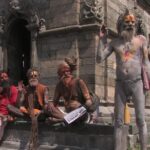
At Pashupatinath Temple (about 1 hour), you’re entering a Hindu temple complex with over 500 shrines and temples, and it’s described as the main temple for Shiva devotees. The size clue matters: with so many shrines, you’ll want the guide to help you understand what’s central and what’s peripheral, especially when time is limited.
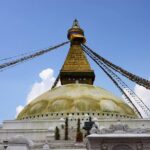
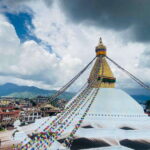
Finally, you visit Boudhanath Stupa for about 1 hour. This is your Buddhist counterweight to Pashupatinath. The tour describes it as a symbol of Buddhism in Nepal, with a dome-shaped structure measuring 36 meters high, surrounded by prayer wheels and picture carvings connected to Buddha. This is a longer stop, and it’s one of the better moments in the day to slow down and just watch how people interact with the stupa area.
Practical tip: the day is long enough that your energy will dip near the end. If you care about good photos, save some of your camera time for Boudhanath’s stupa zone.
Price and Value: What You Get for $130
At $130 per person, this isn’t a budget “hop-on-hop-off” situation. It’s priced like a real guided day. The big reason it can still feel like good value is what’s included:
- Private transport by car
- Professional tour guide
- Hotel pickup and drop-off inside the Ring Road area, including Bouddha area
- Entry fees for all heritage sites you visit
When a tour includes entry fees, the cost stops feeling like a surprise at every stop. And when your transport is already set, you’re paying for your time and attention to go to the sites, not to the logistics.
The only clear cost gap is simple: food and drinks are not included. That means you should plan for lunch, snacks, and water. If you skip that part, the tour can still be worth it, but your comfort and energy will suffer.
Also worth noting: this tour is commonly booked about 55 days in advance, which is a clue that dates fill up. If your trip window is fixed, don’t wait too late.
Who This Private UNESCO Tour Suits Best
This is a strong fit if:
- You want a one-day, guided overview of the UNESCO World Heritage highlights in Kathmandu Valley.
- You like architecture, religious history, and the way multiple faith traditions share space.
- You’d rather spend your energy listening and looking than negotiating transport.
It may not be the best fit if:
- You prefer slow travel with long museum time and minimal walking.
- You want food included or you’re trying to keep the day extremely flexible.
If you’re a solo traveler, couple, or small group, the private setup tends to feel especially efficient because the guide can pace your group and keep your day on track.
The Timing Reality: How to Prepare for a Packed 7–8 Hour Day
Start time is 9:00 am, and the tour runs about 7 to 8 hours. The stops include a lot of short segments—some are 5 to 15 minutes—so you’ll get breadth, not endless dwell time at any single location.
My advice: treat the day like a guided orientation. You’ll come away with a map of where things are and why they matter. Later, if something really pulls you in, you’ll be able to return on your own with better context.
And since food and drinks aren’t included, plan a lunch strategy. Bring a small snack if you’re the type who gets cranky when hunger hits. Hydration is also not optional in a long day outdoors.
Should You Book This UNESCO Five World Heritage Tour in Kathmandu?
Book it if you want maximum cultural payoff in a single day and you value a guided route with entry fees included and a private car. It’s built for efficient coverage of Kathmandu and Patan’s royal and religious heart, then finishes with the big two: Pashupatinath and Boudhanath.
Skip it or look for a different format if you hate tight schedules, want meals handled for you, or you’re hoping for plenty of free time at each stop. This tour is strong at packing in the big names and the explanations that make them click.
If your priority is a stress-free, first-time UNESCO hit, this is the kind of day that leaves you with direction for the rest of your trip.
FAQ
What time does the tour start?
The start time is 9:00 am.
How long is the UNESCO World Heritage tour in Kathmandu?
The duration is about 7 to 8 hours.
Is pickup available, and where does the tour drop you off?
Hotel pickup and drop-off are included inside the Ring Road area, including the Bouddha area.
Are entry fees included?
Yes. Entry fees for all heritage sites you visit are included.
Does the tour include food or drinks?
No. Food and drinks are not included.
Is the tour private?
Yes. It’s a private tour/activity with only your group participating.
What is the cancellation window?
You can cancel for a full refund up to 24 hours before the experience’s start time.